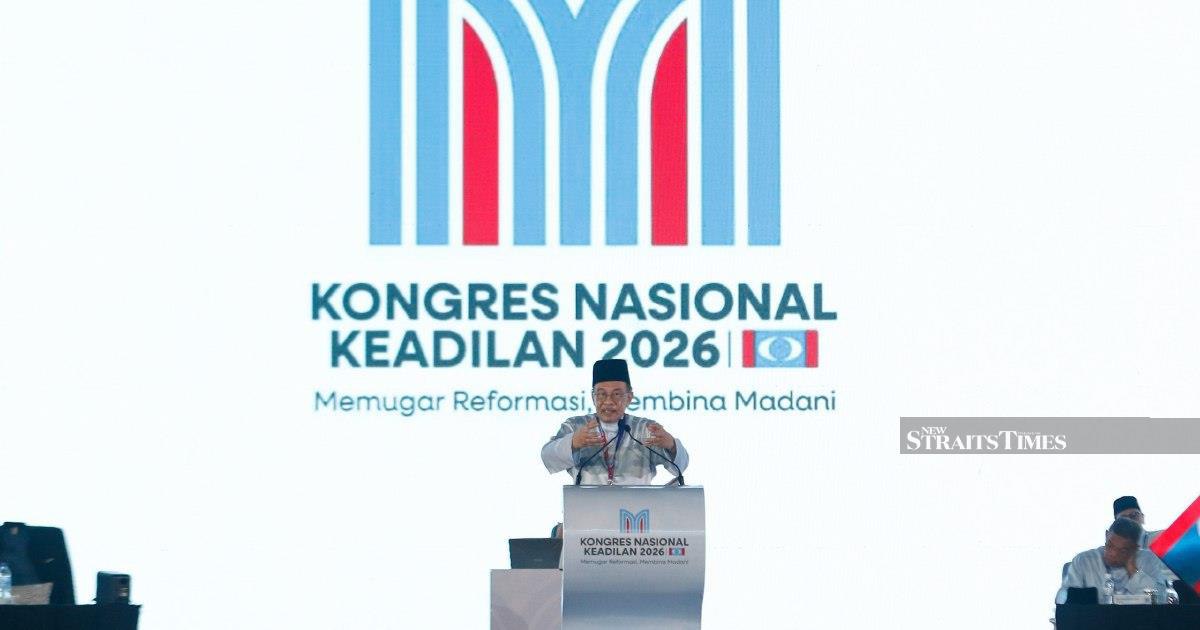
The allegation of embezzlement at Tabung Haji has resurfaced at the PKR Congress in Ayer Keroh, where party president Datuk Seri Anwar Ibrahim publicly confirmed that the institution fell victim to "sakau", or misappropriation of funds. His statement draws directly from the findings of the Royal Commission of Inquiry established to investigate irregularities within Malaysia's premier Hajj savings institution, lending considerable weight to mounting scrutiny of how the pilgrimage fund has been managed over recent years.
The RCI into Tabung Haji was established amid public concern about the institution's financial health and governance practices. The inquiry examined a range of operational issues and financial transactions that had raised red flags among stakeholders, including members who contribute savings specifically earmarked for their pilgrimage to Mecca. The emergence of embezzlement as a confirmed concern underscores the vulnerability of even formally regulated institutions to internal mismanagement and financial crimes, a troubling revelation for millions of Malaysian Muslims who depend on Tabung Haji as a trusted vehicle for saving towards their religious obligation.
Tabung Haji's significance extends beyond simple financial management—it represents a sacred trust for Malaysian Muslims. The institution manages contributions from hundreds of thousands of Malaysians who prioritise their Hajj pilgrimage as a crucial religious milestone. When governance lapses occur at such institutions, the impact reverberates through affected communities and undermines confidence in institutional frameworks designed to protect public welfare. Anwar's public acknowledgement of embezzlement at the PKR Congress reflects broader political pressure to address governance failures transparently rather than managing them through bureaucratic channels alone.
The Royal Commission of Inquiry methodology typically involves comprehensive examination of documents, witness testimony, and financial records to establish patterns of irregularity. The fact that embezzlement emerged as a substantiated finding suggests that evidence met evidentiary standards rigorous enough to warrant a senior political figure's public confirmation. This distinction matters because it separates substantiated misconduct from mere allegation, providing a factual basis for remedial action and accountability measures that extend beyond individual cases to systemic reform.
For Malaysian investors and savers, the implications are significant. Trust in financial institutions—whether commercial banks, investment vehicles, or savings mechanisms like Tabung Haji—depends fundamentally on demonstrated governance, transparency, and accountability. When embezzlement occurs, even if subsequently discovered and addressed, it raises legitimate questions about oversight mechanisms and internal controls. Prospective contributors to Tabung Haji will likely scrutinise what institutional changes have followed the RCI's conclusions before committing their savings.
The broader Southeast Asian context matters here too. Malaysia has positioned itself as a leader in Islamic finance and Shariah-compliant investment products. Governance failures in institutions like Tabung Haji potentially weaken Malaysia's credibility in these sectors at a time when the region is competing for positioning within global Islamic finance networks. Regional investors considering whether to allocate capital to Malaysian Islamic financial instruments factor in institutional governance reliability, making Tabung Haji's embezzlement findings a matter of regional concern.
Anwar's intervention through the PKR Congress platform signals that the ruling coalition is taking governance accountability seriously, at least in public pronouncements. However, the gap between acknowledgement and concrete reform action remains crucial. The political will to implement structural changes at Tabung Haji—whether through revised oversight mechanisms, enhanced auditing procedures, stronger internal controls, or personnel changes—will ultimately determine whether the RCI's findings translate into genuine institutional rehabilitation or merely become another episode in Malaysia's long history of governance scandals followed by insufficient remediation.
The statement also reflects political calculations within PKR and the broader government coalition. Public admission of institutional failure can serve multiple purposes: it demonstrates accountability and transparency credentials, it appeals to voters frustrated by governance lapses, and it potentially inoculates the government against future criticism by appearing to have already acknowledged and begun addressing the problem. Whether these political benefits translate into substantive institutional improvements remains to be seen.
For individuals currently saving with Tabung Haji or considering contributions, several questions persist. What specific embezzlement incidents did the RCI identify? Who was responsible, and what consequences have they faced? What preventative measures has Tabung Haji implemented to prevent recurrence? Have affected contributors received compensation or remediation? Anwar's confirmation of embezzlement raises public awareness of the problem, but transparency regarding remedial responses will determine whether the institution can rebuild trust among its stakeholders and the broader Malaysian Muslim community.

