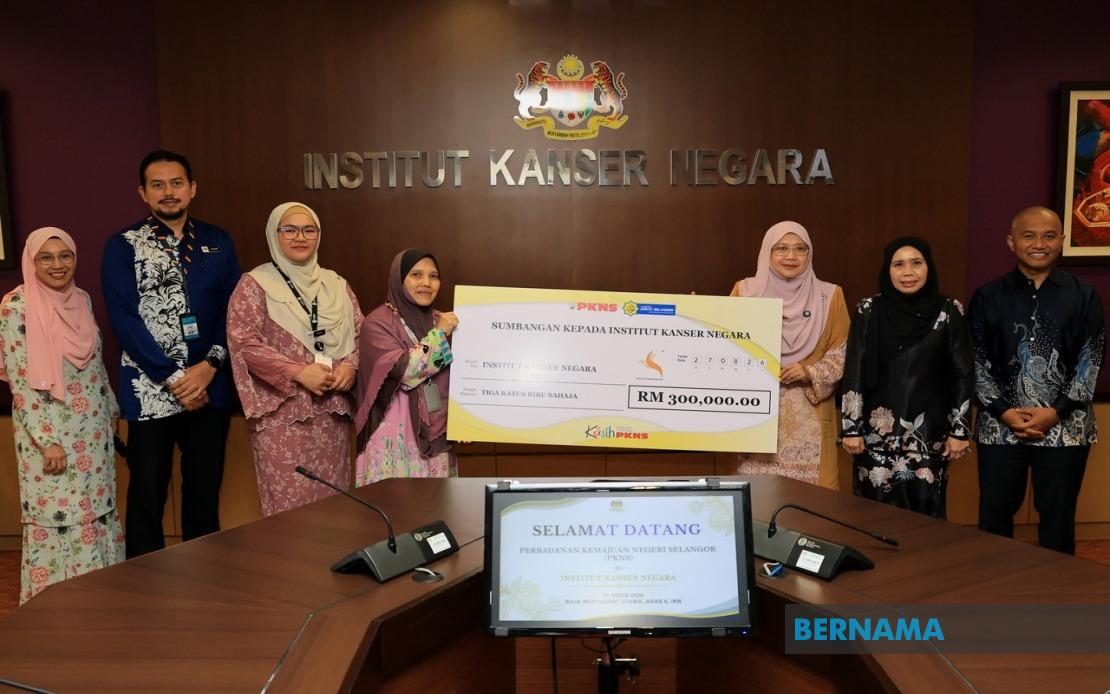
The Selangor State Development Corporation (PKNS) has committed RM300,000 in financial assistance aimed at supporting between 50 and 100 cancer patients currently undergoing medical treatment at the National Cancer Institute (IKN) in Putrajaya. The allocation represents a significant step by the state agency in addressing the mounting financial pressures that accompany prolonged cancer care, extending beyond mere monetary relief to encompass emotional encouragement and community solidarity for vulnerable patients and their families.
Sapna Turmidi, senior general manager of PKNS Corporate Services, emphasised during the initiative's launch that corporate giving transcends simple financial transactions. She articulated the agency's commitment as rooted in genuine compassion, stating that the contribution reflects PKNS's determination to provide not only material assistance but also psychological reassurance to individuals navigating the gruelling demands of cancer treatment. The framing of this initiative underscores a growing recognition among Malaysian institutions that holistic support for seriously ill patients must encompass emotional and social dimensions alongside tangible resources.
The impetus for PKNS's decision to establish this particular aid programme emerged from a deeply personal tragedy. A staff member diagnosed with glioma in February passed away merely four months later at IKN, an outcome that proved transformative in shaping organisational priorities. This loss catalysed PKNS leadership to develop a more intimate understanding of the multifaceted hardships endured by cancer patients and their families, moving the agency beyond abstract corporate social responsibility toward meaningful intervention grounded in lived experience and institutional reflection.
The assistance programme has been structured through PKNS's corporate social responsibility framework, specifically utilising wakalah zakat—a delegated zakat mechanism—in partnership with the Selangor Zakat Board (LZS). The initiative targets eligible Muslim patients classified within the asnaf al-Gharimin category, referring to those burdened by debt or financial obligations. This targeting approach reflects Malaysia's dual commitment to both secular welfare provision and Islamic charitable principles, demonstrating how government-linked agencies can operationalise religious obligations within contemporary institutional contexts.
The timing of this announcement coincides with PKNS's 62nd anniversary, celebrated on August 1 annually. Established in 1964, PKNS functions as Selangor's primary development apparatus, spearheading socio-economic initiatives designed to elevate living standards and facilitate prosperity across the state. The coincidence of the cancer patient assistance programme with this institutional milestone suggests a deliberate symbolic alignment, positioning charitable giving as integral to PKNS's foundational mission rather than peripheral to core business operations.
Dr Nur Aslina Bahakodin, director of the National Cancer Institute, provided critical context regarding the scale of institutional need. She disclosed that IKN requires between RM1 million and RM2 million annually to adequately support economically disadvantaged cancer patients throughout their complete treatment trajectories. This figure illuminates the substantial gap between available government resources and actual patient needs, a disparity that necessitates sustained corporate and non-governmental sector participation to prevent comprehensive coverage collapse.
The scope of IKN's patient support extends considerably beyond narrowly defined medical provisions. Dr Nur Aslina detailed how institutional assistance encompasses medical equipment procurement, acquisition of essential supplies, subsidisation of transport to treatment facilities, provision of specialised nutritional interventions tailored to cancer patients' evolving physiological requirements, and welfare support for patient dependents. This comprehensive approach recognises that cancer's financial impact radiates outward through entire households and support networks, not merely affecting individual patients.
Financial constraints impose particularly acute consequences on treatment outcomes and patient trajectories. Dr Nur Aslina highlighted that economically challenged patients frequently forgo scheduled follow-up appointments due to transportation costs and ancillary expenses, a phenomenon that directly undermines treatment continuity and delays necessary clinical interventions. This dynamic creates a vicious cycle wherein poverty-driven care disruption generates worse health outcomes, potentially necessitating more intensive and expensive subsequent treatments. Early intervention through targeted financial assistance thus represents both immediate humanitarian imperative and long-term economic efficiency.
The Medical Social Work Unit at IKN will administer the PKNS contribution following comprehensive socio-economic evaluation of individual patients and their families. This administrative structure ensures that assistance reaches those facing genuine deprivation while maintaining transparent allocation processes. The involvement of specialised social workers recognises that effective charitable intervention requires professional assessment capabilities beyond simple application forms, particularly when addressing the complex intersection of medical need, household economics, and family circumstances.
Dr Nur Aslina observed that rising cancer detection rates partially reflect enhanced public awareness and participation in screening programmes, a development with contradictory implications. While improved detection capacity represents genuine progress in cancer control strategy, it simultaneously reveals previously undiagnosed disease prevalence, expanding both the population requiring treatment and associated financial demands. Breast cancer predominates among female cases, whereas colorectal cancer leads among male patients, demographic patterns suggesting that prevention and early detection strategies must incorporate targeted community education calibrated toward sex-specific risk profiles.
The PKNS contribution arrives within a broader Malaysian context of escalating cancer burden and constrained public health financing. Southeast Asian nations including Malaysia confront rising non-communicable disease incidence alongside competing budgetary pressures, creating structural barriers to comprehensive patient support. Corporate sector engagement through mechanisms like PKNS's initiative demonstrates partial mitigation capacity but cannot substitute for systematic government investment in oncology services and patient welfare provision. The sustainability of cancer care infrastructure across Malaysia will ultimately depend upon political commitment to substantially increased health financing beyond current trajectories.
This initiative illuminates the productive potential of government-linked companies functioning not merely as commercial operators but as community-embedded institutions capable of generating meaningful social impact. PKNS's decision to channel resources toward cancer patient support establishes a model potentially replicable across other state development corporations and private enterprises, suggesting pathways through which institutional actors can simultaneously discharge corporate social responsibility while addressing demonstrable community needs. The convergence of organisational self-interest, genuine compassion, and institutional capacity creates conditions wherein charitable giving becomes structurally embedded rather than episodically performed.

