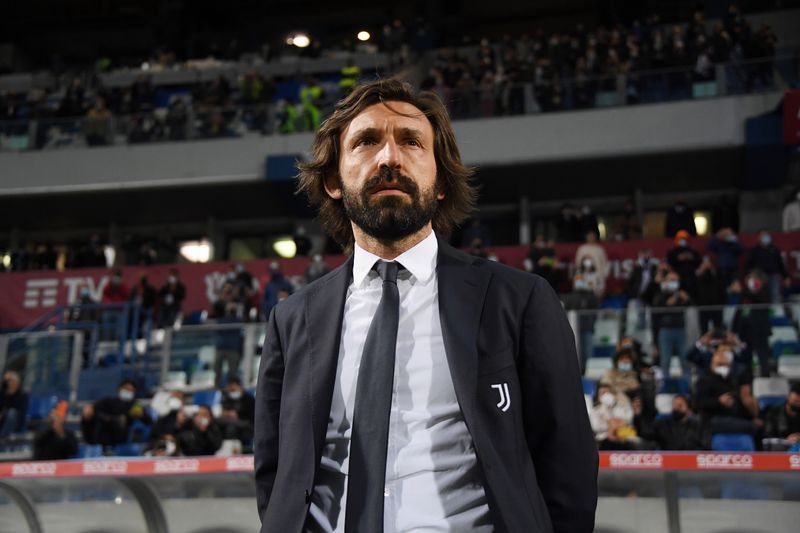
Andrea Pirlo's prospects of becoming Italy's next head coach have encountered substantial political headwinds, with opposition centring on his role as a global ambassador for Fonbet, a Russian sports betting operator. The 47-year-old former World Cup winner had emerged as the frontrunner to replace Gennaro Gattuso following reports that Pep Guardiola, the former Manchester City manager, had declined the position. Yet this apparent consensus within football circles has fractured along political lines, creating a contentious backdrop for the Italian Football Federation's leadership as it attempts to chart a new direction for the sport.
The timing of the controversy could hardly be more delicate. Giovanni Malago's recent election as FIGC president was meant to signal fresh momentum after Italy's historically embarrassing failure to qualify for the World Cup for the third consecutive occasion. Instead, the federation now finds itself defending a candidate whose off-field associations have become a lightning rod for domestic political concern. Pirlo's ambassadorial contract with Fonbet commenced in October, but the arrangement gained unwanted prominence following his appearance at Moscow's Luzhniki Stadium alongside former Italy teammate Marco Materazzi during an event organised by the bookmaker. The visit occurred against the backdrop of Russia's aerial bombardment of Ukraine, an unfortunate coincidence that intensified scrutiny of Pirlo's involvement and raised questions about optics and judgment.
Pirlo has sought to deflect criticism by characterising his participation as apolitical and purely professional, a defence that has gained limited traction among Italian political circles. The Italian Football Federation itself has remained publicly circumspect, declining to comment when approached but signalling through sources that Pirlo's Russian connections were being evaluated and that the matter remained unresolved. This measured stance masks deeper institutional tension. Paolo Maldini, the newly appointed technical director and a legendary figure in Italian football, has provided backing for Pirlo's candidacy, lending significant weight to the nomination. Yet this endorsement from within the football establishment has proven insufficient to overcome mounting objections from the political establishment.
The resistance spans multiple political factions and levels of authority. Pina Picierno, vice-president of the European Parliament, articulated a widely held sentiment in describing Pirlo's potential appointment as contradictory to Italian football's stated need for cultural and ethical renewal. She contended that the choice represented a step backwards precisely when the sport required transformation following successive World Cup elimination failures. Ignazio La Russa, the Senate president and a senior figure within Prime Minister Giorgia Meloni's political coalition, expressed more measured but telling reservations about Pirlo's coaching credentials. Whilst acknowledging Pirlo's legendary playing career, La Russa described the appointment as risky, framing the decision as a gamble of uncertain outcome. His reluctance to endorse the move, despite the personal relationships involved, signals that political considerations weigh heavily in the federation's deliberations.
Carlo Calenda, leading the centrist Azione party, adopted the most unambiguous stance, issuing a categorical statement that individuals promoting Russia since 2022 ought to be disqualified from holding national positions. This formulation reflects a broader European sentiment regarding the geopolitical dimensions of supporting Russian interests following the invasion of Ukraine. For Malaysian and Southeast Asian observers, the episode illuminates the extent to which sporting appointments in major nations have become intertwined with foreign policy considerations and domestic political calculus. The decision to appoint a national team coach, ostensibly a technical and sporting matter, has metamorphosed into a question of national values and international alignment.
The controversy's emergence at this juncture compounds the federation's institutional challenges. Malago's tenure was anticipated to focus on rebuilding Italy's football infrastructure and restoring competitive credibility after the World Cup debacles. Instead, the organisation must navigate conflicting pressures from technical advisors endorsing Pirlo's experience and political leaders questioning the broader implications of his appointment. This tension reflects deeper uncertainties about how sporting organisations balance meritocratic considerations against broader stakeholder concerns, including government representatives with legitimate interests in national symbolism and international relations.
Pirlo's current position as manager of United Arab Emirates Pro League side United FC in Dubai provides an alternative explanation for the ambassadorial arrangement, framing it as a pragmatic commercial engagement rather than ideological commitment. However, this distinction has largely failed to resonate with Italian critics, who appear less interested in parsing motivation than in assessing compatibility between Pirlo's commercial relationships and the symbolic significance of leading Italy's national team. The World Cup qualification failure created an appetite for change and accountability, emotions that Pirlo's appointment fails to satisfy for substantial constituencies within Italian politics.
The unfolding situation demonstrates how international sports governance intersects with contemporary geopolitical tensions and domestic political dynamics. For regional observers in Southeast Asia, where several nations maintain complex relationships with Russia and face their own questions about athlete and administrator conduct, the Italian experience offers instructive lessons about the limits of compartmentalising commercial interests from national representation. The federation faces a binary choice: maintain its footballing rationale for Pirlo's appointment and weather intensifying political criticism, or reconsider the nomination and signal responsiveness to political sensibilities, albeit at the cost of disappointing influential voices within the sporting establishment.
The controversy also highlights unresolved tensions within Italian institutional structures regarding the appropriate extent of political intervention in sporting matters. Whilst parliamentarians and government officials retain legitimate interests in how national institutions are managed and represented internationally, the degree to which political objections should constrain sporting organisations' operational decisions remains contested. This ambiguity creates space for continued negotiation, but also risks embroiling the federation in protracted controversy precisely when institutional stability and cohesion are essential for meaningful reform.

