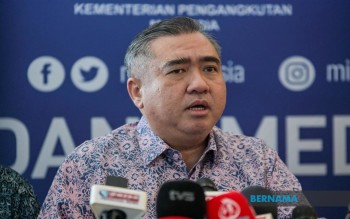
Transport Minister Anthony Loke has unveiled plans for a substantial expansion of the Penang International Logistics Aeropark (PILA), signalling the government's commitment to strengthening the northern region's position as a critical hub for air cargo operations within Southeast Asia. Speaking at a monthly assembly held at the Ministry of Transport in Putrajaya on August 13, Loke highlighted how the initiative would fundamentally reshape logistics infrastructure in Penang and its surrounding areas, building upon the existing air cargo facilities that already serve the region.
The PILA project represents far more than a simple upgrade to current operations. Rather than merely expanding the existing cargo hub incrementally, the development envisages the creation of an entirely new Penang Air Logistics Complex with substantially greater infrastructure and handling capabilities. According to Loke, this comprehensive expansion would include modern facilities designed to process significantly higher volumes of air freight while maintaining competitive operational standards. The scale of ambition reflects broader recognition that Malaysia's northern corridor requires investment to compete with other regional logistics hubs in Thailand, Vietnam, and Singapore.
The initiative is being spearheaded through a collaborative public-private partnership model that exemplifies contemporary Malaysian infrastructure development strategy. Malaysia Airports Holdings Bhd (MAHB) is undertaking the construction and operational responsibility, while the Penang Development Corporation (PDC) serves as a local strategic partner. This arrangement allows the government to facilitate progress without bearing the full financial burden of development, a critical consideration given Malaysia's fiscal constraints and competing infrastructure priorities across multiple regions.
Loke revealed that the Prime Minister has been invited to formally launch the project, underscoring its political significance and the government's prioritisation of air cargo advancement. The new complex will be positioned adjacent to the current Penang cargo hub, enabling operational integration and the potential consolidation of related services. This geographic proximity means existing expertise and workforce can transition smoothly into expanded operations, reducing implementation friction during the transition phase.
The project framework involves the establishment of a dedicated joint venture entity, PILA Sdn Bhd, whose formation was approved by the boards of both PDC and MAHB in May, with the formal agreement signed on April 13, 2026. This corporate structure provides clarity regarding operational management and investment responsibility while maintaining the government's oversight role in strategic infrastructure development. The private-sector-led investment model Loke described underscores the government's broader policy orientation toward leveraging private capital and expertise for infrastructure projects rather than relying primarily on public funding.
The first construction phase will focus on developing a modern free commercial zone-class air cargo warehouse facility. This facility is expected to become operational by 2029, providing an intermediate milestone while longer-term expansion continues. The free commercial zone designation carries particular importance for the logistics sector, as it facilitates simplified customs procedures and reduced bureaucratic barriers for international freight handling, making the facility more attractive to multinational logistics operators and airlines seeking strategic regional distribution centres.
Projection figures paint an ambitious long-term vision for the facility's contribution to Malaysia's logistics capacity. By 2050, the fully developed complex is expected to handle up to 500,000 tonnes of cargo annually, substantially exceeding current Penang operations. The warehouse infrastructure alone will exceed two million square feet, providing the physical space necessary for modern cargo handling equipment, cold storage for perishable goods, and secure facilities for high-value freight. This scale positions Penang as a potentially competitive alternative to Kuala Lumpur for certain cargo categories, particularly those destined for or originating from Thailand and other northern neighbours.
Loke's remarks also contextualised PILA within MAHB's broader air cargo modernisation agenda across Malaysia. The airport operator is simultaneously pursuing upgrades at Kuala Lumpur International Airport (KLIA), indicating a national strategy to distribute cargo capacity across multiple hubs rather than concentrating operations at a single facility. This geographical dispersal reduces congestion at KLIA while enabling regional facilities to specialise in serving nearby markets more effectively. For Malaysian businesses engaged in international trade, particularly those in the northern regions, the Penang expansion promises improved access to air freight services and potentially reduced logistics costs through increased local capacity.
The government's facilitative rather than directly proprietary role reflects modern infrastructure development thinking. Rather than requiring public funds for construction and operation, the authorities create enabling conditions through regulatory approval, land provision, and policy frameworks while private operators assume commercial and operational risk. This approach aligns with international best practices and allows governments to achieve infrastructure objectives without excessive fiscal exposure, a particularly valuable consideration for developing economies managing diverse infrastructure demands.
For Malaysia's broader logistics sector and the regional competitive position, PILA represents recognition that Penang's geographic location and existing transportation networks position it advantageously for serving northern ASEAN markets. The expansion signals confidence in sustained cargo growth and international demand for Malaysian distribution services. As regional production continues shifting within Southeast Asia and companies seek alternatives to Singapore and Bangkok, facilities like PILA offer strategic alternatives for companies establishing supply chain hubs.
The timeline extending to 2050 indicates this is envisioned as a transformative, long-term undertaking rather than a short-term initiative. Phased development allows MAHB to assess market demand, refine operational models, and progressively expand capacity as commercial demand justifies investment. This measured approach reduces financial risk while ensuring the facility evolves to meet actual market requirements rather than speculative projections. For stakeholders in Malaysia's northern regions, the project represents a multi-decade commitment to developing world-class logistics infrastructure that could fundamentally reshape regional economic dynamics and competitive positioning within global supply chains.

