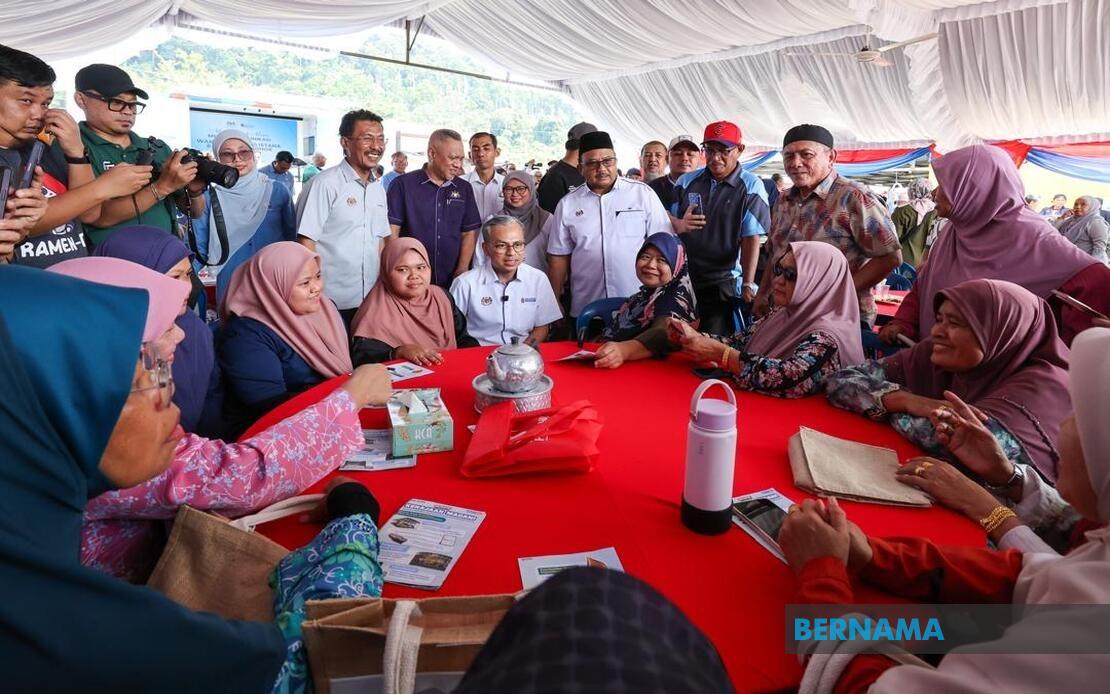
Communications Minister Datuk Fahmi Fadzil has pushed back against suggestions that Pakatan Harapan's manifesto launch for the Johor state election came too late in the campaign cycle, insisting instead that the coalition timed the release strategically after securing comprehensive endorsement from its senior leadership. Speaking in Batu Pahat on Friday during a community engagement event, Fahmi rejected criticism from former Bangi MP Ong Kian Ming, who had predicted the delayed unveiling of the 'Johor for All' document would hamstring PH's ground game and hand Barisan Nasional an election landslide.
The messaging from Fahmi underscores a recurring tension within Malaysian political campaigns: balancing the pressure to maintain momentum and public visibility against the need for careful policy development and internal consensus-building. PH's decision to withhold its manifesto until the second week of the three-week formal campaign period reflects a deliberate choice to present voters with fully vetted proposals rather than rushing to publication. Fahmi emphasised that the coalition released the manifesto only after its contents had been thoroughly reviewed and formally approved by party presidents and the Prime Minister himself, suggesting that premature launch would have been counterproductive.
Ong's broader critique extended beyond timing concerns, encompassing what he characterised as a pattern of strategic missteps by PH. His assessment included the coalition's failure to publicly name a menteri besar candidate, the absence of prominent senior leaders fielded as state assembly candidates, and the communications vacuum that manifesto delay created. These accumulated factors, in Ong's analysis, left PH struggling to articulate a compelling reason for voters to switch from the incumbent administration. However, Fahmi contended that early-stage campaign focus on candidate introductions followed by parallel policy launches from both coalitions represents normal electoral progression rather than evidence of weakness.
The Malaysian political environment has historically favoured coalitions that can demonstrate internal unity and coordinated messaging, particularly when announcing major policy platforms. PH's requirement to navigate consensus across multiple parties—from the Democratic Action Party to Amanah to PKR—inevitably lengthens decision cycles. This structural reality, while sometimes portrayed as a liability by opponents, also represents one of the coalition's founding principles: multi-party collaboration rather than single-party dominance. The deliberate approach to manifesto finalisation may actually reinforce PH's positioning as a coalition genuinely committed to consensus governance.
Fahmi also turned attention to criticisms from former UMNO Youth chief Khairy Jamaluddin, who had dismissed the PH manifesto as essentially derivative of BN's own policy commitments. Rather than defending the manifesto's originality point-by-point, Fahmi reframed the exchange as evidence that Khairy had assumed a more prominent campaigning role than Johor Menteri Besar Datuk Onn Hafiz Ghazi himself. This counterattack highlights intra-BN dynamics that, while not explicitly acknowledged by either coalition, clearly matter to state-level electoral outcomes. Khairy's elevated visibility in campaign events could indicate either internal confidence in his political standing or perhaps concerns within BN ranks about the incumbent's capacity to energise the base.
The Communications Minister suggested that if BN sought to strengthen its campaign narrative, it might benefit from importing Khairy's demonstrable organisational energy and public engagement style into the menteri besar's own activities. While framed as light commentary, the observation carries implications for how the ruling coalition's internal power structures intersect with electoral strategy. Senior party figures sometimes operate with significant autonomy in campaign settings, particularly when overall strategy appears uncertain or when different factions within the coalition sense vulnerability.
Concerns about internal DAP controversies have circulated throughout the campaign, triggered partly by former Skudai assemblyman Marina Ibrahim's social media statement that she had withdrawn from politics following frustration with what she characterised as orchestrated positions by DAP leadership regarding potential pardons for former Prime Minister Datuk Seri Najib Tun Razak. Such defections, even from relatively junior figures, typically receive amplified attention during elections as they can signal deeper party fractures. Fahmi dismissed suggestions that these narratives have substantively affected PH's campaign momentum, pointing instead to robust turnout and enthusiastic grassroots engagement at coalition events throughout the campaign period.
The Johor state election represents a critical electoral test for both major coalitions, with 172 candidates competing across 56 state assembly seats. Scheduled polling for July 11, with early voting available on July 7, the contest will provide measurable data on whether PH's strategic approach to manifesto development and campaign narrative resonates with voters, or whether Ong's predictions of a BN landslide materialise. For regional observers, the Johor outcome carries implications beyond the state's borders, as it will illuminate voter sentiment in Malaysia's most economically significant state and offer signals about federal coalition dynamics heading into any future national elections.
Fahmi's defence of the manifesto timing reflects confidence in PH's campaign trajectory, though that confidence faces empirical testing against actual electoral results. The communications strategy of repositioning criticism as evidence of opponent disorganisation rather than acknowledging underlying campaign challenges represents a standard political rhetorical move, one that depends for its credibility on whether ground-level voter responses align with the minister's characterisation of strong grassroots support. Meanwhile, the prominence of figures like Khairy in BN's Johor campaign suggests that state-level contests in Malaysia increasingly feature prominent national politicians operating with considerable independence, complicating traditional hierarchical campaign structures and potentially creating openings for opposition parties willing to exploit coordination gaps.

