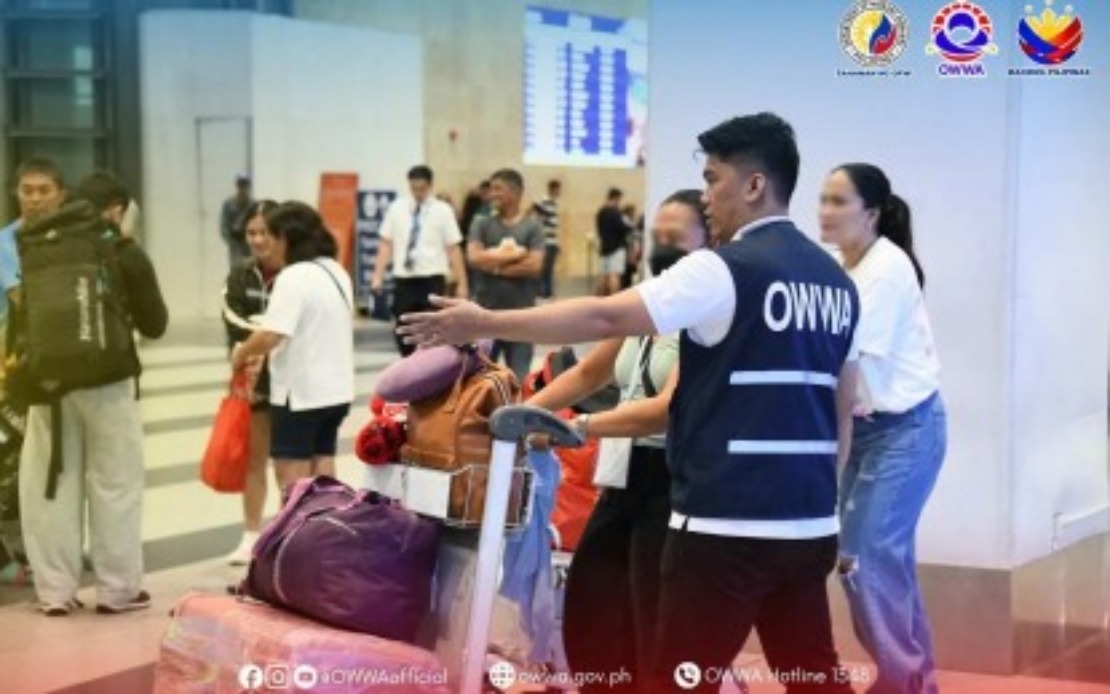
The Philippine government is maintaining its repatriation programme for overseas Filipino workers stranded in conflict-affected parts of West Asia, even as the number of those seeking to return home has declined in recent weeks. The Department of Migrant Workers (DMW) confirmed on Monday that assistance and evacuation efforts remain active across the Gulf Cooperation Council member states, underscoring Manila's commitment to protecting its citizens during a period of heightened regional instability stemming from tensions between the United States, Israel, and Iran.
Undersecretary Felicitas Bay of the DMW outlined the current pace of operations, noting that while repatriation flights continue regularly, the volume has markedly decreased from the peak months of April and May when uncertainty about escalating conflict prompted hundreds of workers to request immediate evacuation. The shift reflects a gradual stabilisation in the region and diminishing fears among the Filipino workforce that conditions would further deteriorate. Nevertheless, the government has not scaled back its infrastructure or personnel dedicated to processing repatriation requests, ensuring that those who determine they must leave can do so promptly.
As of July, cumulative figures reveal that 10,580 migrant workers, overseas Filipinos, and their family members have been successfully repatriated to the Philippines since the tensions began intensifying. The arrivals have been staggered throughout the period, with a recent batch of 50 repatriates from Kuwait landing in the country this week. These numbers demonstrate the sustained logistical effort required to coordinate flights, clearances, and reception facilities across multiple countries in a region where political tensions can rapidly affect transportation networks and diplomatic access.
For Malaysian readers and Southeast Asian observers, the Philippine repatriation experience offers important lessons about managing migrant worker crises in a volatile region where several hundred thousand citizens from across the Association of Southeast Asian Nations work in vulnerable sectors. The Philippines' experience illustrates both the capacity and the limitations of coordinated government response during periods of geopolitical uncertainty. While Manila has effectively mobilised resources to assist those seeking to leave, the gradual decline in repatriation requests also suggests that many workers have calculated that remaining in place, despite risks, may be preferable to losing employment and income. This dilemma—balancing safety against economic necessity—is common across the region and affects nationals from Thailand, Indonesia, Bangladesh, and other labour-exporting nations.
The DMW's operations rely heavily on coordination with Migrant Workers Offices (MWOs) stationed throughout Gulf Cooperation Council countries, which serve as the frontline interface between the Philippine government and its diaspora. These offices must simultaneously gather intelligence about security conditions, respond to individual welfare inquiries, process documentation, and liaise with host governments to secure exit permits and transport arrangements. The ongoing nature of this work, even at reduced volume, requires maintaining staffing levels and communication channels that cannot be easily discontinued without risking the ability to respond quickly if conditions suddenly worsen.
A critical dimension of the repatriation effort involves information management and public communication. The DMW has specifically urged overseas Filipino workers to rely exclusively on official government sources and verified channels when assessing security situations and deciding whether to request evacuation. This guidance addresses a documented problem across migrant worker communities in the Gulf: the rapid spread of misinformation through social media and informal networks, which can trigger panic, overwhelm repatriation systems, or conversely cause workers to ignore legitimate warnings. The emphasis on verified information reflects lessons learned from previous crises and underscores the importance of trust between government agencies and the diaspora.
Bay also stressed that workers in potentially dangerous areas should prioritise their personal safety by remaining in secure locations and adhering to directives issued by host country authorities. This advice acknowledges that the Philippine government's capacity to protect citizens is constrained by the legal framework and sovereignty of the countries where they work. Workers cannot simply congregate in public spaces or attempt to travel to airports without authorisation; they must operate within the legal and security parameters established by Saudi Arabia, the United Arab Emirates, Kuwait, and other nations where they are employed. The tension between this reality and the desire for rapid evacuation creates difficult decisions for both workers and government officials.
The broader context of Filipino migration to West Asia reflects decades of labour mobility driven by wage differentials and the region's hunger for service workers, construction labour, and domestic help. The Philippines has built an entire institutional apparatus around managing this migration, including pre-departure orientation programmes, overseas office networks, and emergency response systems. However, the existence of these structures does not insulate workers from geopolitical shocks. When regional conflicts erupt or tensions escalate, even well-prepared government systems face bottlenecks in transportation, diplomatic complications, and the sheer logistical challenge of moving thousands of people across international borders simultaneously.
The DMW's statement that repatriation efforts will continue indefinitely, regardless of demand levels, signals that Manila views this as an ongoing responsibility rather than a temporary crisis response. This approach contrasts with approaches that might wind down operations once initial urgent cases have been handled. By maintaining capacity and readiness, the Philippines positions itself to respond quickly if circumstances change. The persistence of geopolitical tensions in West Asia suggests that this vigilance will likely remain necessary for the foreseeable future, with the government prepared to surge operations if fresh conflicts or safety concerns emerge.
For Southeast Asian governments managing their own overseas workforces, the Philippine experience demonstrates the value of having pre-established networks, designated officials, and coordination protocols in place before crises occur. Building these systems requires sustained investment and political will during periods of relative calm, when the urgency may not be apparent. It also requires sustained diplomatic relationships with host countries and international partners, including organisations like BERNAMA that can assist in rapid information dissemination. The Philippine repatriation programme, while facing the ongoing challenge of balancing worker safety with economic realities, represents one of the more comprehensive regional responses to managing migrant worker welfare during geopolitical volatility.

