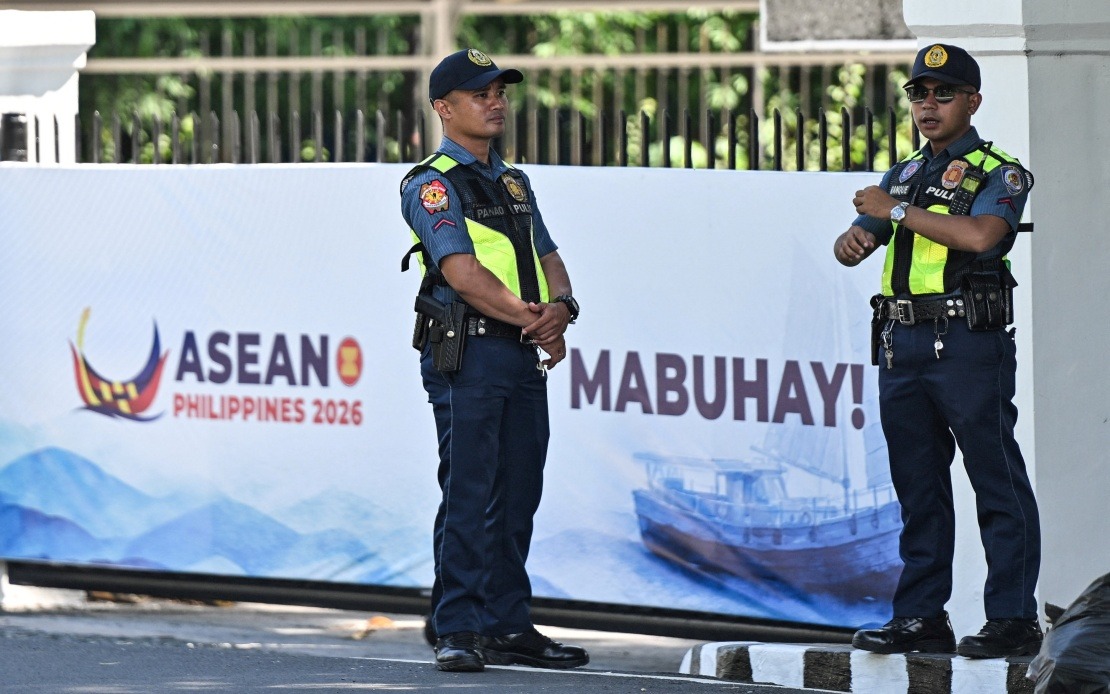
The Philippines assumed the spotlight on the regional diplomatic calendar in late July as host of the 59th ASEAN Foreign Ministers' Meeting and its accompanying forums, marking a significant moment for multilateral engagement at a time when global and regional tensions threaten international stability. According to Foreign Affairs Assistant Secretary Dominic Xavier Imperial, the week-long series of conversations represents both a continuation of momentum built over the preceding months and an opportunity for Southeast Asian nations to project a unified voice on critical matters affecting the bloc and its partners.
The assembled ministers arrived in Manila with an ambitious agenda centred on three main pillars. First among these is the advancement of ASEAN's development priorities and the reinforcement of community identity in an increasingly fragmented geopolitical landscape. Imperial characterised this focus as building upon "the momentum we have sustained over the past seven months," suggesting that the Philippines' leadership throughout its tenure as ASEAN chair had already laid groundwork for these discussions. The implicit recognition that ASEAN must continuously reassert its cohesion and common purpose reflects growing anxiety within the bloc about external pressures and internal divergences.
Human rights and fundamental freedoms emerged as a leitmotif throughout the proceedings, underscored by the 16th face-to-face dialogue between ASEAN Foreign Ministers and the ASEAN Intergovernmental Commission on Human Rights (AICHR). This interface signals that despite persistent criticism from international observers about ASEAN's record on human rights protection, the regional organisation continues to embed these conversations within its formal mechanisms. The emphasis on vulnerable populations suggests an attempt to ensure that development initiatives do not proceed at the expense of marginalised communities, though the effectiveness of such commitments remains contested among civil society groups across Southeast Asia.
Nuclear non-proliferation also figured prominently in the meeting schedule, with regional ministers convening to review the Southeast Asia Nuclear Weapon-Free Zone (SEANWFZ) Commission's action plan for 2023–2027 and to consider applications from potential new states seeking to accede to the Treaty's Protocol. This enduring commitment to keeping the region free from nuclear weapons represents one of ASEAN's most coherent collective positions and reflects historical anxieties about great-power military competition in Southeast Asian waters. The pursuit of international recognition and support for maintaining this status demonstrates ASEAN's continued effort to anchor regional security architecture in established international norms rather than rely solely on bilateral arrangements.
When the formal 59th AMM convened on Tuesday, ministers were expected to adopt two cornerstone documents that would shape regional diplomacy in the months ahead. The AMM Joint Communiqué would serve as a comprehensive statement of ASEAN positions on both internal development matters and external international developments, functioning as the bloc's collective voice to the world. Equally significant was the Guidelines on the Modalities for Engagement of ASEAN with High Contracting Parties to the Treaty of Amity and Cooperation in Southeast Asia, a framework that Imperial described as a "key deliverable" of the Philippine chairmanship. These guidelines establish structured pathways for cooperation with states that do not yet maintain official partnerships with ASEAN, thereby creating a mechanism to expand the organisation's diplomatic reach while maintaining fidelity to the principles enshrined in the TAC, which Imperial identified as "the cornerstone of peace, stability, and confidence-building in the region."
The breadth of ASEAN's dialogue partnerships became evident in the schedule of Post-Ministerial Conferences slated for Wednesday, which included meetings with established partners spanning the geopolitical spectrum: India, the United States, Canada, Russia, China, the Republic of Korea, Japan, Australia, New Zealand, the United Kingdom, and the European Union. This roster reflects ASEAN's carefully cultivated position as a strategic actor that maintains relationships with major powers whilst preserving strategic autonomy. Imperial articulated the significance of these forums by noting they provide "a very good opportunity, a venue for the dialogue partners... to address whatever is impacting currently regionally as well as globally," a formulation that emphasises ASEAN's role as both a regional player and a participant in global strategic conversations.
Following the PMCs, the agenda expanded further to encompass the 27th ASEAN Plus Three meeting, the 33rd ASEAN Regional Forum, and the 16th East Asia Summit, cascading levels of engagement that move progressively outward from bilateral arrangements to increasingly inclusive multilateral forums. These mechanisms, established over decades, represent institutional investments in dialogue and consensus-building designed to prevent miscalculation and manage competition peacefully. The concentration of these meetings within a single week underscores the Philippines' effort to maximise the visibility and impact of ASEAN's diplomatic voice during its chairmanship.
A particularly noteworthy bilateral encounter scheduled during the meetings was the conversation between Philippine Foreign Affairs Secretary Ma. Theresa Lazaro and Chinese Foreign Minister Wang Yi. Imperial characterised this engagement as essential for addressing bilateral concerns between Manila and Beijing whilst simultaneously reflecting "our regional impact of what's happening globally to the region." This formulation reveals the intricate linkage between bilateral disputes and broader regional security architecture, suggesting that Philippine-China relations cannot be disaggregated from their effects on ASEAN cohesion and stability. The meeting implied Manila's continued effort to manage its relationship with its most powerful neighbour whilst maintaining its position within regional arrangements.
Two persistent crises loomed over the ministerial discussions: the ongoing instability in Myanmar and the longstanding territorial disputes in the South China Sea. On Myanmar, the ministers planned to exchange views on the enforcement of the Five-Point Consensus, a regional framework adopted to address the political upheaval following the military coup. Imperial indicated that engagement would extend beyond the State Administration Council to encompass other stakeholders within Myanmar, suggesting a nuanced approach that acknowledged the junta's control whilst maintaining communication channels with opposition elements. This reflects ASEAN's persistent struggle to balance non-interference principles with pragmatic recognition of its interests in Myanmar's stability.
The South China Sea Code of Conduct negotiations constituted another fixture on the agenda, representing years of intensive diplomatic engagement aimed at producing a binding agreement that would establish rules for state behaviour in disputed waters. Imperial confirmed that the COC would "always be a part of their discussions," an observation that simultaneously acknowledges both its centrality to regional security architecture and the slow pace of progress toward completion. For Southeast Asian nations with maritime claims in the South China Sea—including the Philippines, Vietnam, Malaysia, and Brunei—this forum provides the primary venue for collective engagement with China on an issue that directly affects their sovereignty and economic interests.
The broader context for all these discussions is the heightened international tensions that Imperial referenced repeatedly, reflecting anxieties about great-power competition, territorial assertiveness, and the fragility of rule-based international order. ASEAN's response, embodied in this week of intensive multilateral engagement, is to reassert the relevance of regional mechanisms, to emphasise dialogue over confrontation, and to position Southeast Asia as a zone where peaceful resolution of disputes remains possible even as tensions rise elsewhere. The meetings represent both ASEAN's continued commitment to its founding principles and its recognition that maintaining peace and stability in Southeast Asia requires active, persistent diplomatic engagement at multiple levels.
The week concluded with commemorative activities marking the Treaty of Amity and Cooperation's fiftieth anniversary, providing an opportunity to reflect upon the regional architecture that has undergone repeated stress tests since its establishment. The TAC's longevity and continuing relevance, despite numerous regional crises, testify to its utility as a framework for managing state relations in a region characterised by vast power differentials and competing interests. As ASEAN approaches the next phase of its engagement with global powers and regional crises, the principles embedded in the TAC—mutual respect for sovereignty, peaceful settlement of disputes, and non-interference in internal affairs—remain contested but enduring foundations for regional order.

