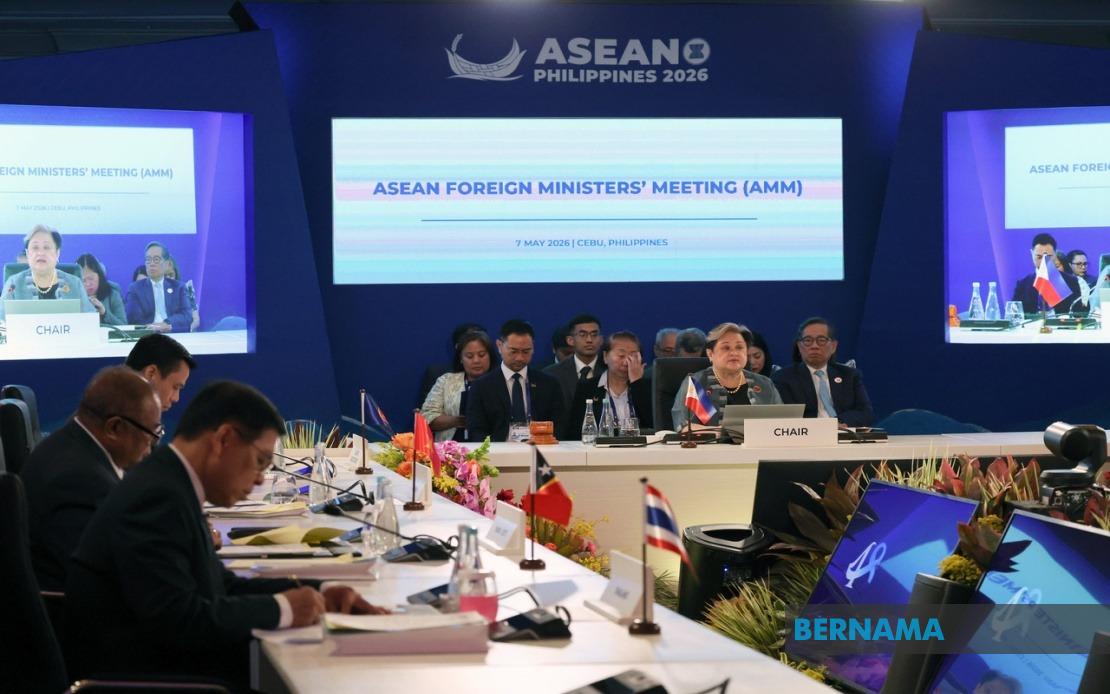
The Philippines has indicated that ASEAN's approach to resolving the Myanmar crisis requires a recalibration of how its established peace framework is executed, without abandoning the underlying principles. Philippine Foreign Affairs Secretary Ma. Theresa P. Lazaro articulated this position in remarks made during July, emphasizing that while the Five-Point Consensus remains sacrosanct, the methods for translating it into concrete action must evolve in tandem with developments within Myanmar itself.
The Five-Point Consensus, adopted in April 2021 following the military coup that deposed civilian leader Aung San Suu Kyi, establishes five pillars for addressing the Myanmar crisis. These include halting all armed violence immediately, fostering inclusive dialogue involving all conflicting parties, appointing an ASEAN Special Envoy to mediate discussions, ensuring humanitarian aid reaches affected populations, and enabling the envoy to engage comprehensively with all stakeholders. Since its inception, this framework has served as ASEAN's diplomatic cornerstone for engagement with Myanmar, though its implementation has frequently encountered resistance and complications on the ground.
Lazaro's remarks reflect growing frustration among some ASEAN member states that the Five-Point Consensus, while strategically sound, has produced limited tangible results nearly three years after adoption. Several ASEAN leaders have begun questioning whether the framework requires operational adjustments to deliver more meaningful outcomes. The Philippine position elegantly navigates this tension by distinguishing between the integrity of the framework itself and the tactical approaches used to activate it. This distinction allows ASEAN to maintain consensus around its core agreement while permitting individual member states greater flexibility in implementation.
Crucially, Lazaro stressed that ASEAN's diplomatic actions must be grounded in contemporary realities rather than abstract adherence to principles. This pragmatic turn acknowledges that Myanmar's political landscape has fundamentally transformed since February 2021. The military junta has consolidated control, armed resistance movements have proliferated, humanitarian conditions have deteriorated, and various armed groups now exercise territorial influence. A peace framework designed three years ago cannot mechanically address conditions it could not have anticipated, Lazaro's position implicitly suggests.
Regarding Myanmar's participation in ASEAN functions, Lazaro indicated that the country's restoration to full diplomatic standing depends upon measurable advancement across three specific dimensions: genuine de-escalation of violence, substantive progress in dialogue among Myanmar's fractious factions, and meaningful delivery of humanitarian assistance to vulnerable populations. This conditional approach represents a subtle refinement of ASEAN's previous stance. Rather than imposing a binary choice between full participation and complete exclusion, the Philippines envisions graduated restoration contingent upon concrete improvements.
Currently, ASEAN maintains restrictions on Myanmar's top military leadership, permitting only non-political representatives to participate in high-level meetings. This compromise position has itself generated debate within ASEAN, with some members questioning whether it meaningfully influences Myanmar's junta while others defend it as a necessary expression of disapproval. The annual ASEAN Leaders' Review and Decision on Five-Point Consensus implementation provides an institutional mechanism for periodically reassessing whether conditions warrant adjusting Myanmar's diplomatic status.
The Philippines' position as ASEAN Chair during this period carries particular significance. As Chair, the nation has positioned itself as a convener and facilitator of intra-ASEAN dialogue on Myanmar strategy. Lazaro emphasized that the Chair's role involves creating spaces for member states to collectively evaluate ASEAN's Myanmar engagement and chart future directions. This framing elevates the Chair's function from mere administrator to strategic architect of consensus-building.
Malaysia's concurrent statements in June 2024 revealed parallel thinking within ASEAN's leadership. Malaysian Foreign Minister Datuk Seri Mohamad Hasan explicitly referenced exploration of fresh approaches to strengthen Five-Point Consensus implementation while reaffirming its foundational status. Malaysia's commitment to engaging all relevant parties—the military government, the National Unity Government, the People's Defence Force, and ethnic armed organizations—reflects ASEAN's broader acknowledgment that effective mediation requires dialogue across ideological divides.
The implications for Malaysia and other Southeast Asian nations extend beyond Myanmar's borders. ASEAN's handling of the Myanmar crisis establishes precedents for how the bloc addresses internal conflicts and military takeovers. A perception that ASEAN has either abandoned principles or proven ineffectual carries consequences for regional stability and the organization's credibility. The Philippines and Malaysia's current emphasis on adaptive pragmatism suggests ASEAN is attempting to navigate between these unpalatable alternatives.
For Myanmar's various armed factions and civilian resistance movements, the adjustments in ASEAN messaging carry strategic implications. While some may interpret flexibility as potential weakening of pressure on the junta, others may view it as recognition that circumstances require sustained but evolving engagement rather than ultimatums that generate defiance. The National Unity Government and People's Defence Force, which claim to represent Myanmar's democratic aspirations, will scrutinize whether ASEAN's revised approach genuinely advances their positions or inadvertently legitimizes the military regime through dialogue without conditions.
The humanitarian dimensions also merit consideration. Myanmar faces a deepening crisis with millions displaced and requiring assistance. ASEAN's capacity to deliver humanitarian aid while simultaneously pursuing political objectives creates inherent tensions. The Philippines' emphasis on humanitarian assistance as a metric for assessing progress acknowledges these urgent ground realities. Adaptation of the framework must somehow reconcile the need to maintain diplomatic engagement with the imperative to alleviate human suffering.
Looking forward, ASEAN's approach to Myanmar appears poised between competing pressures. Maintaining diplomatic engagement with the military government facilitates access and potential influence, yet continued engagement without demonstrable concessions risks legitimizing the coup and disappointing democratic movements. The emerging consensus around pragmatic flexibility may ultimately prove unsatisfying to all stakeholders—too rigid for those demanding immediate junta accountability, too flexible for those fearing accommodation of military rule. Nevertheless, this carefully calibrated middle path represents ASEAN's current strategy for sustaining its Myanmar engagement without fracturing internal consensus.

