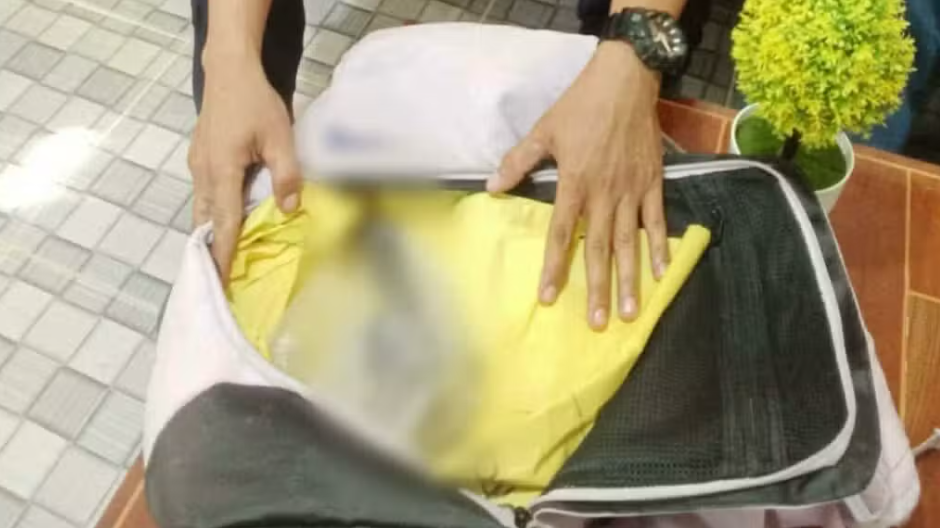
A .357-calibre Smith & Wesson Magnum revolver was discovered in the school bag of a 14-year-old student during a routine safety inspection at a Pinamungajan, Cebu school on Thursday, August 20, revealing troubling lapses in firearm security within Filipino households and prompting intensified school safety measures across the region. The discovery, made at approximately 3.50pm when a teacher conducting a precautionary bag inspection uncovered the weapon, immediately triggered a response from school authorities who contacted local police personnel stationed at the institution to verify the find and secure the firearm.
Investigations into the incident revealed circumstances suggesting significant family supervision gaps. The minor, whose parents work outside the municipality, lives under the care of his grandparents. According to police findings, the revolver belonged to the student's grandfather and had been stored inside a cabinet at the family residence. The student, acting independently without apparent parental knowledge or consent, removed the firearm from the cabinet and transported it to school on the morning of the discovery. Police subsequently recovered the weapon unloaded, with no ammunition found in the student's possession.
The incident underscores the vulnerability of young people to access dangerous weapons when household storage practices remain inadequate. The case emerged amid a critical period for Philippine school security, following a recent fatal shooting at a senior high school in Zamboanga that claimed two lives and prompted urgent reassessment of protective measures across educational institutions. Governor Pamela Baricuatro of Cebu province responded by directing police leadership to implement comprehensive security enhancements at schools throughout the region.
Following established child protection protocols, the student was transferred to custody of the Municipal Social Welfare and Development Office pending parental arrival or guardianship arrangements. As of Friday, August 21, the case remained under investigation, with the MSWD coordinating appropriate intervention programmes alongside the family. The firearm was secured for proper documentation and legal disposition, with the case now proceeding through juvenile justice procedures.
Cebu Police Provincial Office Provincial Director Police Colonel Abubakar Udang Mangelen Jr responded to the governor's directive by implementing a one-police-to-school deployment scheme, establishing dedicated officer presence across schools in coordination with local government units and educational administrators. This systematic approach aims to provide tangible security presence while facilitating regular inspections and closer monitoring of student conduct and potential safety threats.
The security initiatives reflect broader concerns about firearms accessibility in contexts where young people reside. Police communications have increasingly emphasised that firearm owners bear responsibility for preventing unauthorised access by minors, stressing the necessity of secure storage mechanisms and household practices that keep weapons physically inaccessible to children. This messaging carries particular significance in regions where household firearm ownership remains common but storage awareness remains inconsistent.
The Cebu discovery represents a significant preventive success, with potential consequences averted through the teacher's vigilant inspection protocol. The intervention occurred before any unsafe handling, accidental discharge, or threat materialisation could transpire, demonstrating that proactive school-based safety measures can effectively intercept dangerous situations before harm occurs. Educational institutions throughout Southeast Asia increasingly grapple with similar security challenges, balancing open learning environments with necessary protective mechanisms.
For Malaysian educators and administrators, the Cebu case carries cautionary implications about transnational security considerations, particularly given cross-border ties and shared regional safety concerns. While firearm prevalence differs substantially between Philippines and Malaysia, the underlying principle remains relevant: institutional vigilance combined with community awareness represents essential infrastructure for protecting young people. The incident also highlights the consequences of household firearm access gaps, a concern relevant across diverse regulatory environments.
The provincial security response demonstrates coordinated governance approaches that emphasise prevention over reactive crisis management. By deploying dedicated police presence, mandating regular security inspections, and fostering institutional coordination, authorities attempt to create deterrent effects and early warning systems. Such measures, when implemented consistently, establish protective ecosystems that communicate to students, parents, and potential risk actors that schools maintain organised security consciousness.
Looking forward, the incident raises systemic questions about household firearm regulation, parental supervision accountability, and school duty-of-care standards. Philippine policymakers may consider whether existing regulations adequately address the gap between adult firearm ownership rights and child safety imperatives, particularly in extended family care arrangements where supervisory responsibility diffuses across multiple guardians. The grandfather's cabinet storage, while likely compliant with minimal legal requirements, proved insufficient against determined juvenile access.
The involvement of MSWD in the student's case reflects recognition that juvenile firearm possession typically signals underlying family dysfunction or inadequate supervision rather than criminal intent. Intervention programmes, counselling services, and family support mechanisms address root causes rather than criminalising the minor, acknowledging that young people require guidance and structured support for healthy development. This rehabilitative approach, increasingly adopted across Philippine juvenile justice processes, seeks to prevent future risk behaviour through constructive intervention.
Cebu's heightened security measures represent evolving best practices for Philippine schools, potentially establishing models applicable across the archipelago. Teacher training in threat recognition, clear reporting protocols, parental communication systems, and police coordination create layered defence approaches. While no system prevents all risks, systematic vigilance demonstrably reduces dangerous incident probability. For Malaysian and broader Southeast Asian educational communities, the experience provides valuable reference points for developing comparable protective frameworks appropriate to local contexts and regulatory environments.

