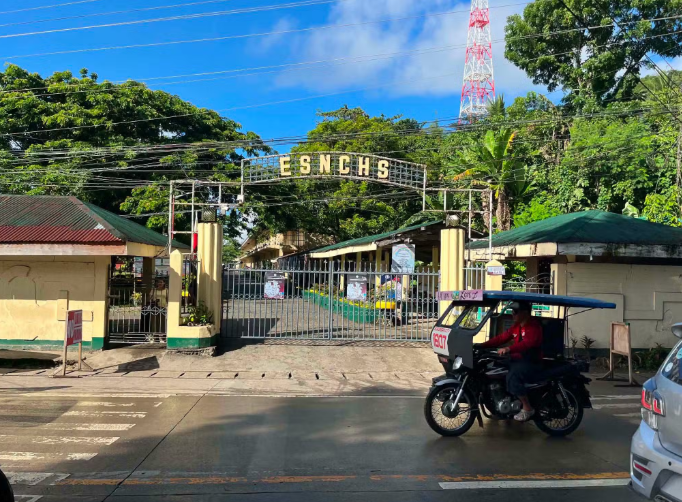
A prominent secondary school in the Philippines locked down on Friday following the circulation of threatening online posts, forcing administrators to cancel classes and deploy armed response teams to sweep the sprawling campus. Eastern Samar National Comprehensive High School (ESNCHS) in Borongan City suspended operations after an internet post allegedly linked to Grade 11 students in the Kitchen Operations programme carried references to explosives and firearms, prompting swift intervention from local law enforcement and the regional Department of Education office.
The closure of one of Eastern Samar's largest educational institutions reflects the heightened vigilance now gripping schools across the Eastern Visayas region following a horrific shooting incident at a Tacloban City campus less than two weeks earlier. That June 22 attack at San Jose National High School left three students dead and twenty injured when a student opened fire on the crowded grounds, an event that has reverberated through provincial education systems and prompted systematic reviews of security infrastructure nationwide. The fresh threat emerged against this backdrop of raw institutional trauma and community anxiety about student safety.
Acting School Head Dean Ernest Paul Hermano issued an official statement indicating that the decision to suspend classes came through collaborative channels involving the school's leadership, the Borongan City Police Station, the regional Schools Division Superintendent's office, and the Assistant Schools Division Superintendent overseeing the Department of Education division. This multi-layered decision-making process underscores how Philippine education authorities now treat online threats as serious institutional risks requiring coordinated responses across administrative hierarchies. The statement emphasised that the precaution was implemented "to ensure the safety and security of students, faculty members, and staff."
Police response was immediate and methodical. A Special Weapons and Tactics (SWAT) team was deployed to inspect the areas where the photographs referenced in the online post had allegedly been taken. The security operation proceeded systematically through the campus, searching facilities and examining potential points of concern. By 8:35 a.m. on Friday, PLTCOL Silver Cabanillas, the acting chief of the Borongan City Police Station, declared the school premises clear of any actual bomb or firearm threat following what officials described as a thorough security sweep.
Despite the all-clear declaration, investigators have not yet identified the person or persons responsible for posting the threatening content. The investigation remains open-ended, with authorities working to establish whether the posts originated from actual students in the Grade 11 cookery programme or whether the threat may have been generated externally but attributed to the school. This investigative uncertainty adds another layer of complexity to how regional authorities manage school security going forward, particularly regarding the attribution and verification of online threats.
The Eastern Samar institution at the centre of the incident holds particular significance within provincial education. ESNCHS functions as both the largest public high school in Eastern Samar and the province's flagship secondary institution, serving thousands of students from Borongan City itself and from adjacent municipalities. The closure therefore affected a substantial portion of the region's student population and demonstrated the cascading effects that security concerns can have on educational access when they reach major institutional anchors.
The timing of this threat reflects a broader pattern of school-related security incidents clustering across Eastern Visayas in the days following the Tacloban shooting. Authorities across the region have responded by implementing tighter security measures at educational facilities, increasing police visibility on campuses, and conducting comprehensive reviews of emergency response protocols. Schools and local government units have begun coordinating more closely with law enforcement to establish rapid-response systems for future incidents or threats.
The school administration's statement indicated full cooperation with investigating authorities and emphasised institutional commitment to maintaining a safe learning environment. The announcement stressed that ESNCHS "takes all security threats seriously" and would work to ensure accountability through the investigative process. This messaging appears designed to reassure both the school community and the broader public that administrators are treating the incident with appropriate gravity while avoiding overreaction that might itself cause social disruption.
Regional law enforcement has appealed to the public to avoid amplifying unverified threat information through online channels and instead report any credible concerns directly to police agencies for proper assessment. This guidance reflects official anxiety about copycat behaviour or the spread of panic that could itself trigger additional school closures and security responses. The cautionary messaging suggests authorities recognise that in an environment of heightened anxiety, unverified social media circulation of threat information can itself become a public safety issue.
For Malaysian observers, the incident illustrates how school security challenges in Southeast Asia increasingly centre on online threats rather than solely on physical security measures. The rapid deployment of SWAT teams and the involvement of education department leadership demonstrates how Philippine institutions are developing multi-agency protocols that blur boundaries between schools, law enforcement, and regional administration. The incident also highlights how a single major violence event can trigger systematic changes in institutional behaviour across an entire region, establishing new security expectations that become embedded in educational practice.

