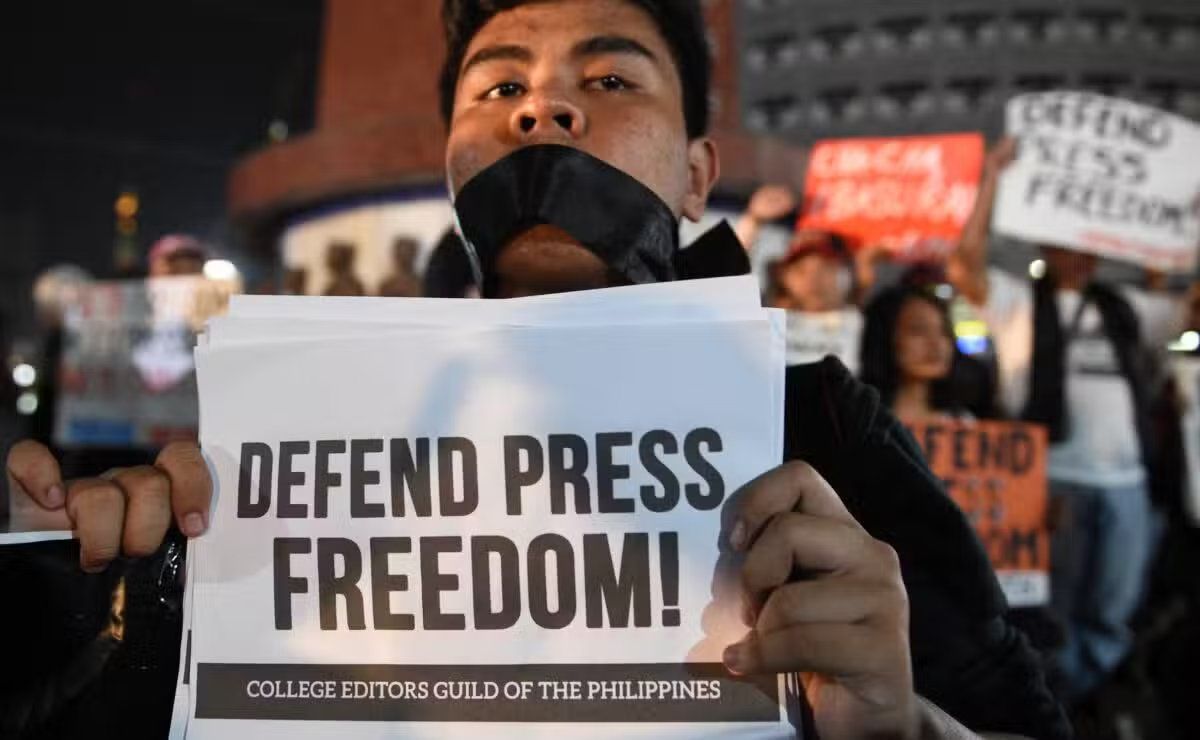
The National Union of Journalists of the Philippines has compiled a troubling catalogue since President Ferdinand Marcos Jr. took office in mid-2022: approximately 260 recorded attacks on media workers across the country. Yet the raw numbers obscure a more revealing reality about who shoulders the greatest danger. The overwhelming majority of these incidents—more than 180 cases—target journalists employed by community radio stations, local newspapers, and independent news outlets operating far from the protective infrastructure of Manila's major newsrooms. This concentration reveals a systematic vulnerability affecting the backbone of Philippine journalism: reporters and editors working with minimal financial cushioning, sparse administrative support, and often without the legal resources that major media organisations can deploy when their staff face threats.
The profile of attacked journalists underscores this disparity sharply. Community and provincial journalists typically earn modest salaries while shouldering risks that rival those faced by their better-compensated counterparts in the capital. Many work at outlets chronically underfunded and understaffed, where a single journalist might juggle reporting, production, and administrative duties simultaneously. These working conditions leave individuals exposed on multiple fronts: they lack the institutional legal teams available to major networks, operate in environments where their personal identities are inseparable from their professional role, and cannot easily relocate if threatened. For these workers, journalism is not primarily a financial pursuit but rather a commitment to their communities—a dedication that paradoxically makes them more vulnerable to those wielding local power.
The case of Jay Lavapiez, station manager at Baskog Radyo in Roxas City, Capiz, exemplifies both the commitment and the peril. In June of this year, Lavapiez survived an assassination attempt when two assailants on a motorcycle opened fire on his vehicle with a 9-millimetre pistol, striking it four times. This violent escalation followed months of legal harassment. He and his spouse, India, both journalists, had filed reports exposing alleged abuse and corruption involving a local official's cemetery operations and related misconduct. Beginning in the preceding year, authorities filed multiple cyberlibel cases against the couple and their staff members across Manila, Muntinlupa, and Capiz—a coordinated legal strategy that transforms journalism into a financial and psychological drain regardless of whether convictions materialise.
Lavapiez's experience reflects a broader intimidation arsenal deployed against provincial journalists. Beyond physical violence, the tactics include frivolous libel and cyberlibel complaints designed to consume resources and discourage reporting, coordinated online harassment campaigns, veiled and explicit threats against journalists and their families, character assassination through smear campaigns, and armed assaults like the one Lavapiez endured. Each mechanism serves the same objective: silencing inconvenient questions about official conduct. What distinguishes provincial attacks from those in larger cities is the inescapability factor. A metropolitan journalist targeted by a politician might have recourse to institutional support networks or the option of reassignment. A provincial journalist lives and works within the same community as those they scrutinise, seeing the same officials at markets and social gatherings, unable to escape the atmosphere of intimidation that envelops their professional lives.
The compensation disparity sharpens this vulnerability further. Provincial and community media workers accept salaries substantially below those in national newsrooms, understanding their work will never generate the revenue streams that advertising-rich publications can sustain. Yet they encounter dangers proportionally equal to or exceeding those faced by better-resourced colleagues. Lavapiez candidly acknowledged that these provincial salaries are not remotely commensurate with the risks journalists face, underscoring a fundamental inequity: those taking the greatest personal danger often possess the fewest institutional or financial protections. This imbalance becomes especially acute when facing legal warfare. A major publication can absorb legal costs and deploy experienced counsel to defend sued journalists; a provincial radio station cannot, forcing individual journalists to shoulder defence expenses from already-thin personal finances.
Recent tragic incidents have reinforced the stakes of community journalism. RJ Ledesma, a community journalist based in Toboso, Negros Occidental, was among 19 people killed during a military operation in April. Ledesma had been conducting community engagement work while reporting on renewable energy initiatives and their impacts on agricultural communities. A fact-finding mission subsequently condemned the operation for serious violations, including alleged indiscriminate firing by military personnel despite reportedly having clear visibility of the scene. Ledesma's death crystallises the ultimate risk that community journalists accept: coverage of issues affecting their local populations can result not merely in career obstacles but in loss of life. His work addressing how large-scale energy projects affect ordinary farmers represented exactly the journalism that smaller outlets perform but which national media organisations often neglect—coverage that requires journalists embedded within rural communities, inherently exposing them to conflicts between development interests and community welfare.
Yet despite these documented dangers, community journalists continue producing the investigative and accountability reporting that provincial and local communities desperately require. This persistence reflects neither ignorance of risks nor acceptance of injustice, but rather recognition that without their work, local power brokers operate entirely unexamined. When national media focuses on national-level scandals and capital-region politics, provincial corruption, misuse of local government funds, environmental degradation, and abuse affecting rural communities proceed without scrutiny. Community journalists fill this gap, knowing that the people they serve have nowhere else to turn for information about the officials controlling their municipalities and the decisions affecting their livelihoods.
Lavapiez articulated this motivation plainly: community journalism fundamentally addresses a question of voice and representation. Someone must ask uncomfortable questions when public money is involved and ordinary citizens feel unheard by their own government. This necessity does not diminish for journalists operating outside wealthy urban centres; if anything, it intensifies. Provincial communities often lack access to sophisticated legal counsel, organised civil society oversight mechanisms, and media literacy ecosystems that urban populations take for granted. In these contexts, a single committed journalist or small newsroom can represent the only institutional check on official abuse. The irony, as Lavapiez noted, is that proximity to community—the very attribute making provincial journalists effective—simultaneously renders them maximally vulnerable. Everyone knows where they work, where they live, who their families are, and what their routines entail. This transparency, essential for trusted community journalism, also creates security liabilities that metropolitan journalists rarely face.
The pattern documented by the National Union of Journalists of the Philippines reveals something beyond a statistics problem. Behind each of the 260 recorded incidents stands a journalist with a newsroom and a community whose access to truth hangs in balance. Over two-thirds of these cases involved workers at institutions with substantially fewer resources than national outlets to respond to attacks, pursue legal defences, or implement protective measures. This distribution is not accidental; it reflects targeting of the journalists least able to resist. Smaller outlets cannot afford the legal teams, security details, or public relations machinery that shield journalists at major publications. Attackers understand this calculus and exploit it accordingly, wagering that provincial journalists, lacking institutional backup and facing legal costs they cannot absorb, will eventually abandon reporting that threatens local power structures.
The implications extend beyond individual journalists to the health of Philippine democracy itself. Press freedom in substantive terms means not merely that journalists in Manila can publish criticism of the national government, but that journalists throughout the country can investigate local officials and institutions without facing assassination attempts, manufactured legal cases, or harassment campaigns. The Philippines' documented crisis in press safety thus represents a profound governance failure affecting rural and provincial regions most acutely. When community journalists cannot work without extraordinary personal risk, accountability for local development spending, environmental management, resource allocation, and official conduct evaporates. Communities become dependent on official information channels and informal rumour rather than verified journalism. This information deficit allows abuses to flourish and prevents citizens from making informed decisions about their representatives and communities.
Moving forward, the concentration of attacks on community and provincial journalists demands targeted protection and support. Major media organisations, civil society groups, and international press freedom advocates have begun recognising that defending Philippine press freedom requires defending community journalists specifically—the most vulnerable segment. This includes legal defence funds capable of assisting provincial journalists facing manufactured libel cases, security training and protocols adapted to provincial contexts where threats differ from capital-region risks, equipment and technology access that enables journalists to report safely, and platforms amplifying provincial journalism so that covering local officials entails greater public attention and scrutiny. Without these interventions, the pattern of selective targeting of resource-poor journalists will continue.
For journalists like Jay Lavapiez, the immediate future holds no certainty. He continues broadcasting from Capiz despite the assassination attempt and ongoing legal cases, embodying the commitment that community journalism demands. His request remains straightforward and fundamental: the freedom to do journalism without threats, harassment, prosecution, or physical harm. This freedom should not be conditional on working for a major metropolitan publication or possessing financial resources for expensive legal counsel. It represents a baseline expectation for any functioning democratic society. That Philippine community journalists must fight for this basic right, often while facing greater dangers than better-resourced colleagues, represents an indictment of the broader environment for press freedom that the country must urgently address.

