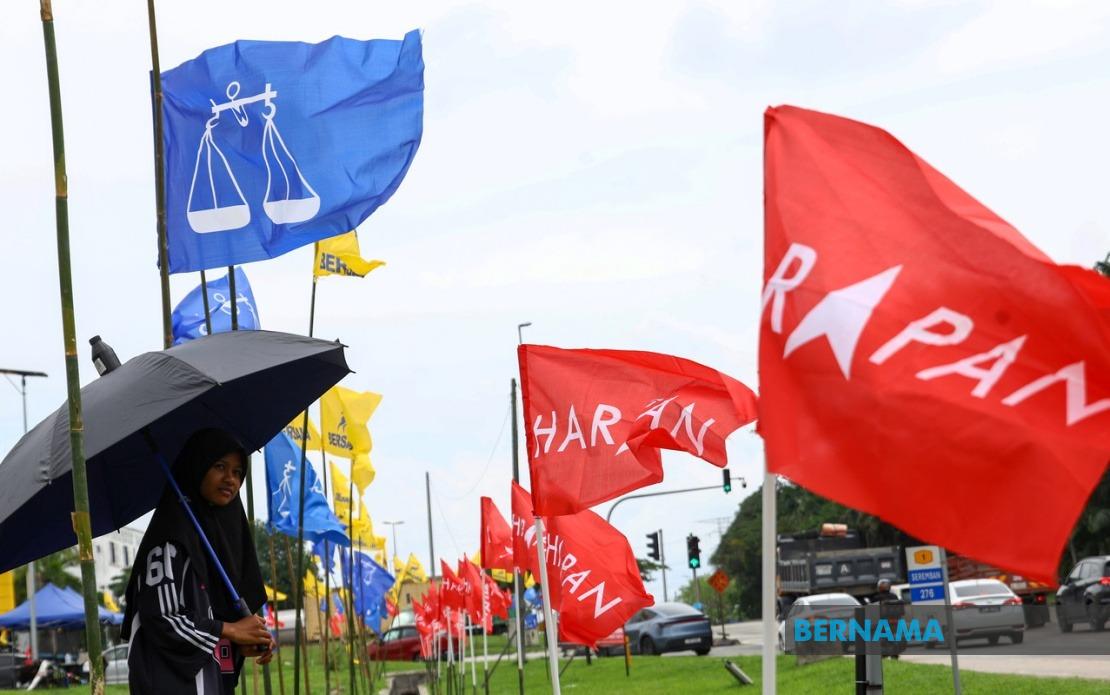
Pakatan Harapan's performance in Johor's upcoming state election holds implications that extend far beyond regional politics, according to DAP secretary-general Anthony Loke, who framed the coalition's electoral prospects through the lens of institutional governance and democratic safeguards. Speaking at a party gathering in Kluang ahead of the July 11 polling day, Loke articulated a vision in which electoral competition serves as a foundational mechanism for preserving the integrity of Malaysia's federal system, where state-level dynamics increasingly influence broader policy outcomes.
The coalition's strategy of contesting all 56 state assembly seats reflects a comprehensive approach to political challenge rather than selective engagement in winnable territories. This blanket candidacy underscores PH's determination to present voters with a complete alternative vision across the state's diverse constituencies, from urban centres to rural areas. The decision carries symbolic weight in signalling the coalition's commitment to Johor specifically, a state historically significant in Malaysian politics and currently under different political stewardship.
Loke's core argument addresses a structural concern that resonates throughout Malaysia's democratic system: the concentration of political power within a single bloc without meaningful opposition creates governance environments where executive authority operates with minimal external constraint. When one coalition commands overwhelming legislative majorities, the mechanisms that typically generate policy refinement—parliamentary debate, committee scrutiny, and alternative policy proposals—become attenuated. This concern transcends partisan rhetoric and touches on fundamental questions about how state governments function when accountability structures weaken.
The composition of PH itself—comprising PKR, DAP, and Amanah—represents a coalition whose internal ideological diversity has historically generated productive tension. Within such arrangements, minority parties retain leverage to shape policy outcomes, creating what political scientists term "coalition discipline." Should PH secure sufficient representation in Johor, this internal dynamic could serve as an additional layer of checks beyond inter-coalition competition, as different partner parties balance competing interests.
The Johor electoral contest unfolds within a wider context of Malaysia's political recalibration following the 2022 general election, which produced a hung parliament and forced unprecedented coalition arrangements at federal level. State elections now carry heightened significance as testing grounds for electoral sentiment and coalition viability. The 172 candidates competing across the 56 Johor seats suggest robust competition, though the effective contest remains concentrated between major blocs.
Loke's participation in the dinner event, alongside DAP deputy national chairman Nga Kor Ming and deputy secretary-general Steven Sim Chee Keong, indicated the party's serious resource deployment in Johor. The presence of senior leadership reinforces messaging discipline and signals to grassroots activists the strategic importance assigned to this particular electoral cycle. For parties increasingly dependent on sophisticated campaign operations and media engagement, such visible leadership presence serves multiple functions simultaneously.
The early voting mechanism scheduled for July 7, preceding general voting by four days, introduces organisational complexity for all parties. Early voting typically facilitates participation among specific demographic groups—armed forces personnel, election officials, and those with documented mobility challenges—creating voting blocs whose preferences parties seek to understand and influence. The compressed campaign timeline between announcement and actual polling concentrates pressure on ground operations and media strategies.
From a Malaysian governance perspective, Johor's political direction matters because the state houses significant industrial capacity, major port infrastructure, and substantial population centres. State-level policy affecting business licensing, land development, and environmental regulation directly impacts the peninsula's economic performance. When governance arrangements become unstable due to fragmented legislatures or shifting coalitions, administrative continuity suffers, potentially deterring long-term investment.
The broader implication of Loke's framing—emphasising checks and balances as preferable to dominant-party governance—reflects international democratic theory yet remains contested in Malaysian political practice. Critics of opposition-led governance occasionally argue that divided legislatures create gridlock and inefficiency. However, proponents of competitive systems counter that such friction, while sometimes frustrating, generates policy legitimacy through broader consensus-building and reduces the risk of majoritarian abuse.
For Malaysian readers observing state-level politics, the Johor election illustrates how electoral outcomes ramify through institutional structures and governance quality. A state dominated by single-coalition super-majorities may deliver rapid policy implementation but potentially sacrifice deliberative processes and minority protection. Conversely, closely divided legislatures generate negotiation requirements that slow decision-making but embed multiple veto points. The optimal balance remains contested, but Loke's advocacy for competitive plurality positions checks and balances as the underlying value worth prioritising.
The regional dimension merits consideration as well. Southeast Asian democracies display considerable variation in how they balance executive efficiency against legislative constraint. Malaysia's constitutional federalism grants states meaningful autonomy in numerous policy domains, making state-level governance quality consequential for citizens' daily lives. Johor's electoral outcome thus contributes to the broader regional conversation about democratic resilience and institutional function.

