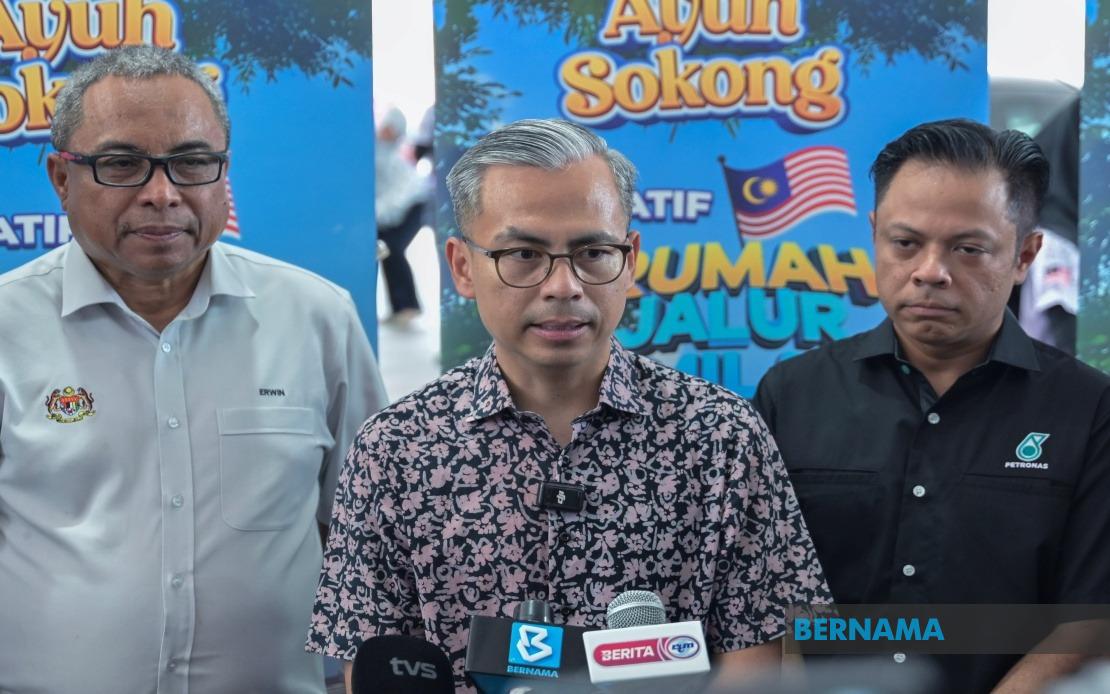
Pakatan Harapan has signalled receptiveness to negotiations with Barisan Nasional over seat allocation for the forthcoming Melaka state election, marking a notable shift in coalition dynamics at the state level. Communications Minister Datuk Seri Fahmi Fadzil characterised BN's willingness to discuss the matter as a constructive opening that warrants serious consideration, emphasising that such flexibility could yield benefits for Melaka's political trajectory and national stability. The development reflects broader efforts to establish frameworks for coalition cooperation that extend beyond winner-take-all electoral contests.
The mathematical realities underpinning these discussions are stark. BN currently controls 21 of Melaka's state assembly seats, while PH holds just five, creating an asymmetry that shapes negotiation parameters. Fahmi acknowledged this disparity when addressing reporters, framing any seat-sharing arrangement as a pragmatic acknowledgement of the existing electoral landscape rather than an ideological compromise. This candour suggests PH understands that meaningful gains in Melaka would require strategic cooperation rather than unilateral challenge, a recognition that shapes its approach to coalition discussions.
The overture from BN chairman Datuk Seri Dr Ahmad Zahid Hamidi adds institutional weight to these preliminary discussions. Ahmad Zahid explicitly stated that BN remains amenable to negotiations encompassing seat distribution, and potentially even seat exchanges, provided such arrangements respect the principle that parties retain seats they have legitimately won and that any transfers occur transparently. This stipulation—that no party simply relinquish earned electoral positions to coalition partners without mutual agreement—establishes a critical boundary that guards against perceptions of backroom deals or imposed arrangements that could undermine party autonomy.
The involvement of Keadilan's Melaka leadership demonstrates that these conversations extend beyond top-level political signalling to active ground-level engagement. Yang Berhormat Adam Adli, the Keadilan chairman for the state, has already initiated direct dialogue with Melaka Chief Minister Datuk Seri Ab Rauf Yusof, indicating that negotiations have moved beyond preliminary probing into substantive discussion. This multilayered engagement structure suggests both coalitions view the matter with sufficient importance to activate party machinery across hierarchical levels.
For Malaysian readers observing state-level politics, these discussions carry implications extending beyond Melaka itself. The willingness of two major coalitions to explore seat-sharing arrangements rather than contest every position represents a moderation in electoral competition that could reshape state politics across Malaysia. Such cooperation models, if successfully implemented in Melaka, provide templates that might influence future state elections elsewhere, potentially reducing the winnowing effect of bipolar contest dynamics that currently dominate Malaysia's electoral environment.
Fahmi's articulation that seat-distribution matters admit of resolution at both state and federal administrative levels suggests the framework for negotiations remains flexible and multidimensional. Rather than treating seat allocation as an isolated decision, this approach permits coordination across governance tiers, allowing federal-level considerations to inform state-level seat arrangements. Such cross-level negotiation introduces complexity but also flexibility, enabling solutions that might address concerns spanning multiple jurisdictions.
The emphasis on honesty and sincerity in these discussions, as Ahmad Zahid stipulated, acquires particular weight given Malaysia's history of coalition instability and defection. Explicit commitment to transparent principles may serve partly as assurance against the perception that either coalition is manoeuvring toward unilateral advantage through duplicitous arrangement. Such assurances become necessary precisely because previous coalition configurations have fractured amid accusations of bad faith, creating scepticism about the durability of any arrangement not undergirded by clear ethical commitments.
For political observers tracking PH's strategic evolution, the receptiveness to BN's overture demonstrates pragmatic adjustment to electoral realities at state level. Rather than attempting to overturn BN's substantial majority through direct electoral challenge, PH pursues incremental gains through negotiated cooperation. This approach acknowledges both the difficulty of displacing entrenched incumbency and the potential value of stability over constant contestation, even if such stability requires some ideological accommodation.
The timing of these discussions, emerging during the August 2024 period, positions them ahead of formal election announcements or campaigning cycles, suggesting both coalitions prioritise early clarification of negotiating positions. This forward planning permits proper deliberation and reduces the rushed desperation that often accompanies eleventh-hour coalition arrangements concluded amid electoral urgency. The more measured tempo creates space for genuine negotiation rather than simple capitulation by weaker parties to stronger demands.
Melaka's particular political significance within Malaysia's federation adds weight to these discussions beyond its immediate state concerns. As a historically pivotal state with accumulated experience of coalition governance, arrangements negotiated there could acquire precedential status influencing how other states approach coalition dynamics. The success or failure of BN-PH cooperation in Melaka thus possesses reverberations extending throughout Malaysia's broader political architecture, making these seat-distribution negotiations investments in templates for future collaboration or cautionary tales depending on implementation outcomes.

