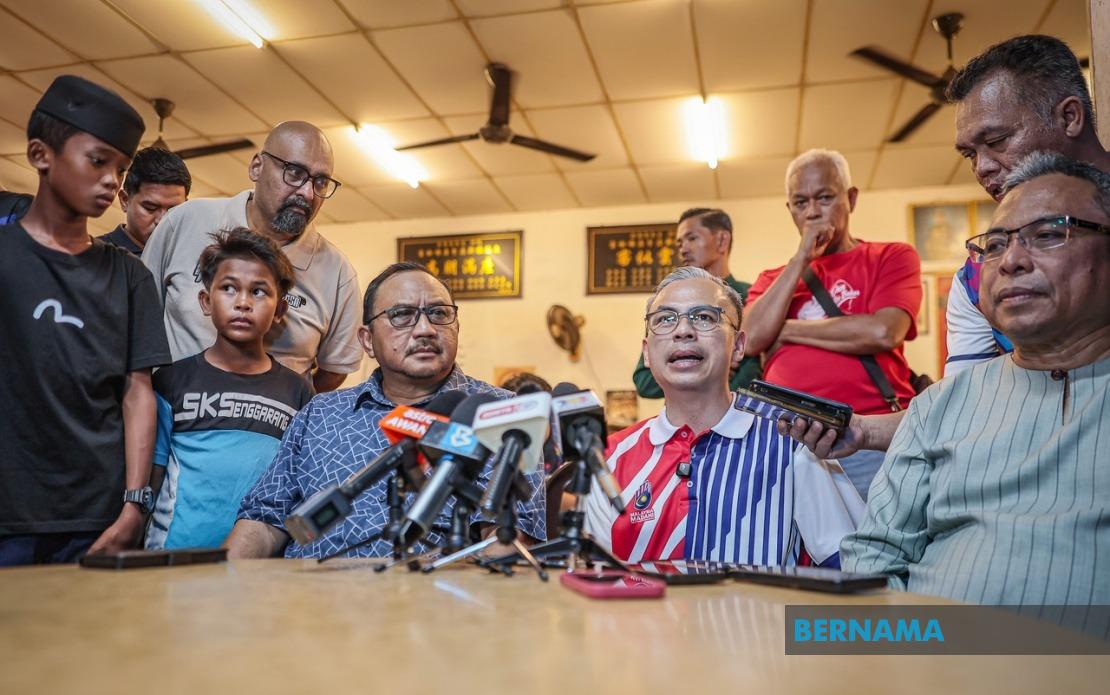
Pakatan Harapan is preparing a dual-pronged campaign strategy for the upcoming 16th Johor State Election, fusing traditional community mobilisation with modern digital communication channels to penetrate all layers of the voting population. PH Communications director Datuk Fahmi Fadzil outlined the approach in Batu Pahat on June 26, just as the official campaign was set to launch the following morning, signalling the coalition's intention to saturate the electoral landscape through multiple touchpoints simultaneously.
The strategic pivot reflects a broader recognition within the coalition that contemporary elections demand presence across both physical and virtual domains. Fahmi stressed that combining ground-level engagement with social media amplification is essential to ensure PH's political messaging and policy platforms penetrate effectively across diverse demographic segments. This dual approach acknowledges the reality that Malaysian voters—particularly in a state as economically and demographically varied as Johor—consume information through fragmented channels, making any reliance on a single communication method strategically insufficient.
PKR, the coalition's largest participating party, is fielding candidates in twenty constituencies and announced immediate campaign launches following the conclusion of nomination proceedings on June 27. To operationalise rapid information dissemination, PH established a dedicated media group tasked with quickly circulating content about its candidates to supporters and the broader public. High-profile party figures including Fahmi himself and PKR deputy president Nurul Izzah Anwar committed to visible campaign presences, with specific assignments to nomination centres such as Semerah and Senggarang, ensuring symbolic leadership visibility at crucial campaign junctures.
A cornerstone of PH's messaging framework is an explicit commitment to fact-based communication, positioning the coalition as a bulwark against the misinformation that increasingly characterises electoral discourse in Malaysia. This rhetorical positioning becomes particularly significant given the proliferation of unverified claims and digital manipulation throughout previous election cycles. By foregrounding accuracy and factuality, PH attempts to build a credibility advantage during a campaign period when voters' trust in political narratives tends to erode under the weight of competing claims.
The coalition is leveraging Johor's recent infrastructure achievements and economic initiatives as tangible evidence of its developmental competence. Fahmi highlighted the Rapid Transit System Link project and the Johor-Singapore Special Economic Zone as demonstrations of federal-state cooperation yielding high-impact outcomes. These projects carry practical significance beyond campaign rhetoric—the RTS Link addresses chronic congestion in the southern corridor, while the special economic zone signals positioning Johor as a critical growth node within Malaysia's broader economic architecture. Such developments, PH argues, translate directly into job creation, improved productivity, and reduced spatial inequality between urban and peripheral districts.
The coalition's governance experience in Selangor, Negeri Sembilan, and Penang features prominently in its credibility narrative. Rather than presenting abstract ideological commitments, PH positions these three states as living laboratories where its policy agenda has supposedly materialised into deliverable outcomes. This localisation of national governance experiences creates psychological proximity—Johor voters can theoretically inspect PH's administrative record in neighbouring or near-neighbouring states, making governance capacity claims empirically testable rather than merely rhetorical.
Candidate selection reflects strategic calculations about electoral geography and demographic resonance. The nomination of figures such as Dr Maszlee Malik in Puteri Wangsa and Onn Abu Bakar in Senggarang signals deliberate choices to field candidates with perceived cross-demographic appeal or specialist expertise. These placements suggest PH anticipates certain constituencies require candidates with particular demographic profiles or technical credentials to overcome incumbent advantages or voter scepticism.
PH leadership confirmed that a comprehensive state-specific manifesto would eventually materialise, though the timing remained unspecified. This phased rollout approach—launching campaigns before releasing detailed policy documents—prioritises momentum-building and broad messaging over detailed programmatic specificity. Such sequencing reflects campaign calculus that early campaign phases benefit from emotional engagement and institutional visibility rather than policy granularity, with detailed manifestos reserved for later campaign phases when voter attention sharpens.
The institutional ecosystem surrounding the election has mobilised to counter information disorder. The Malaysian Communications and Multimedia Commission has established a special task force incorporating the Election Commission, the Royal Malaysia Police, and the Malaysian Media Council to monitor and suppress misinformation spread. This multi-institutional coordination signals official recognition that electoral integrity increasingly depends on managing the information environment alongside traditional election administration functions.
For Malaysian political observers, the Johor election carries significance beyond the state level. Johor represents the southern peninsula's most economically consequential state, and electoral performance there sends powerful signals to federal decision-makers about coalition viability and voter sentiment. The state's large Chinese and Indian populations, alongside its indigenous Bumiputera majority, creates a genuinely multicommunal electoral terrain that tests whether PH's multiracial positioning translates into sustained cross-community support. Campaign outcomes here will likely influence calculations about national electoral timing and coalition configuration, making Johor's June-July contest far more than a routine state election.
The emphasis on grassroots outreach alongside digital presence also reflects tactical lessons absorbed from previous electoral experiences. Traditional door-to-door canvassing and community engagement build personal relationships and trust networks that algorithmic social media feeds cannot replicate, yet digital platforms enable cost-efficient message reach that ground operations cannot match. By consciously integrating these approaches rather than treating them as alternatives, PH seeks to maximise both grassroots relationship-building and metropolitan reach, a sophisticated recognition that contemporary electoral competition demands simultaneous mastery of pre-digital and digital communication ecosystems.

