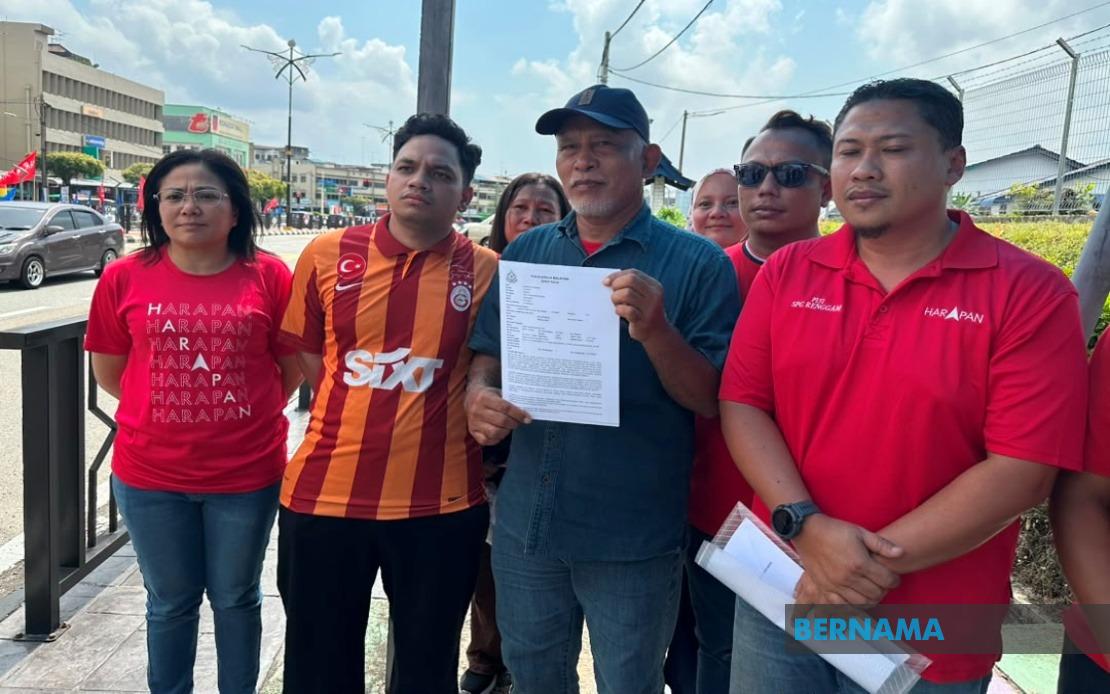
The Pakatan Harapan campaign apparatus in Johor has escalated allegations of electoral impropriety by lodging a formal police complaint against Menteri Besar Datuk Onn Hafiz Ghazi, centering on the alleged politicization of vocational training students during the ongoing state election campaign. The complaint, filed through Khiru Nasir Rohani—the PH representative for the Machap seat—targets what is characterized as a systematic effort to mobilize Technical and Vocational Education and Training (TVET) students for campaign events benefiting Barisan Nasional candidates, raising fresh questions about the boundaries between state resources and electoral activity in Malaysian politics.
Khiru Nasir's account suggests a coordinated mobilization strategy involving students from various TVET institutions in the state, with these young people allegedly directed to attend politically oriented programmes designed explicitly to build electoral momentum for BN hopefuls. Such allegations strike at the heart of electoral fairness concerns, as TVET students represent a concentrated demographic that could theoretically be influenced through their educational institutions—environments where power dynamics between administrators and pupils create potential for subtle coercion or pressure to participate in political activities.
The complaint references specific legal violations under the Election Offences Act 1954, particularly provisions addressing undue influence and the improper exploitation of official positions or public institutions for partisan campaigning. These statutes have long been considered essential safeguards against the kind of institutional capture that can undermine genuinely competitive elections. The framing of the complaint suggests PH believes the alleged conduct represents not merely poor judgment but a systematic breach of electoral law designed to leverage state machinery and educational authority for partisan advantage.
A particularly concrete allegation centres on a programme conducted in Kluang on July 4, which was reportedly presented as a routine educational event but functioned primarily as a platform for open campaigning on behalf of state election candidates. This blurring of educational and campaign purposes exemplifies the type of activity that poses challenges for election monitors, as the distinction between legitimate institutional functions and improper political use can become deliberately obscured through administrative framing.
Khiru Nasir, serving as deputy division chief for the Simpang Renggam branch of Amanah—a component party within the PH coalition—has explicitly called upon multiple enforcement agencies to undertake thorough investigations. His appeal specifically invokes the Malaysian Anti-Corruption Commission (MACC) and the Election Commission (EC) alongside the police, suggesting an understanding that potential violations might span corruption concerns as well as electoral offences. This multi-agency approach reflects an escalating strategy to maximize pressure for investigation and to establish record of the complaint across institutional channels.
The complaint arrives at a politically charged moment in Johor state politics. With 172 candidates contesting 56 state seats and polling scheduled for the Saturday immediately following these allegations, the timing presents challenges for election authorities to conduct meaningful investigation while maintaining public confidence in process neutrality. The proximity of voting to the complaint filing creates an inherent tension between thorough investigation and the practical realities of campaign schedules.
For Malaysian voters and observers of democratic practice, such allegations highlight persistent vulnerabilities in the separation between state institutions and electoral competition. Vocational institutions, which serve economically significant populations often first-time voters, can represent particularly susceptible constituencies when institutional resources are mobilized for campaign purposes. The involvement of TVET students—many from lower-income backgrounds pursuing practical career pathways—adds a dimension of concern about whether educational access might become entangled with political expectations.
The complaint also reflects broader patterns within Malaysian electoral competition where opposition coalitions increasingly employ formal complaint mechanisms as tactical responses to perceived government advantages. Whether through police reports, MACC references, or EC notifications, such filings serve both to document alleged violations and to generate media attention that influences voter perception. The strategic utility of public complaints means that while some allegations represent genuine concerns about electoral integrity, others may reflect escalating political point-scoring rather than core democratic principles.
Forward momentum on the complaint will depend substantially on EC investigative capacity and political will. Malaysia's electoral authorities have demonstrated variable responsiveness to campaign-period allegations, with investigations sometimes proceeding swiftly when violations appear clear-cut but stalling when allegations require complex institutional fact-finding. The multi-agency coordination requested—involving police, MACC, and EC simultaneously—could either strengthen investigative reach or diffuse accountability through bureaucratic duplication.
The allegations carry implications extending beyond immediate Johor electoral dynamics. If substantiated, they would confirm concerns about institutional capture in Malaysian electoral contexts that academics and election monitors have documented across multiple state and federal cycles. Conversely, if investigation reveals the complaints represent exaggerated opposition framing of routine institutional activities, the episode would illustrate how electoral allegations can become weaponized through formal complaint channels. Either outcome carries lessons about the ongoing challenge of maintaining democratic standards in Malaysia's competitive multi-party environment.

