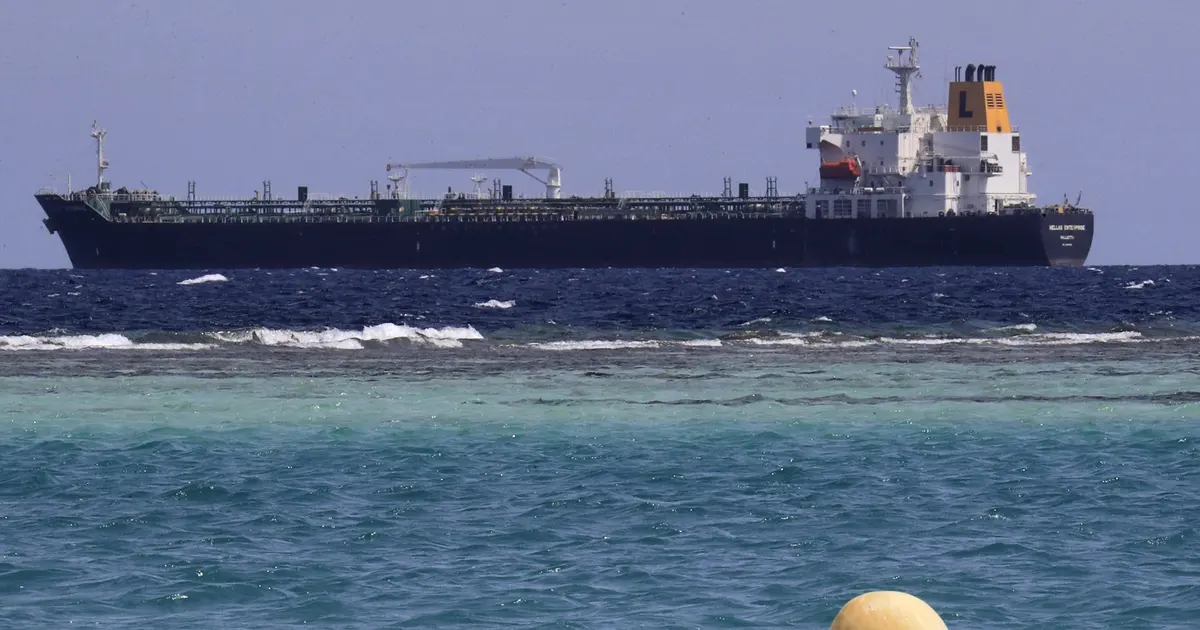
A Petronas-operated vessel has obtained approval to traverse the Red Sea—a strategically critical but increasingly volatile maritime corridor—and is scheduled to dock in Melaka in the coming weeks. The clearance represents a notable development for Malaysia's national oil and gas corporation, which has faced mounting pressures from regional instability that has disrupted shipping routes throughout the Indian Ocean and beyond. Prime Minister Anwar Ibrahim characterised the outcome as evidence of Malaysia's commitment to maintaining a measured and principled approach to international relations, particularly as geopolitical tensions continue to reshape global trade patterns.
The Red Sea has emerged as one of the world's most critical chokepoints for maritime commerce, with roughly 12% of global shipping passing through the waterway en route to the Suez Canal and beyond. In recent months, however, the strategic waterway has become increasingly perilous due to escalating regional conflicts and hostile maritime activities. Multiple shipping companies have rerouted vessels around the Cape of Good Hope, a detour that adds considerable time and expense to voyages originating from or destined for Asia. The approval granted to the Petronas vessel therefore carries practical significance beyond the single transit, signalling that international shipping through the corridor—whilst risky—remains operationally feasible under certain conditions.
For Malaysia, energy security and maritime commerce are inextricably linked to national prosperity. Petronas operates sophisticated offshore infrastructure throughout the region and maintains intricate supply chains dependent upon reliable sea routes. Any sustained disruption to the Red Sea corridor would impose material costs on Malaysia's energy sector and broader export economy. The vessel's clearance suggests that despite heightened international scrutiny and the complex security environment, legitimate commercial operations can continue with appropriate precautions and diplomatic coordination. This outcome reflects the delicate balance that regional powers must strike between maintaining economic activity and ensuring the safety of personnel and assets.
Prime Minister Anwar's characterisation of the development as vindication of Malaysia's foreign policy reveals the depth of strategic calculation underlying Malaysia's international posture. Malaysia has consistently advocated for multilateral dialogue, respect for international law, and the primacy of economic cooperation over zero-sum geopolitical competition. This principled stance has enabled Malaysian entities to maintain operational presence across regions experiencing significant political fragmentation. Unlike nations pursuing more assertive or ideologically aligned foreign policies, Malaysia has preserved space for pragmatic engagement with multiple stakeholders, facilitating business continuity even amid broader regional instability.
The journey to Melaka carries symbolic weight beyond the immediate commercial transaction. Melaka's position as a major petrochemical hub and historical maritime trading centre underscores Malaysia's enduring role in regional commerce. The port city has long served as a gateway for energy resources destined for domestic refining and international export. A successful transit and arrival would reinforce Malaysia's credentials as a reliable hub for energy trade and demonstrate that the nation's infrastructure and diplomatic relationships remain robust enough to support complex supply chain operations.
The approval process itself likely involved extensive coordination among Malaysian maritime authorities, international security agencies, and potentially regional naval forces monitoring the Red Sea. Such clearances require comprehensive risk assessments, security protocols, and insurance arrangements that reflect the underlying dangers of the passage. The fact that a Petronas vessel obtained clearance indicates that risk management protocols have evolved sufficiently to permit major commercial shipping whilst acknowledging genuine security threats. This represents a pragmatic rather than complacent approach to maritime security.
Malaysia's experience navigating this situation offers valuable lessons for other Southeast Asian economies dependent upon global shipping networks. The region's prosperity fundamentally depends upon freedom of navigation and the stability of international sea routes. Any prolonged disruption to critical corridors such as the Red Sea would reverberate throughout Southeast Asia's export-oriented economy and supply chain networks. Malaysia's ability to continue operating through contested waters, whilst maintaining diplomatic neutrality, demonstrates how careful statecraft can preserve economic interests during periods of international tension.
The scheduled arrival in Melaka next month will likely receive considerable attention from maritime analysts, shipping companies, and policymakers monitoring the feasibility of conventional Red Sea transits. Successful completion would suggest that the corridor, whilst hazardous, has not become completely impassable for well-prepared commercial operators. This information carries direct relevance for Malaysian companies operating across multiple maritime zones and for the broader shipping industry assessing route viability and insurance costs. Market participants have responded to Red Sea disruptions with significant premium increases and route adjustments; evidence of sustainable transit options would facilitate recalibration of commercial strategies.
Anwar's emphasis on Malaysia's prudent foreign policy reflects a deeper conviction that small and medium-sized nations navigate complex geopolitical environments most effectively through principled consistency and pragmatic flexibility. Malaysia has historically avoided excessive alignment with major power blocs, instead cultivating relationships across ideological and strategic divides. This posture generates diplomatic capital that proves invaluable when Malaysian interests require passage through contested territories or negotiation of complex cross-border arrangements. The Petronas vessel's clearance exemplifies how such patient diplomacy translates into tangible commercial benefits.
Looking forward, the successful navigation of this voyage will provide Malaysia with operational data and diplomatic precedent valuable for future maritime operations through similarly contested regions. As global supply chains fragment and geopolitical competition intensifies, Malaysia's proven ability to maintain commercial connectivity whilst respecting all parties' legitimate interests becomes an increasingly valuable strategic asset. The coming weeks will reveal whether this particular transit succeeds without incident—a development that would reinforce Malaysia's international standing and confirm the viability of its balanced diplomatic approach.

