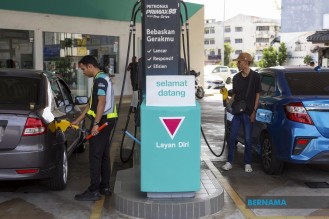
Malaysia's fuel supply situation has been secured through at least August, with government officials moving to reassure the public and business community that petrol stations operated by Petronas will maintain adequate stocks during what remains an uncertain period for global energy markets. Datuk Seri Azalina Othman Said, Minister in the Prime Minister's Department (Law and Institutional Reform), provided this update following discussions at the National Economic Action Council's weekly meeting, citing direct confirmation from Petronas itself that inventory levels would remain sufficient during this critical timeframe.
The significance of Petronas' supply guarantee extends far beyond individual motorists filling their tanks. The company's extensive network of petrol stations represents approximately half of Malaysia's entire domestic fuel requirements, establishing it as the single largest supplier in the country's energy retail ecosystem. This dominance means that stability within Petronas operations directly translates to stability across Malaysia's broader transportation and logistics sectors, which depend on predictable fuel availability and pricing. The assurance from Petronas, delivered through publicly listed subsidiary Petronas Dagangan Bhd, therefore carries substantial weight in maintaining economic confidence during an otherwise volatile period for energy markets globally.
The government's response to potential fuel supply challenges reflects growing recognition that Malaysia faces genuine risks stemming from geopolitical tensions in West Asia. Rather than dismissing these concerns, policymakers have established a dedicated Crisis Management Task Force operating under the National Economic Action Council's oversight. This institutional response demonstrates a more proactive approach to energy security, moving beyond reactive measures to address supply disruptions as they arise. The task force's mandate encompasses continuous monitoring of fuel, petroleum, and energy supplies, with explicit responsibility for ensuring supply security through the coming months while simultaneously managing price stability and combating smuggling activities that could distort market conditions.
Beyond immediate monitoring functions, the government has undertaken strategic initiatives to diversify Malaysia's crude oil sourcing arrangements. Current efforts focus on securing supplies from producers outside the Middle East, particularly targeting West African nations and countries across the Americas. This geographic diversification strategy reduces Malaysia's vulnerability to supply shocks concentrated in any single region, though success depends on matching crude oil grades to existing refinery specifications and negotiating commercially acceptable terms. The shift toward alternative suppliers represents a meaningful departure from historical purchasing patterns and reflects the magnitude of concerns regarding sustained disruptions from West Asian conflicts.
The original question posed by Member of Parliament Khairil Nizam Khirudin from Jerantut had expressed concern about Petronas' earlier statement suggesting supply guarantees only through June 2026. This apparent contradiction between different official statements created market anxiety and prompted clarification. The minister's response extends that horizon, pushing confidence beyond midsummer into August and providing a three-month buffer that businesses and consumers can factor into planning. However, the extension from June to August, while reassuring in the short term, also acknowledges that conditions beyond August remain uncertain and will require reassessment as that period approaches.
For Malaysian consumers and businesses, the fuel supply assurance carries immediate practical implications. Transportation costs represent a fundamental component of logistics expenses across the manufacturing, agriculture, and services sectors. Uncertainty regarding fuel availability drives up operational costs as businesses maintain larger reserves or negotiate premium pricing for guaranteed supplies. The government's statement, by reducing this uncertainty, should theoretically moderate some inflationary pressures that stem from energy supply anxiety rather than fundamental supply constraints. Small and medium enterprises, which often operate with limited cash reserves, benefit most from this kind of predictability.
The role of the Crisis Management Task Force extends importantly into price control and smuggling prevention functions. Southeast Asia has faced persistent problems with fuel smuggling, particularly in maritime regions where enforcement proves challenging. Disruptions to legitimate supply channels incentivize smuggling networks, which operate outside government oversight and tax collection systems while potentially offering undercut prices that distort legitimate market competition. By maintaining stable supplies through official channels, the task force reduces incentives for illegal trade while strengthening Malaysia's tax revenue from fuel sales. The dual focus on supply adequacy and smuggling control recognizes that securing fuel physically is insufficient without securing the legitimate distribution channels through which that fuel reaches consumers.
Regional energy security concerns extend beyond Malaysia's borders, affecting broader Southeast Asian stability and trade patterns. Several Association of Southeast Asian Nations members rely heavily on fuel imports or face similar sourcing challenges. Malaysia's success in securing supplies and managing prices influences regional confidence and provides a template for coordinated energy security approaches. If Malaysia experiences serious supply disruptions, the economic impacts ripple through regional supply chains, affecting manufacturing partners in Thailand, Vietnam, and Indonesia. Conversely, Malaysia's stability contributes to broader regional resilience in facing global energy market pressures.
Looking forward, the three-month supply guarantee window through August provides a planning horizon for more structural solutions. This includes potential acceleration of renewable energy integration, which would reduce reliance on fossil fuel imports and insulate Malaysia from crude oil supply shocks. It also allows time for longer-term contracts with alternative suppliers to be finalized and for infrastructure to be adapted if necessary to accommodate different crude oil characteristics from new sources. The government's establishment of formal crisis management structures suggests that this situation is being treated as more than a temporary disruption, with implications for Malaysia's energy policy and security planning extending well beyond the immediate supply guarantee period.

