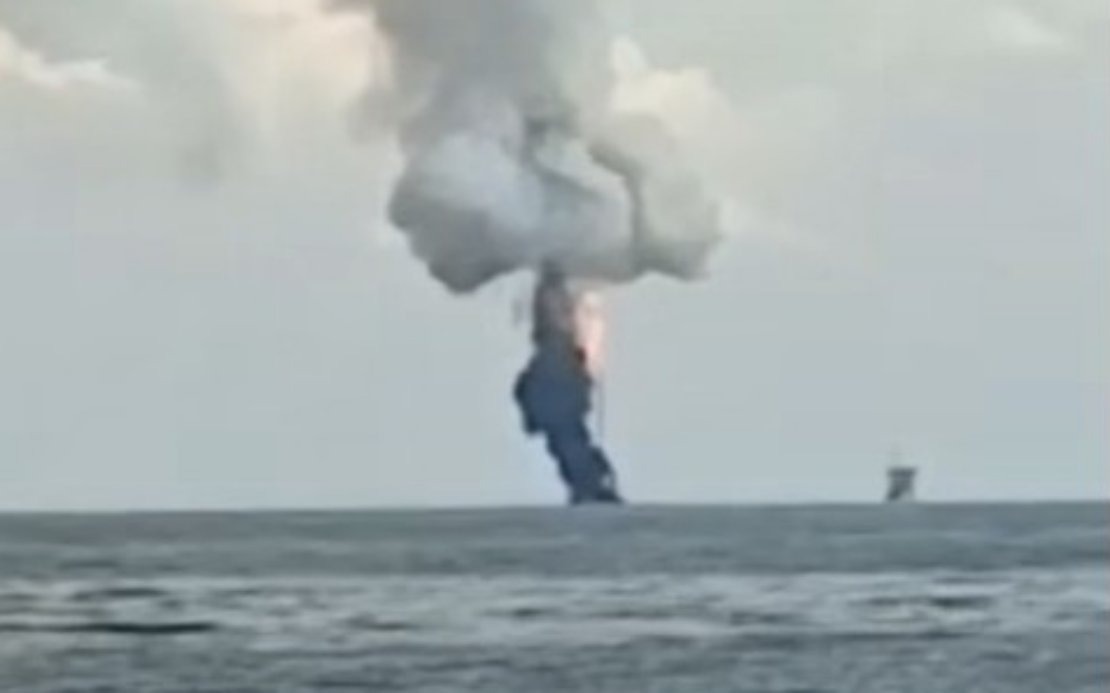
Petronas Carigali's subsidiary company Vestigo Petroleum Sdn. Bhd. has formally acknowledged a fire incident at its West Lutong Vent A (WLV-A) production facility located in Sarawak's offshore waters, which broke out at approximately 2 pm on June 28. The company issued a statement confirming that emergency response measures swiftly contained the blaze, and investigations into the underlying cause are now underway.
The incident, which was captured in video footage that subsequently circulated across social media platforms, prompted immediate official disclosure once the situation had been stabilised. Vestigo's rapid confirmation and transparent communication reflect industry protocols designed to manage public perception and regulatory compliance following operational emergencies in the energy sector. The company stressed that no personnel sustained injuries and that all staff members evacuated safely from the affected installation.
Vestigo emphasised its engagement with government agencies and relevant maritime authorities to ensure comprehensive oversight of the incident response. The operator implemented comprehensive risk mitigation strategies to prevent exposure among workforce members and to contain any potential environmental contamination. This coordinated approach with regulators is standard practice for offshore petroleum operations in Malaysian waters, where Petronas maintains stringent safety and environmental oversight through its regulatory framework.
The company's statement underscored that the incident posed no direct hazard to surrounding communities or the marine environment. Such assurances are crucial for offshore operators, as public confidence in safety standards directly influences operational licensing and broader industry reputation within the region. West Lutong is an established producing field, and maintaining environmental integrity is essential for long-term licence retention and regulatory standing.
Vestigo reiterated its unwavering commitment to personnel safety, environmental protection, and operational stability as core corporate values. These commitments align with Petronas' broader safety-first mandate across its subsidiary operations throughout Southeast Asia. The West Lutong facility contributes to Malaysia's domestic energy supply and export revenues, making incident management critical to sustained hydrocarbon production and economic contribution.
The social media circulation of the fire footage underscores contemporary challenges in crisis communications for oil and gas operators. Uncontrolled narrative development across digital platforms can amplify public concern faster than official channels can provide context, necessitating rapid and credible official responses. Vestigo's swift statement appears designed to address emerging public concern whilst investigations continue into root causes and contributing factors.
Offshore Sarawak remains strategically significant for Malaysian petroleum production. The region hosts multiple producing fields operated by various international and national companies, contributing substantially to government revenue and employment. Any operational disruption receives close attention from federal regulators and state authorities, given the economic stakes involved and the region's reliance on energy sector activity.
Investigations into the fire's origin will likely examine equipment failure, maintenance protocols, operational procedures, and external factors. Regulatory authorities will scrutinise whether safety systems functioned as designed and whether pre-incident protocols were followed. The findings will inform any operational adjustments required before resumption of full production capacity at the affected facility.
The incident reflects the inherent operational risks characterising deepwater and offshore petroleum extraction, even when modern safety systems and trained personnel are deployed. While fires at offshore facilities remain statistically uncommon given contemporary engineering standards, their potential impact on personnel, environment, and production capacity necessitates robust emergency response capabilities. This incident demonstrates that such capabilities functioned effectively, with rapid containment preventing escalation.
The broader context for Malaysian offshore operations involves increasing scrutiny from environmental advocates and community stakeholders regarding climate impacts and pollution risks. Incidents like this, even when promptly contained and resulting in no injuries, contribute to wider debates about energy transition and the sustainability of continued petroleum development. Operators must balance production imperatives with mounting expectations for enhanced environmental stewardship.
Vestigo's transparency in acknowledging the incident and committing to thorough investigation aligns with international best practices and Petronas' corporate governance standards. The subsidiary's emphasis on inter-agency coordination reflects understanding that regulatory relationships require demonstrated commitment to safety and environmental standards. Successful incident management, from both operational and communications perspectives, preserves stakeholder confidence essential for continued operations in Malaysia's competitive energy sector.

