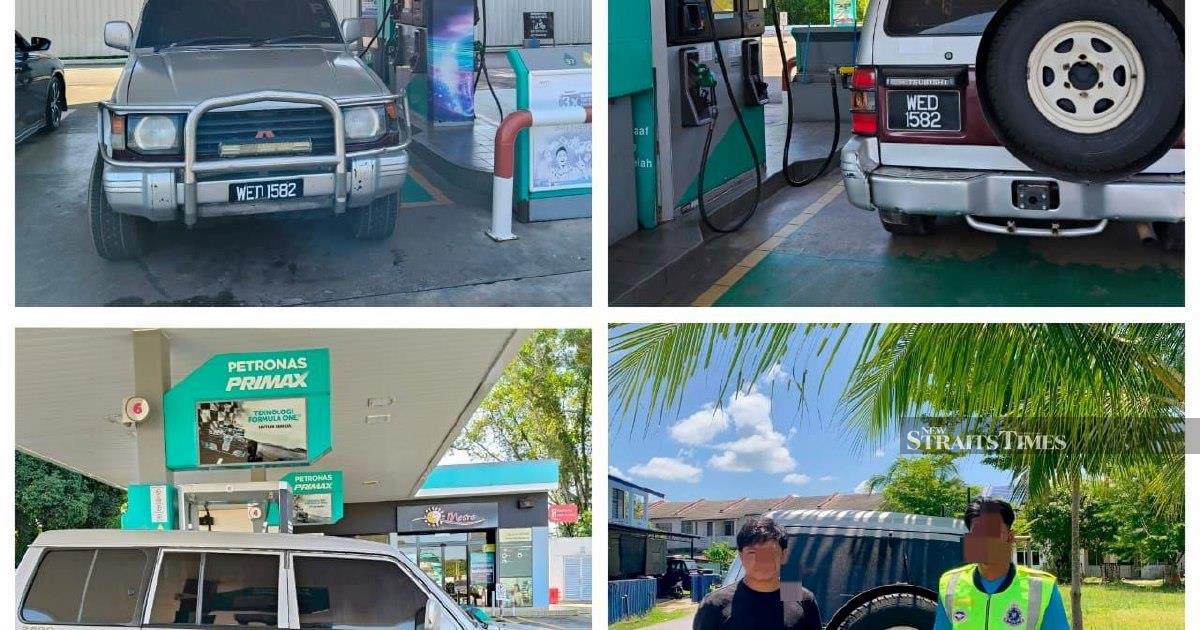
Enforcement officers have arrested a 36-year-old man at a petrol station in Rantau Panjang on suspicion of conducting repeated fuel purchases intended for illegal smuggling operations into Thailand. The detention occurred following what authorities describe as suspicious purchasing patterns at the service station, where the suspect allegedly made multiple transactions in a short timeframe.
Rantau Panjang, situated in Kelantan along the Malaysia-Thailand border, has long served as a critical transit point for cross-border commerce and, increasingly, for illicit trade. The strategic location makes it a natural hub for fuel smuggling, given the significant price differential between Malaysian petrol and Thai petrol prices. This disparity has historically driven underground economies on both sides of the frontier, creating ongoing enforcement challenges for Malaysian customs and excise authorities.
The arrest highlights intensifying concerns about fuel contraband operations that drain government revenue and undermine legitimate commerce along Malaysia's northern frontier. Fuel smuggling represents a persistent headache for enforcement agencies, as the relatively low risk-to-reward ratio for perpetrators often outweighs compliance incentives. The operation appears to follow established smuggling patterns whereby individuals make successive small purchases to avoid triggering detection thresholds that would alert authorities to larger, coordinated trafficking schemes.
Investigators allege the suspect's behaviour at the petrol station exhibited telltale markers of systematic smuggling activity. By conducting multiple transactions rather than single large purchases, perpetrators attempt to circumvent fuel regulations and customs monitoring systems designed to track abnormal buying patterns. This incremental approach allows contraband networks to accumulate quantities destined for transport across land borders where inspection capacity often proves insufficient to intercept all suspicious activity.
The Kelantan-Thailand border region experiences substantial informal trading due to geographical proximity and historical cross-border economic ties. Fuel represents an exceptionally valuable commodity for smugglers because of pronounced pricing gaps and high demand in Thailand, where fuel costs significantly exceed Malaysian retail prices. Local communities on both sides have developed sophisticated networks for moving products across porous frontier regions, with petrol ranking among the most profitable targets for trafficking operations.
Malaysian authorities have intensified enforcement activities along the northern border following repeated ministerial directives to combat smuggling and revenue loss. The Excise Department, Royal Malaysian Customs, and state police units coordinate periodic operations aimed at disrupting fuel trafficking networks. However, the vast length of maritime and land borders, combined with limited personnel and resources, constrains enforcement capacity. Officers must balance detection efforts against practical realities of border management.
Fuel smuggling carries broader economic implications for Malaysia's government finances and subsidy programmes. Every litre of petrol smuggled represents forgone excise revenue and distorted market dynamics. The cumulative impact of numerous small operations across frontier regions contributes meaningfully to annual revenue losses, funds that might otherwise support public services and infrastructure development. Policymakers have grappled with balancing fuel price competitiveness against the economic bleeding caused by contraband operations.
The arrest coincides with renewed emphasis on strengthening enforcement cooperation between Malaysian and Thai authorities. Bilateral agreements increasingly address cross-border crime including smuggling, though implementation challenges persist. Communication gaps, differing enforcement priorities, and limited real-time intelligence sharing sometimes allow operations to function with relative impunity. The suspect's case potentially provides investigative leads extending beyond individual criminal liability to wider smuggling networks operating across the frontier.
Rantau Panjang itself has witnessed recurring enforcement actions against fuel and goods smuggling. The small border town functions as both a legitimate trading hub and an illicit commerce nexus, where licit and illicit activities often intertwine. Communities dependent on cross-border trade have developed intricate knowledge of enforcement patterns and gaps, enabling smugglers to time operations and choose routes with calculated precision. This cat-and-mouse dynamic between authorities and trafficking networks shows few signs of abating.
The investigation into the suspect's activities will likely reveal details about smuggling logistics, transportation methods, and distribution networks operating on the Thai side. Such information proves valuable for authorities seeking to disrupt wider operations beyond the arrested individual. Investigators typically pursue conspirators, supply chain operators, and end-recipients involved in trafficking schemes. A single arrest frequently serves as an entry point for dismantling larger criminal organisations.
Longer-term solutions to fuel smuggling may require addressing underlying economic drivers rather than relying exclusively on enforcement. Narrowing fuel price gaps between Malaysia and Thailand, improving border surveillance technology, and increasing penalties for trafficking could collectively shift cost-benefit calculations deterring participation in contraband operations. Regional economic integration and harmonised fuel pricing could theoretically reduce smuggling incentives, though such approaches face significant practical and political obstacles.
The case underscores persistent vulnerabilities in Malaysia's border security architecture and revenue protection systems. As authorities pursue this investigation, the broader challenge of transforming enforcement capacity and disrupting established smuggling routes remains unresolved. Tackling fuel trafficking comprehensively requires sustained commitment, adequate resourcing, and sophisticated intelligence operations capable of identifying and targeting organised networks rather than merely apprehending individual couriers and purchasers.

