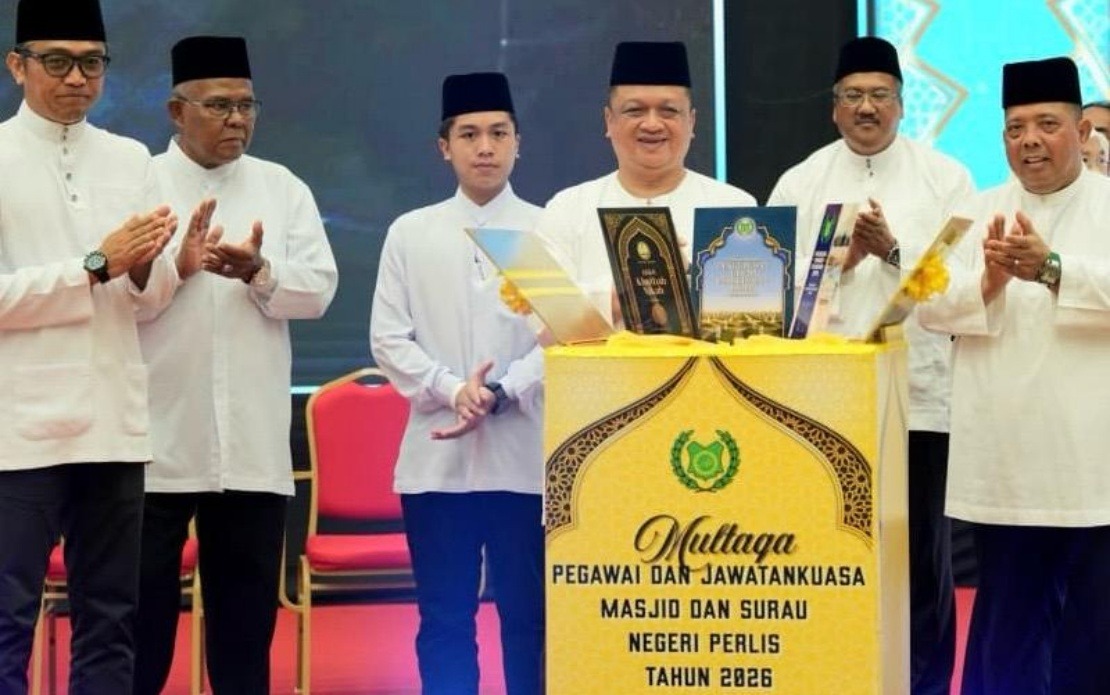
Tuanku Syed Faizuddin Putra Jamalullail, the Raja Muda of Perlis, has stressed the importance of maintaining public trust through accountable stewardship in the management of religious institutions throughout the northern state. Addressing mosque and surau committee members gathered at an official state programme in Kangar, His Royal Highness underscored that those entrusted with overseeing these community spaces must demonstrate unwavering commitment to ethical administration and systematic operational practices.
The Raja Muda's intervention highlights a broader concern within Malaysia's Islamic institutional framework regarding standardisation and professional governance at the grassroots level. Religious institutions, particularly mosques and suraus, serve not merely as spaces for congregational prayer but increasingly function as administrative hubs managing diverse community affairs. The challenge of ensuring consistent adherence to guidelines and ethical standards across hundreds of such facilities within a single state reflects the complexity of religious governance in Malaysia's federal system.
Central to Tuanku Syed Faizuddin Putra's message was the necessity for all committees to fully comprehend and comply with directives issued by two key regulatory bodies: the Perlis Islamic Religious and Malay Customs Council (MAIPs) and the Perlis Islamic Religious Affairs Department (JAIPs). This dual framework represents the state's institutional approach to ensuring religious affairs remain aligned with Islamic jurisprudence while maintaining adherence to civil legislation. The Raja Muda framed such compliance not as bureaucratic burden but as essential infrastructure enabling efficient community service delivery.
The 2026 Perlis State Mosque and Surau Officers and Committees Multaqa Programme, which prompted these remarks, specifically concentrated on three substantive areas affecting Muslim residents. Management protocols for Muslim burial grounds, operational frameworks for mosque administration, and procedures governing Islamic marriage registration alongside the responsibilities of jurunikah officials constituted the programme's core curriculum. These domains collectively encompass critical touchpoints between religious institutions and community members navigating significant life events and spiritual needs.
Tuanku Syed Faizuddin Putra articulated a vision of modern religious institutional management that transcends traditional interpretations. He acknowledged that contemporary Muslims increasingly expect their places of worship to operate with corporate-level professionalism, financial transparency, and demonstrated responsiveness to evolving community concerns. This expectation represents a notable shift in how Islamic institutions are evaluated, particularly in Malaysia's more urbanised settings where accountability standards increasingly mirror those applied to secular organisations.
The expansion of this year's multaqa to encompass surau committees alongside mosque officials carries particular significance for Perlis's religious infrastructure. Suraus, smaller prayer facilities typically neighbourhood-based, frequently operate with minimal formal oversight compared to state-funded mosques. Their inclusion in structured governance initiatives acknowledges their complementary role in serving dispersed communities and suggests growing recognition that fragmented management approaches undermine system-wide coherence. By bringing surau leadership into formal coordination mechanisms, state authorities attempt to establish unified implementation of policies and regulations.
The Raja Muda's emphasis on transparent, integrity-driven management operates within Malaysia's broader governance discourse, where public institutions increasingly face scrutiny over financial accountability and administrative conduct. Religious organisations, which often enjoy certain regulatory exemptions and depend significantly on voluntary contributions, sometimes receive heightened public attention when concerns about resource management emerge. By proactively positioning integrity as central to institutional identity, Perlis's leadership attempts to preempt such controversies through cultural shift rather than reactive intervention.
From a Southeast Asian perspective, Malaysia's approach to formalising religious institutional governance reflects broader regional trends where governments increasingly seek to integrate faith-based organisations into structured accountability frameworks. Countries across the region grapple with balancing religious autonomy against public interest in transparent administration of community resources. Perlis's multaqa model, bringing together officers and committee members for systematic briefing on standardised procedures, represents one approach to this challenge—combining respect for religious authority with contemporary governance expectations.
The programme's focus on practical administrative procedures rather than theological matters demonstrates sophisticated understanding of institutional effectiveness. Marriage registration procedures and cemetery management protocols require clear standardisation to prevent confusion and ensure equitable treatment across communities. By grounding governance improvements in concrete operational domains rather than abstract principles, the framework becomes accessible to committee members with varying educational backgrounds and administrative experience levels.
Tuanku Syed Faizuddin Putra's characterisation of the multaqa as an official platform for conveying state religious policy directly to institutional stakeholders underscores the hierarchical nature of Malaysia's Islamic administration. Unlike secular governance where policy dissemination occurs through multiple channels, religious policy transmission often emphasises direct communication from senior figures to frontline implementers. This approach maintains theological authority while attempting to ensure consistent understanding of guidelines across the institutional network.
The emphasis on systematic work culture and professional administration reflects increasing recognition that institutional legitimacy depends partly on operational competence. Religious communities worldwide demonstrate that spiritual authority alone proves insufficient for sustained institutional effectiveness; procedural fairness, transparent decision-making, and professional service delivery significantly influence public confidence. By elevating these dimensions, Perlis's leadership signals that religious leadership encompasses administrative excellence.
Moving forward, the effectiveness of this initiative depends substantially on implementation mechanisms and monitoring capacity. Multaqa programmes create awareness, but sustained change requires follow-up systems verifying compliance and providing remedial support for under-performing committees. Whether Perlis develops such infrastructure, and whether other Malaysian states adopt comparable approaches, will determine whether this initiative represents merely symbolic affirmation of good governance values or genuine institutional transformation.
Ultimately, the Raja Muda's message reflects recognition that Malaysian Muslim communities increasingly demand institutional performance meeting contemporary standards while maintaining spiritual authenticity. This balancing act—preserving religious identity while adopting modern governance practices—presents ongoing challenge for Islamic institutions throughout Malaysia and Southeast Asia as societies evolve and stakeholder expectations shift.

