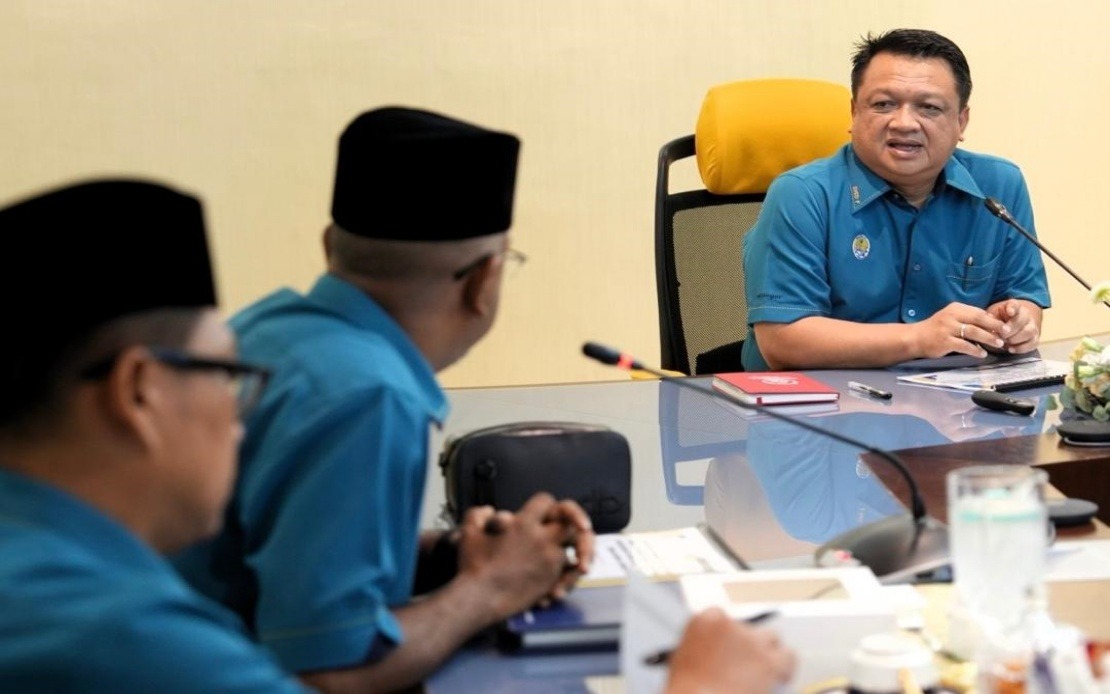
The Raja Muda of Perlis, Tuanku Syed Faizuddin Putra Jamalullail, has called for Perlis to serve as a demonstration laboratory for Malaysia's environmental ambitions, leveraging the state's compact geography to lead the nation towards a 'Green Smart State' designation. Speaking during an audience at the Arau Royal Gallery with officials from the Kangar Municipal Council, he outlined a vision where Perlis becomes a pioneer in renewable energy deployment and climate action, setting benchmarks that other Malaysian states could eventually replicate on a larger scale.
The proposal carries significant weight for Malaysia's broader climate strategy. By designating Perlis as an experimental hub for sustainability initiatives, the state would transition from a peripheral player in national environmental discourse to a frontline jurisdiction testing solutions for renewable energy integration, waste management innovation, and carbon neutralisation. The relatively modest population and geographic constraints that have historically limited Perlis's economic clout would instead become strategic advantages, allowing policymakers to implement and evaluate comprehensive environmental programmes before scaling them across larger, more complex jurisdictions.
Under the Green City Action Plan (GCAP), a strategic document prepared through collaboration between Malaysia's Ministry of Economy, the IMT-GT Joint Business Council, international sustainability organisations including ICLEI - Local Governments for Sustainability, and the Asian Development Bank, Perlis aims to construct a framework for low-carbon development centred on three pillars: economic resilience, social wellbeing, and environmental protection. The council approved this blueprint in February, establishing it as the authoritative reference for implementing green city initiatives across the state infrastructure and municipal operations.
Solar photovoltaic systems represent the cornerstone of Perlis's renewable energy transition. The plan mandates installation of solar PV technology across government buildings, public facilities, and private structures, addressing both demand-side energy consumption and supply-side generation challenges simultaneously. This distributed solar approach differs from large centralised schemes, allowing rapid deployment while building local capacity in installation, maintenance, and grid integration—skills that would become transferable assets as Malaysia accelerates its renewable energy roadmap across other states.
Transportation comprises another critical component of Perlis's sustainability architecture. Officials have identified the preparation of a Low Carbon Transport Plan and the development of Micro-Mobility Zones alongside Non-Motorised Transport facilities as priorities. These initiatives acknowledge that decarbonisation requires systemic changes beyond energy supply, extending into how citizens move within urban spaces. For Malaysian cities grappling with congestion and emissions, Perlis's approach to integrating cycling infrastructure, pedestrian pathways, and potentially electric public transport could generate valuable data on adoption rates and social acceptance in a Southeast Asian context.
Waste management reforms underscore the plan's comprehensiveness. An 80-tonne-per-day Material Recovery Facility would dramatically enhance Perlis's recycling capacity and solid waste processing efficiency, addressing a sector where Malaysia currently lags regional peers. The facility would extract recoverable materials from waste streams, reducing landfill dependency while generating economic value from waste-derived resources. Success here would demonstrate viable pathways for other states to modernise their waste infrastructure, particularly for smaller jurisdictions where economies of scale traditionally constrain investment viability.
Water security and disaster resilience form parallel strands in the sustainability framework. A comprehensive rainwater harvesting system implemented statewide would build climate resilience against increasingly erratic precipitation patterns, while strengthening the Perlis Integrated Command Centre and developing a state disaster management plan would enhance preparedness for climate-related emergencies. These interventions acknowledge that sustainability transcends environmental metrics to encompass community safety and resource security—concerns that resonate across Malaysia's diverse geography and climate zones.
The alignment of Perlis's initiatives with Malaysia's national commitments and international obligations reflects strategic positioning within broader policy ecosystems. The plan explicitly connects to the Sustainable Development Goals and Malaysia's greenhouse gas reduction pledges, embedding local action within global climate architecture. For Malaysian policymakers, successful implementation in Perlis would provide evidence-based arguments for scaling similar programmes nationally while generating regional knowledge that could inform initiatives across ASEAN.
Implementation challenges, however, remain substantial. Securing adequate financing for the Material Recovery Facility, solar infrastructure, and transport modernisation demands coordinated resource mobilisation across federal grants, municipal budgets, and potential private sector partnerships. Technical capacity constraints in a smaller state administration may require targeted institutional development. Public behaviour change—from waste segregation habits to transport mode choices—cannot be mandated through policy alone and requires sustained engagement.
The international partnership structure supporting the Green City Action Plan positions Perlis within global sustainability networks. Collaboration with the Asian Development Bank and ICLEI connects local implementation to international best practices, technical expertise, and funding mechanisms unavailable to isolated state initiatives. This externally-anchored approach mitigates the risk of policy drift while exposing Perlis officials and communities to proven methodologies from other Asian jurisdictions navigating similar transitions.
For Southeast Asia broadly, a successful sustainability transition in Perlis carries demonstration value. The region's developing economies frequently struggle to balance growth imperatives against environmental constraints, and evidence of effective green development in a Malaysian context could influence policy choices across ASEAN. Perlis's role as a testing ground thus extends beyond state boundaries, potentially shaping how the broader region approaches climate action within realistic fiscal and institutional contexts.
The Raja Muda's advocacy ensures executive-level commitment to the sustainability agenda, crucial for maintaining political support through inevitable implementation obstacles and trade-offs. Royal endorsement signals that environmental transformation enjoys backing beyond municipal administration, legitimising the sometimes-difficult decisions required to reallocate resources, modify regulations, and reshape urban planning around sustainability principles. This institutional alignment distinguishes Perlis's approach from policy initiatives lacking such high-level political anchoring.

