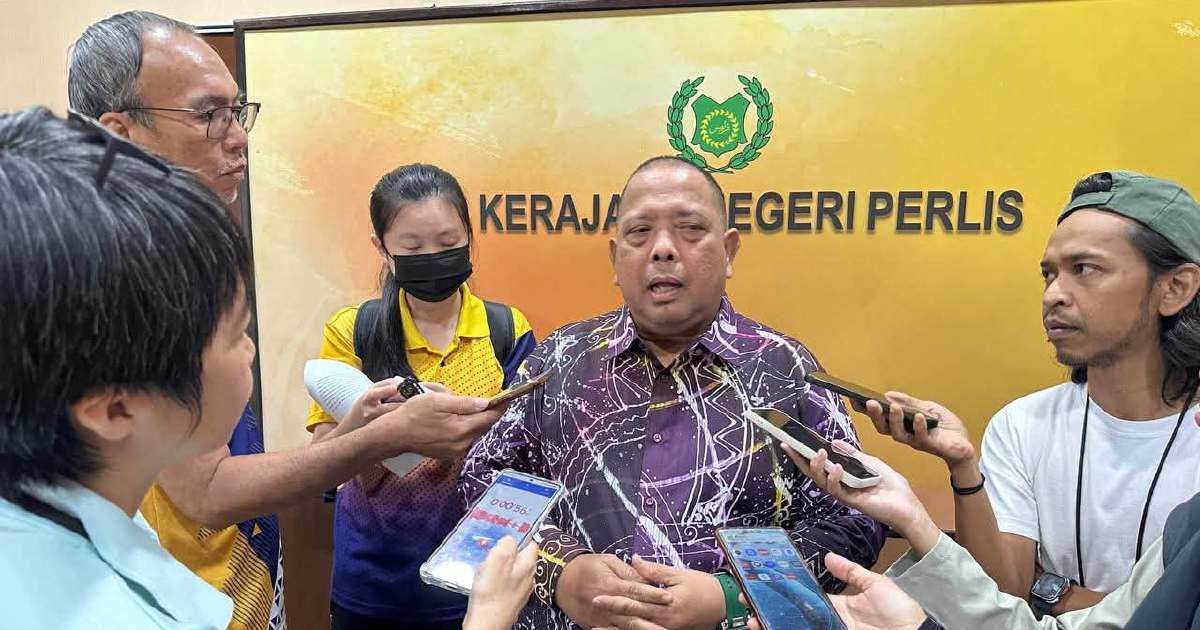
Perlis Menteri Besar Abu Bakar Hamzah has moved decisively to counter mounting speculation that he may be preparing to defect from Bersatu, issuing a firm statement that he remains fully committed to the party and its leadership structure in the northern state.
The clarification comes in the wake of his recent exit from Bersatu's Supreme Council, a development that had triggered immediate conjecture within political circles about the trajectory of his party affiliation. Abu Bakar's unequivocal denial underscores the delicate political calculus at play in Perlis, where state-level stability depends on maintaining cohesion within the ruling coalition.
Speaking from his official residence in Kangar, the Menteri Besar reaffirmed his standing within Bersatu's organizational hierarchy, emphasizing that his removal from the Supreme Council does not signal any broader shift in his loyalty or intention to abandon the party platform. He stressed that his position as chairman of Bersatu Perlis remains intact and that this responsibility continues to define his role within the party's state operations.
The timing of such denials typically reflects anxiety within a political party about losing ground or facing internal fracturing. In the Malaysian political landscape, where party-hopping has become increasingly commonplace—particularly at state and federal levels—even routine administrative changes risk triggering speculation about larger realignments. The fact that Abu Bakar felt compelled to issue a public statement suggests the rumors had gained sufficient traction to warrant immediate intervention.
Bersatu's position in Perlis represents a microcosm of the party's broader challenges across Malaysia. Since its emergence as a political force following the 2018 elections, Bersatu has experienced considerable turbulence, with defections and internal disputes occasionally creating headlines. For state-level leaders like Abu Bakar, maintaining visibility and demonstrating loyalty becomes crucial in an environment where factional tensions can quickly escalate.
The Supreme Council, as Bersatu's highest decision-making body, carries significant symbolic weight within the party's structure. Membership signals proximity to the party's apex leadership and influence over strategic direction. Abu Bakar's departure from this body, regardless of the circumstances or whether it was voluntary or administrative, created an opening for political observers and rival parties to speculate about potential friction at the top.
For Perlis specifically, such instability at the state leadership level carries practical implications. As a small northern state with a population of around 250,000, Perlis's political dynamics are tightly knit, with developments at the state level affecting everything from resource allocation to the timing of potential state elections. Any suggestion that the Menteri Besar might be considering a party switch would immediately jeopardize the coalition's parliamentary arithmetic and raise questions about the viability of the current government.
Abu Bakar's reassertion of his commitment to Bersatu, coupled with his emphasis on his role as state chairman, essentially positions him as the party's primary representative and decision-maker in Perlis—potentially compensating for any diminished influence he might have experienced through his Supreme Council departure. This pivot allows him to maintain credibility within Perlis's political establishment while demonstrating continued organizational allegiance.
The broader context matters here as well. Malaysian politics in 2024 remains marked by fluid alignments and occasional crossovers as politicians navigate changing coalitional arrangements and perceived shifts in national momentum. Bersatu, despite being junior partners in the federal coalition, retains considerable influence in several states, making the retention of capable state leaders a priority for party headquarters. Abu Bakar's Perlis position, while not enormous in national terms, represents one of Bersatu's notable successes in state-level governance.
The denial also serves a secondary function of reassuring Bersatu's coalition partners that internal discipline remains intact and that potential vulnerabilities will not be exploited by rival parties seeking to poach sitting Menteri Besar positions. In Malaysia's present political environment, where coalition partners must trust one another to maintain government stability, such public reaffirmations carry weight beyond their immediate surface meaning.
Looking forward, observers will likely monitor Abu Bakar's continued activities within Bersatu and his state administration to assess whether the Supreme Council departure represents a temporary administrative adjustment or signals deeper organizational tensions within the party's Perlis operations. His continued prominence in state governance and party machinery will determine whether this episode fades quickly or presages broader realignments within northern Malaysian politics.

