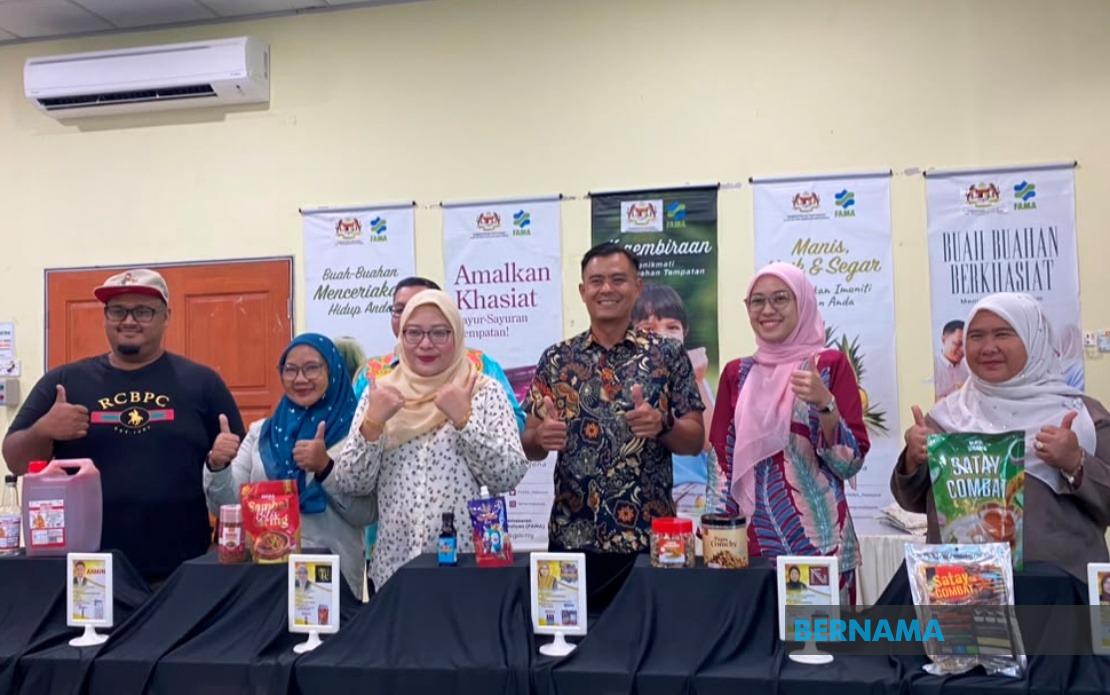
The Perlis branch of the Federal Agricultural Marketing Authority (FAMA) has placed RM510,500 directly into the hands of nine agro-food entrepreneurs, marking a significant injection of public support aimed at strengthening the competitiveness of small and medium-scale agricultural producers in the state. The grants, distributed across four distinct funding categories, reflect FAMA's multi-pronged approach to nurturing the Agro-Food and Agro-Based Industry (IMAT) sector in one of Malaysia's smallest states by population and economic output.
According to Perlis FAMA director Mohd Anzara Azizan, the financial package was apportioned strategically to address different development needs within the sector. The largest single allocation of RM392,000 went toward agro-tourism ventures, a category reflecting growing recognition that agricultural enterprises in Malaysia increasingly depend on experiential offerings alongside traditional product sales. A further RM83,500 was earmarked for product image and packaging improvements, RM25,000 supported outlet enhancements through the KSHOPPE initiative, and RM10,000 was designated for marketing equipment support. This granular breakdown suggests FAMA's understanding that growth constraints in the agro-food sector extend beyond simple capital provision to encompass branding, presentation, and market infrastructure.
The product image and packaging component deserves particular attention given its strategic importance to regional competitiveness. In an era where digital commerce and interstate logistics dominate market access, visual presentation and professional packaging have become essential tools for producers seeking to differentiate themselves from competitors across Peninsular Malaysia and beyond. The grant programme acknowledges that many IMAT entrepreneurs, particularly those operating at earlier development stages, lack capital reserves to invest in these necessary improvements independently. By subsidizing these upgrades, FAMA effectively removes a significant barrier to market expansion that might otherwise keep promising businesses confined to local or regional sales channels.
The performance metrics disclosed by Mohd Anzara provide context for understanding the programme's impact trajectory. The 319 registered IMAT entrepreneurs operating in Perlis generated RM4.8 million in sales as of the reporting date, representing a 30 per cent increase compared to the same period in the previous year. Extrapolated across multiple years, such growth rates suggest that FAMA's cumulative interventions have contributed meaningfully to revenue expansion across the state's agro-food ecosystem. Whether the 30 per cent annual growth is attributable primarily to grant disbursements or reflects broader market dynamics remains unclear, but the association between grant administration and sales increases strengthens the case for continued public investment in this sector.
The diversity of grant schemes available through FAMA—reportedly nearly nine distinct types—indicates an institutional commitment to meeting entrepreneurs at various development stages and addressing sector-specific challenges. Stage One to Stage Three SMEs, the designated beneficiary group for the product improvement initiative, occupy a critical position in Malaysia's agricultural economy. These enterprises have typically moved beyond household or subsistence production but have not yet achieved the scale or capital intensity of larger agro-industrial operations. Targeting support specifically at this cohort reflects understanding that many promising agricultural businesses become stalled at this middle stage, unable to access commercial financing but too advanced for basic smallholder assistance programmes.
FAMA's role in pricing and marketing oversight extends beyond grant distribution to include ongoing market monitoring. By tracking product pricing and ensuring that entrepreneurs maintain competitive positions while preserving reasonable margins, the authority acts as a quasi-regulator of market conditions within the IMAT sector. This hands-on approach differs from a purely laissez-faire model and suggests FAMA operates within a framework recognizing that small producers in Malaysia often lack individual market power to negotiate favorable terms with wholesalers, retailers, or export intermediaries. The authority's intervention helps level these asymmetries, though the long-term sustainability of such protections as enterprises scale remains an open question.
For Malaysian policymakers and Southeast Asian observers, the Perlis initiative demonstrates how federal authorities continue adapting support mechanisms to address persistent challenges in agricultural modernization. The northern peninsular states have historically struggled to maintain competitive agricultural sectors against both imported products and higher-value production from more developed regions. Perlis, in particular, faces demographic and geographic constraints that limit its agricultural workforce and market size. Grant programmes targeting agro-tourism, packaging, and equipment represent implicit acknowledgment that traditional commodity agriculture offers limited growth prospects in this context, and that value-addition through tourism integration and professional branding offers more sustainable pathways forward.
The emphasis on agro-tourism grants, consuming more than three-quarters of the total disbursement, reflects this strategic shift particularly clearly. Rural tourism has emerged across Southeast Asia as a development model that diversifies rural incomes, stabilizes agricultural communities, and attracts higher-margin revenue streams than commodity sales alone. In Malaysia's context, where agricultural land values and rural population retention remain persistent policy concerns, agro-tourism represents a mechanism for keeping young Malaysians engaged with rural livelihoods while generating sufficient income to compete with urban employment opportunities.
Looking forward, the sustainability of FAMA's grant-based support model depends substantially on whether entrepreneurs receiving assistance achieve durable competitive advantages or instead become dependent on recurring subsidies. The 30 per cent annual growth figure suggests at least some recipients have achieved meaningful market traction, but longitudinal tracking of individual enterprise performance would be necessary to confirm lasting impact. For policymakers considering replication of this model in other states or sectors, the Perlis experience offers both a template and a cautionary note: well-designed grant schemes can catalyze growth, but only if coupled with genuine business acumen and market demand for the products being supported.

