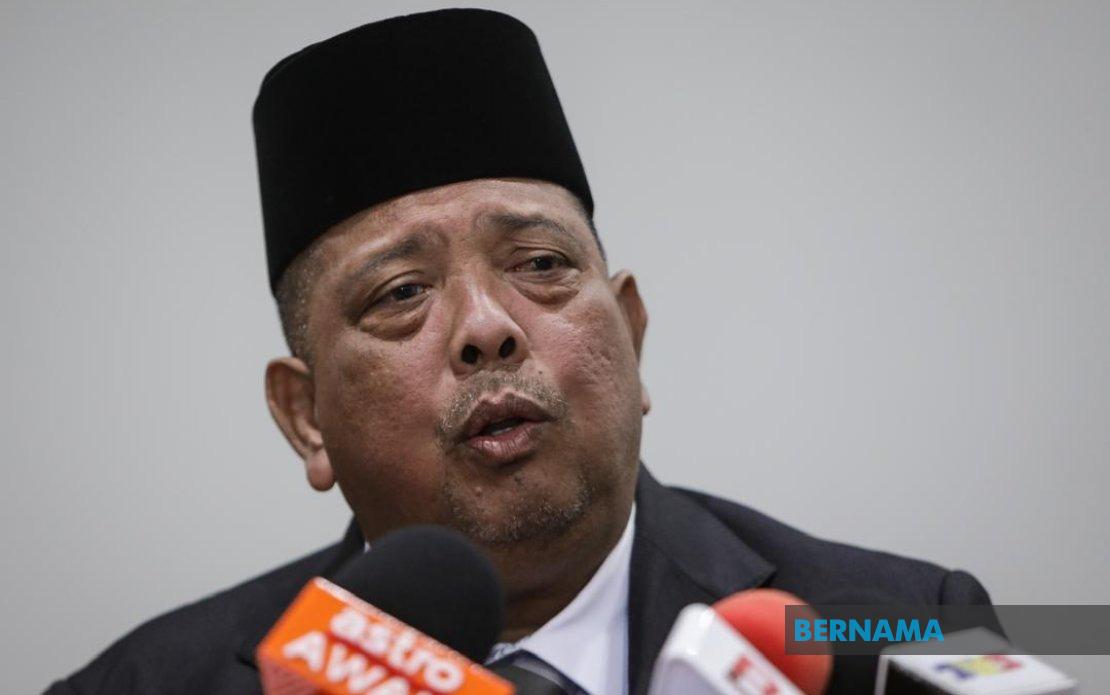
Perlis Menteri Besar Abu Bakar Hamzah has stepped down from his position on Parti Pribumi Bersatu Malaysia's Supreme Leadership Council, a move he confirmed on July 9 during an official engagement in Kangar. The resignation letter was submitted to the party's central leadership the previous week, though the announcement came during the relaunch of cross-border ferry services between Kuala Perlis and Satun, Thailand—a ceremonial occasion underscoring the state government's focus on regional connectivity and economic development.
The decision reflects a strategic prioritization of Abu Bakar's executive responsibilities at the state level. With approximately one year remaining in the current state legislative assembly term, concluding in 2025, the Perlis chief minister emphasized that his departure from the council stems from operational necessity rather than political discord. He explained that the competing demands of administering a state—particularly in areas such as investor attraction and achievement of departmental performance indicators—leave insufficient bandwidth for meaningful participation in Bersatu's highest decision-making body.
Abu Bakar's resignation carries particular weight given the timing and context. In June, during the opening of the state legislative assembly sitting, the Raja of Perlis, Tuanku Syed Sirajuddin Jamalullail, publicly decreed that Abu Bakar should receive unimpeded space to lead the state until the conclusion of the 15th assembly term without interference from party headquarters. This royal sanction provided political cover for the chief minister to prioritize state governance, and his subsequent departure from the MPT appears consistent with that directive.
Crucially, Abu Bakar's resignation does not constitute a complete break with Bersatu. He retains his position as Perlis state party chief and continues as chief of the Kangar Bersatu division, maintaining organizational ties to the party apparatus at the ground level. This distinction is significant in Malaysian political culture, where holding state-level party positions carries considerable patronage and organizational influence. The move suggests a compartmentalization strategy: shedding high-level national party obligations while preserving local party control.
The announcement also implicated another prominent Perlis figure in similar action. Abu Bakar indicated that Sena assemblyman and state executive councillor Datin Marzita Mansor had likewise resigned from her position on Bersatu's Supreme Leadership Council. However, verification of Marzita's resignation proved impossible at the time of reporting, raising questions about the coordination and scope of what appears to be a broader repositioning within Perlis Bersatu's power structure. Whether this reflects a planned realignment or separate individual decisions remains unclear.
For Malaysian observers, Abu Bakar's move illuminates tensions inherent in Malaysia's federal system, where state chief ministers must balance loyalty to national party structures against the immediate demands of state administration. In Perlis—a state with limited economic diversity and competitive political margins—the chief minister's ability to demonstrate tangible development outcomes becomes paramount to electoral viability. The decision to deprioritize national party council work suggests Abu Bakar views electoral retention at the state level as more threatening than any disadvantage from reduced national party influence.
The ferry service restart that framed this announcement deserves attention as context. The Kuala Perlis-Satun route had remained closed throughout the COVID-19 pandemic, and its resumption signals the state government's commitment to cross-border economic integration. This infrastructure initiative appeals to Perlis voters by demonstrating regional engagement and bilateral relationship management—precisely the kind of visible gubernatorial achievement that weighs heavily in state-level elections.
Within Bersatu's organizational ecosystem, the resignation of a sitting chief minister from the Supreme Leadership Council is noteworthy, though not unprecedented. It reflects the party's internal diversity and the recurring challenge of accommodating ambitious state-level figures within a hierarchical national structure. Abu Bakar's departure may also signal confidence in his ability to maintain political power in Perlis without requiring direct leverage within Bersatu's top councils—a calculation that implicitly acknowledges both his secure state position and the limitations of national party patronage in delivering electoral outcomes.
The timing also matters in the broader context of Malaysian politics. With state elections approaching in 2025 and the national political landscape remaining fluid, chief ministers across the country are making calculations about resource allocation and political positioning. Abu Bakar's choice to focus inward suggests belief in Perlis Bersatu's capacity to retain control through state-level performance rather than national party maneuvering. This pragmatism reflects how Malaysian politics often operates on the ground: despite formal hierarchies, state-level power ultimately depends on local governance delivery and community relationships rather than position within party structures.
Looking forward, Abu Bakar's restructuring of his political commitments sets a precedent that other chief ministers may observe. In a federation where state elections occur at staggered intervals and state governments wield significant autonomy, the question of how much a chief minister should invest in national party machinery versus state administration remains perpetually relevant. Abu Bakar's answer—focusing on the state with one year to go—appears calculated to maximize his effectiveness in areas where it matters most electorally: tangible development, investor confidence, and cross-border economic activity.

