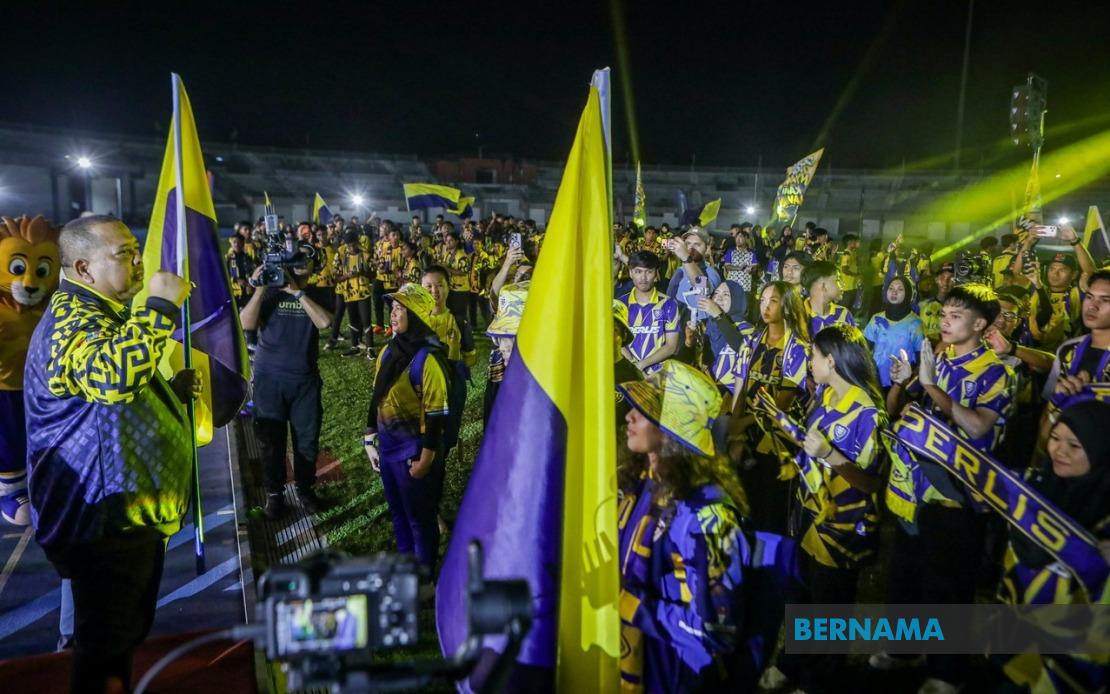
Perlis has surpassed all previous benchmarks in Malaysia Games competition, securing 17 gold medals at SUKMA 2026 hosted by Selangor—a result that represents the state's most accomplished showing since first participating in the biennial sporting event. The achievement demonstrates measurable progress from the state's integrated approach to athletic development and reinforces growing confidence in Perlis' capacity to produce competitive athletes across multiple disciplines. The milestone reflects years of strategic investment and coordinated efforts among government agencies, local sports associations, and the coaching infrastructure that underpins elite performance in the state.
Perlis Menteri Besar Abu Bakar Hamzah characterised the outcome as vindication of the state government's sustained commitment to nurturing athletic talent and building world-class training systems. Speaking after chairing an Exco Meeting at Kompleks Seri Putra in Kangar, Abu Bakar emphasised that the gold medal haul signals alignment between policy objectives and on-ground execution, with tangible results now flowing from coordinated work involving state institutions, individual athletes, coaching personnel, sports associations, and the State Sports Council. The leadership's framing positions the achievement not as a one-time success but as evidence that systemic reforms in sports governance are producing dividends.
Beyond the headline gold medal count, Perlis athletes demonstrated excellence in specific domains that carry technical and psychological significance within competitive sport. The state contingent set a new games record in the shot put event—a field discipline requiring specialised coaching, proper facilities, and sustained biomechanical development over extended periods. Simultaneously, Perlis' weightlifting team captured the overall championship across all weight categories at SUKMA Selangor 2026, indicating depth and consistency within that particular sporting domain rather than isolated victories. These specific successes suggest targeted investment in strength and power sports has yielded particularly strong returns.
The complete medal tally from SUKMA 2026 reveals a more nuanced performance profile than gold medals alone suggest. Perlis accumulated 42 medals total—comprising the 17 golds alongside seven silver medals and 18 bronze medals—indicating competitive participation across numerous events and sports. This distribution pattern suggests the state is developing breadth of talent rather than concentrating resources in narrow specialisations, a strategic posture that typically strengthens long-term athletic sustainability and reduces vulnerability to injuries or performance fluctuations in any single discipline.
For Malaysian sports administration, Perlis' performance gains relevance as a case study in how smaller states with fewer resources than economically dominant peers can leverage focused strategy to achieve competitive growth. The state's success arrives amid broader national conversations about sports development equity and whether federal funding mechanisms adequately support peripheral regions. Perlis, despite geographic remoteness and smaller population base compared to Selangor, Kuala Lumpur, or Johor, has managed to close performance gaps—a dynamic worthy of examination by sports policymakers across the region contemplating how to optimise talent systems in resource-constrained environments.
The state government has signalled intent to deepen competitive advantage through multifaceted investment going forward. Abu Bakar outlined strategic priorities encompassing talent identification and youth development pipelines, high-performance training regimes incorporating sports science methodologies, coaching excellence initiatives, infrastructure modernisation, and athlete welfare provisions—elements recognised internationally as foundational pillars of sustained elite sports systems. This comprehensiveness suggests policymakers in Kangar recognise that isolated interventions prove insufficient; rather, sports development demands ecosystem-level coordination across technical, administrative, financial, and social dimensions.
Athletic incentivisation represents another institutional signal worth noting. The state government is currently structuring a rewards programme for SUKMA 2026 medallists, with formal presentation ceremonies scheduled following conclusion of the Para SUKMA Selangor 2026 competition. While financial incentives alone cannot generate sporting excellence, their presence demonstrates government validation of athlete contribution and creates psychological reinforcement for continued commitment. The timing of incentive discussions—occurring during the broader SUKMA/Para SUKMA calendar—suggests administrative intention to maintain momentum through complementary competitive seasons.
For Southeast Asian sports observers, Perlis' trajectory carries implications regarding how small-population jurisdictions might position themselves within regional athletic frameworks. The Malaysia Games function partly as a proving ground where emerging athletes and systems gain exposure before potential advancement to regional championships or international competitions. Perlis' strengthened SUKMA performance potentially creates pathways for Malaysian athletes to represent national teams at Southeast Asian Games or continental events, thereby contributing to Malaysia's competitive standing in those broader arenas. The state's sports development success therefore extends beyond local pride into national sports security and regional athletic influence.
The achievements at SUKMA 2026 must be contextualised within the competitive landscape that Selangor, as host state and one of Malaysia's wealthiest regions, presents. Perlis competing effectively against better-resourced states underscores the efficacy of targeted strategy and institutional coordination regardless of absolute budget availability. This dynamic holds particular salience for Malaysian sports policymakers deliberating optimal resource allocation mechanisms and whether centralised federal funding versus state-level autonomy produces superior developmental outcomes. The Perlis model—emphasising strategic focus, multi-stakeholder coordination, and sustained institutional commitment—offers a contrasting approach to potentially less-coordinated competitive systems.
Looking beyond the immediate SUKMA cycle, the challenge confronting Perlis sports leadership involves sustaining momentum rather than experiencing cyclical peaks and troughs. Historical patterns across Malaysian sports show states sometimes achieving breakthrough performances followed by stagnation as initial strategic impetus dissipates or resources redirect toward other priorities. Abu Bakar's emphasis on systemic strengthening across multiple pillars—rather than celebrating medals as endpoints—suggests awareness that long-term competitiveness demands continuous refinement and reinvestment. Whether Perlis can maintain or exceed the 17-gold benchmark at subsequent Malaysia Games will indicate whether current institutional structures have genuinely transformed the state's sports development trajectory or whether the achievement represents an anomalous spike.
The international context adds further perspective. Small states like Singapore and smaller population bases have historically demonstrated that elite sports performance correlates more directly with strategic investment intensity and institutional sophistication than with absolute population size or aggregate wealth. Perlis' SUKMA performance aligns with that principle, suggesting that smaller Malaysian states willing to embrace disciplined, coherent sports development frameworks can compete effectively against larger peers. This finding carries implications for sports development policy conversations across Southeast Asia, where smaller nations and subnational entities frequently debate optimal resource allocation between mass participation sports and elite performance systems.

