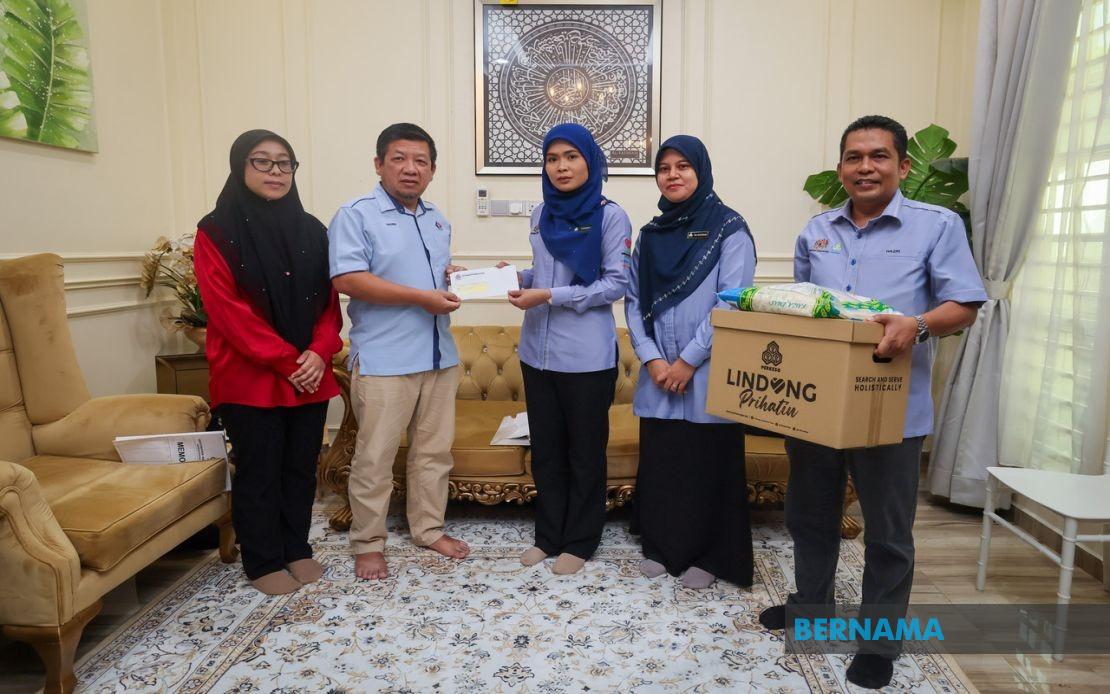
Malaysia's Social Security Organisation (PERKESO) has distributed almost RM3.5 million in social security benefits to workers and their families across Kelantan during the first half of 2024, reflecting the organisation's commitment to protecting the workforce against employment-related hardships. Speaking in Pasir Mas on June 29, Nor Aziemah Ismail, the state's deputy director, outlined the scope of assistance provided between January and June, emphasising PERKESO's role as a safety net for vulnerable workers and bereaved families.
The largest component of these payouts came through the Temporary Disablement Benefit scheme, which accounted for RM2.388 million of the total distribution. This benefit is designed to support workers who have sustained workplace injuries that render them temporarily unable to perform their job duties. The substantial allocation to this category underscores the reality that workplace accidents remain a significant concern within Kelantan's industrial and commercial sectors, affecting numerous contributors who rely on income replacement support during recovery periods.
Beyond temporary disablement, PERKESO channeled RM73,000 in Dependants' Benefits to the next of kin of workers whose deaths were directly linked to employment-related accidents. This scheme ensures that families do not face immediate financial destitution when they lose a breadwinner due to workplace tragedy. However, the volume of such claims, while heartbreaking, suggests ongoing workplace safety challenges that extend beyond injury prevention into fatal incidents that devastate families.
The organisation also paid out nearly RM1 million under its Funeral Benefit programme to families of workers who died during the same six-month window. Each eligible claim receives a standardised payment of RM3,000, which PERKESO endeavours to process within 24 hours of complete documentation submission. This rapid turnaround reflects recognition that funeral arrangements demand immediate financial resources, and delays can compound the distress experienced by grieving families already navigating the loss of their provider.
PARKESO's 24-Hour Employment Injury Scheme represents a particularly progressive dimension of worker protection in Kelantan. Unlike traditional workplace compensation frameworks that recognise injuries occurring only during specified work hours, this scheme extends coverage to employment-related accidents that happen outside the formal workplace or during non-standard hours. Nine claims have been approved under this initiative so far, with RM1,300 disbursed in sick leave benefits to eligible recipients. The scheme's expansion of coverage reflects evolving understanding of modern work realities, where employment-related duties frequently extend beyond office walls.
The approved cases illustrate the scheme's practical breadth. Recipients included workers injured while participating in motorcycle convoys and those sustaining injuries while transporting children to tuition classes. While these scenarios might appear peripheral to employment, PERKESO's framework recognises that workers are often engaged in activities connected to or contextually related to their employment obligations, and injuries sustained during such activities warrant similar protective mechanisms as traditional workplace incidents.
For Malaysian workers, particularly those in manual or field-based occupations, these benefit structures provide crucial financial buffers against the unpredictable shocks of workplace injury or death. In a country where many workers operate without substantial personal savings or family safety nets, PERKESO's interventions prevent individual tragedies from cascading into broader household crises. The half-year distribution of RM3.5 million to Kelantan alone suggests that nationwide, PERKESO is channeling hundreds of millions annually to support workforce resilience.
The prominence of temporary disablement benefits in PERKESO's Kelantan disbursements raises questions about workplace safety standards and preventative measures within the state. If injury rates are sufficiently high to generate RM2.388 million in TDB payments over six months, this signals potential gaps in workplace safety compliance, worker training, or occupational health oversight. Employers and regulators might view these figures as indicators that enhanced safety investments could reduce both human suffering and the social security claims that follow preventable incidents.
From a policy perspective, PERKESO's structure demonstrates how proactive social insurance can stabilise vulnerable populations. By guaranteeing income replacement and funeral assistance, the organisation reduces pressure on families to pursue potentially inappropriate financial strategies during crisis periods. This stability has broader economic implications, as workers with secure protection against workplace injury risks demonstrate greater productivity and engagement, knowing that misfortune will not devastate household finances.
The 24-hour scheme's expansion also reflects recognition that rigid categorical definitions of workplace injury may exclude genuine employment-related risks in modern economies. As work becomes more flexible and boundaries between work and personal life blur, social security frameworks must adapt to capture legitimate injury scenarios that traditional formulations overlooked. PERKESO's evolution in this direction positions Malaysia competitively within Southeast Asian worker protection standards.
Looking forward, the distribution patterns observed in Kelantan warrant continued monitoring. Sustained high levels of temporary disablement claims should prompt inquiry into whether specific industries or occupations account disproportionately for injuries. Targeted interventions in high-risk sectors could reduce both benefit payouts and human suffering. Similarly, the funeral benefit caseload, while modest in absolute terms, represents preventable deaths that merit investigation into causation and prevention strategies.
PERKESO's efficient 24-hour processing of funeral benefits demonstrates institutional capacity that deserves recognition. In an environment where government services often face criticism for bureaucratic delays, this rapid turnaround directly alleviates hardship for grieving families. Maintaining and potentially extending such efficiency across other PERKESO benefit categories would strengthen the organisation's value proposition for Malaysian workers and employers alike.
Ultimately, the RM3.5 million distributed across Kelantan represents not merely statistical disbursement but tangible relief for workers and families navigating employment-related calamity. These figures validate PERKESO's foundational mandate and illustrate why robust, accessible social security remains essential infrastructure for equitable economic development in Malaysia.

