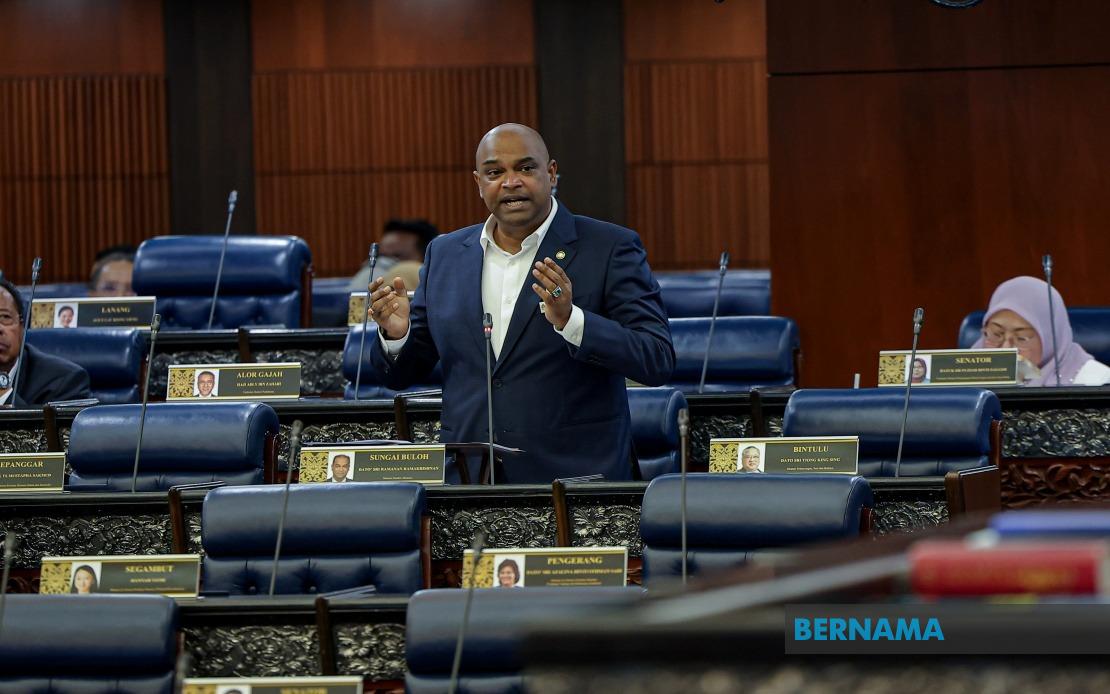
Malaysia's Social Security Organisation, PERKESO, has demonstrated robust operational performance with an average compliance rate exceeding 96 per cent in processing claims and benefit payments throughout the previous financial year. Human Resources Minister Datuk Seri R. Ramanan disclosed this achievement to the Dewan Rakyat, underscoring the organisation's commitment to delivering reliable service to millions of Malaysian contributors who depend on the social safety net.
The strong performance metrics reflect the implementation of enhanced Customer Charter standards that were rolled out last year, establishing clear and measurable processing timelines across the three primary PERKESO benefit schemes: LINDUNG Pekerja, LINDUNG Kendiri and LINDUNG Kasih. These updated standards became binding only after contributors and their representatives submit all necessary documentation, creating a transparent framework that holds the organisation accountable to defined service levels.
Processing timelines vary according to the complexity and nature of individual claims. Funeral Benefit and Temporary Disablement Benefit claims now operate under a two-day processing window from the point of complete application submission. More complex claims, including those for Permanent Disablement Benefit, Invalidity Pension, Survivor's Pension and Dependant's Benefit, operate within a three-day processing period, allowing the organisation adequate time to verify eligibility and conduct thorough assessments.
The newest iteration of PERKESO's service commitments, the LINDUNG Kerjaya scheme's 2025 Customer Charter, has established even more aggressive timelines with a uniform two-day processing requirement for all benefits once complete applications are received. Performance under this accelerated standard has proven exceptional, with PERKESO achieving a 99.68 per cent average compliance rate, suggesting that the organisation possesses the capacity and systems to meet such demanding targets across its entire portfolio.
Digitalisation has emerged as a cornerstone of PERKESO's operational transformation, with the organisation systematically modernising its technology infrastructure to eliminate processing bottlenecks and reduce manual handling delays. The LINDUNG Faedah PERKESO portal represents a key element of this digital strategy, offering contributors a centralised platform to submit and track claims online, thereby circumventing traditional paper-based submission methods that historically created processing delays and documentation verification complications.
Beyond customer-facing systems, PERKESO has invested substantially in internal infrastructure upgrades through implementation of the 1Best system, which was fully operationalised this year. This backend modernisation initiative streamlines internal workflows, automates routine verification tasks and enhances data management capabilities, allowing staff to concentrate on complex assessments and fraud detection rather than administrative housekeeping. Complementing these systems is the PRIHATIN application, designed to democratise access to PERKESO service information, enabling contributors to independently navigate available benefits, eligibility criteria and claims procedures without requiring in-person assistance.
Recognising that digital systems alone cannot address all contributor needs, particularly among older and less tech-savvy populations, PERKESO has established the Prihatin Squad, a dedicated advisory service that operates as an extension of the organisation's customer engagement apparatus. This initiative pairs contributors, beneficiaries and insured persons with trained staff who offer guidance, procedural assistance and direct claim facilitation, effectively bridging the gap between digital-first systems and human-centric support for vulnerable segments of the contributor base.
For accident-related claims, which often demand urgency given the medical and financial exigencies involved, PERKESO has strengthened its coordination mechanisms through the INSPIRE System, which establishes direct electronic linkages between hospitals and PERKESO's processing infrastructure. This integration eliminates transmission delays and documentation gaps that traditionally complicated accident claims, enabling hospitals to transmit accident notifications and supporting medical documentation directly into PERKESO's assessment workflow. Emergency cases operate under expedited procedures capable of completion within 24 hours, recognising that workers involved in accidents require swift benefit disbursement to manage immediate expenses.
Fraud prevention remains an ongoing operational priority, particularly given the substantial financial resources committed to claims payments and the reputational implications of payment errors. PERKESO employs a sophisticated multi-layered verification architecture that combines automated screening with human oversight. Artificial intelligence systems conduct preliminary screening to identify claims patterns, inconsistencies or data anomalies that merit deeper investigation, but these algorithmic assessments never constitute the sole basis for approval decisions. Manual verification by trained claims assessment staff operates as a mandatory secondary checkpoint, ensuring that no claim proceeds to payment without human evaluation and sign-off, thereby balancing efficiency gains from automation against the irreducible need for human judgment in fraud detection.
These operational achievements carry particular significance for Malaysia's labour force and broader economic ecosystem. Timely, reliable claims processing strengthens worker confidence in the social security system, potentially encouraging formalisation of informal employment relationships and increasing compliance with contribution requirements. For employers, streamlined claims processes reduce administrative burden and create certainty around benefit payments, while for beneficiaries and their dependents, predictable payment timelines provide essential income stability during periods of disablement or loss of employment. The convergence of these individual benefits generates broader economic stabilisation effects, sustaining consumer spending and household financial resilience during personal crises that might otherwise precipitate debt accumulation or family financial collapse.

