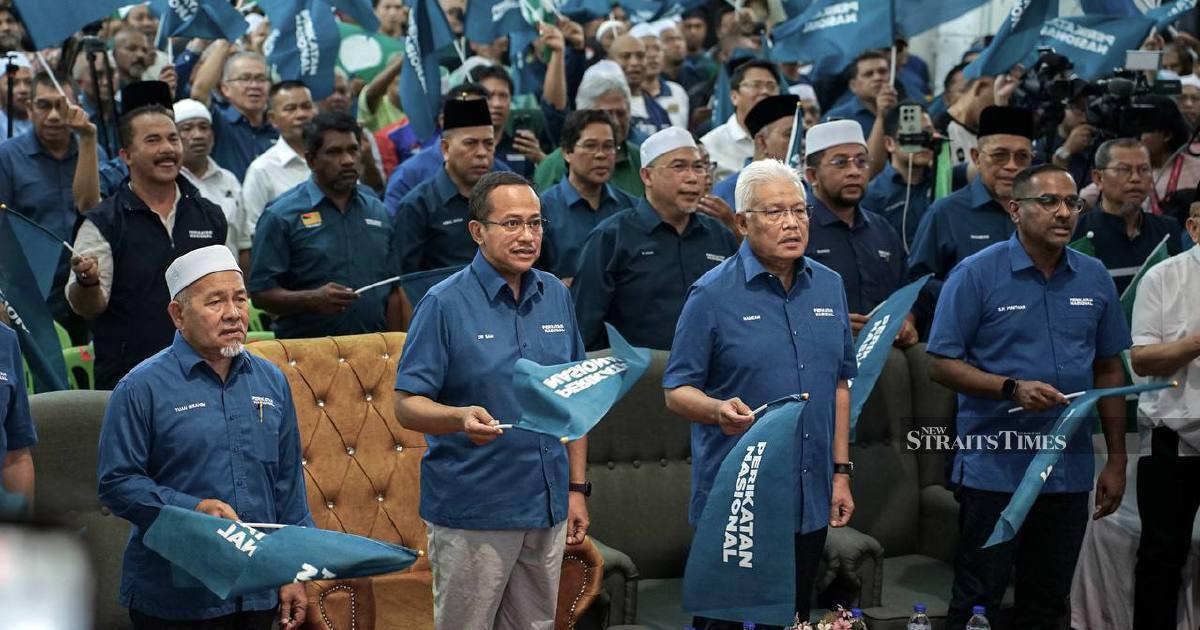
Perikatan Nasional has formally announced its 11 candidates for the Negri Sembilan state election scheduled for August 1, marking a significant moment in the coalition's electoral strategy as it continues navigating the complex political landscape of Malaysia's westernmost peninsular state. The announcement was made in Seremban, the state capital, and represents the culmination of weeks of deliberation within the coalition regarding seat allocation and candidate selection.
A defining feature of this nomination is the absence of direct electoral contests between PN and Barisan Nasional candidates. This arrangement reflects an ongoing understanding between the two broad coalitions, despite their divergent political trajectories at the federal level. Such coordination at the state level underscores how Malaysian electoral politics often operates through informal pacts and compromise arrangements, particularly when neither coalition enjoys overwhelming dominance in a specific state.
Negri Sembilan has long been considered a politically competitive state where no single coalition commands an absolute majority. With 36 state assembly seats in total, the distribution of candidates across multiple coalitions creates a fragmented electoral landscape where alliances and seat-sharing agreements become crucial to forming a government. The decision by PN to avoid contesting against BN in its designated seats suggests a pragmatic approach focused on maximising combined opposition strength against what would be their shared adversary: the incumbent administration and other coalitions in the state.
For Malaysian voters and political observers, this development carries implications for understanding how PN—which experienced significant reshuffling following the 2022 federal general election—is consolidating its position in state-level politics. The coalition, comprising PAS, Bersatu, and smaller partners, has been actively contesting state elections as part of its broader strategy to rebuild political capital after losing federal power. Negri Sembilan represents one of several battlegrounds where PN is testing its appeal and seeking to establish or reinforce its presence among state assemblies.
The composition of PN's 11-strong slate will likely reflect internal power-sharing arrangements among its constituent parties. PAS, as the largest component, typically claims a significant portion of nominations, while Bersatu and other partners receive allocations based on their respective strengths and negotiating positions. The ethnic, religious, and demographic makeup of these candidates often mirrors careful calculations about voter preferences across different constituencies, though such strategic considerations remain largely opaque to the public.
Negri Sembilan's political character differs markedly from other Malaysian states. As a relatively compact state with considerable economic dynamism driven by its proximity to Kuala Lumpur and the Klang Valley, it attracts political attention disproportionate to its population. The state has historically been a testing ground for political experiments and coalition arrangements, making election results there potentially significant for understanding broader trends in Malaysian politics.
The August 1 election date came following the dissolution of the state assembly, triggered by political developments that shifted the delicate balance within Negri Sembilan politics. The snap election creates urgency for all participating coalitions and candidates, requiring them to mobilise quickly and effectively across their respective constituencies. For PN, this timeline represents both an opportunity and a challenge: an opportunity to make electoral gains, but also a challenge to coordinate across multiple parties and candidates within a compressed campaign period.
The avoidance of PN-BN contests indicates negotiations occurred between coalition leadership before nominations were finalised. Such arrangements typically involve allocating constituencies to the coalition deemed more competitive or having stronger ground support in particular areas. These decisions are rarely made purely on ideological grounds; instead, they reflect careful analysis of electoral data, historical voting patterns, and candidate viability. In Negri Sembilan, where seats are often won by narrow margins, such tactical positioning can prove decisive.
This electoral arrangement also reflects the broader Malaysian reality that despite fundamental ideological differences between coalitions, political actors frequently find common cause at state or local levels. The federal government's composition and policies do not always determine state-level alignments, creating situations where coalitions that oppose each other nationally may cooperate regionally. Such pragmatism characterises much of Malaysian politics, where power-sharing and compromise often take precedence over pure ideological consistency.
Observers of Malaysian politics will be watching how effectively PN's 11 candidates perform on August 1, as their results will provide insights into the coalition's electoral strength in this crucial swing state. Success could position PN more prominently for future contests, while disappointing results might prompt reassessment of strategy. The election will test whether voters reward PN's presence and messaging, or whether other coalitions continue to dominate Negri Sembilan's political direction.
The candidate slate also reveals which individuals PN leadership believes can best represent the coalition's interests and appeal to Negri Sembilan voters. These selections involve both high-profile figures with established records and potentially newer candidates intended to broaden the coalition's appeal. The biographical details and track records of these 11 individuals will undoubtedly become subjects of campaign scrutiny as each coalition promotes its vision for the state's future.

