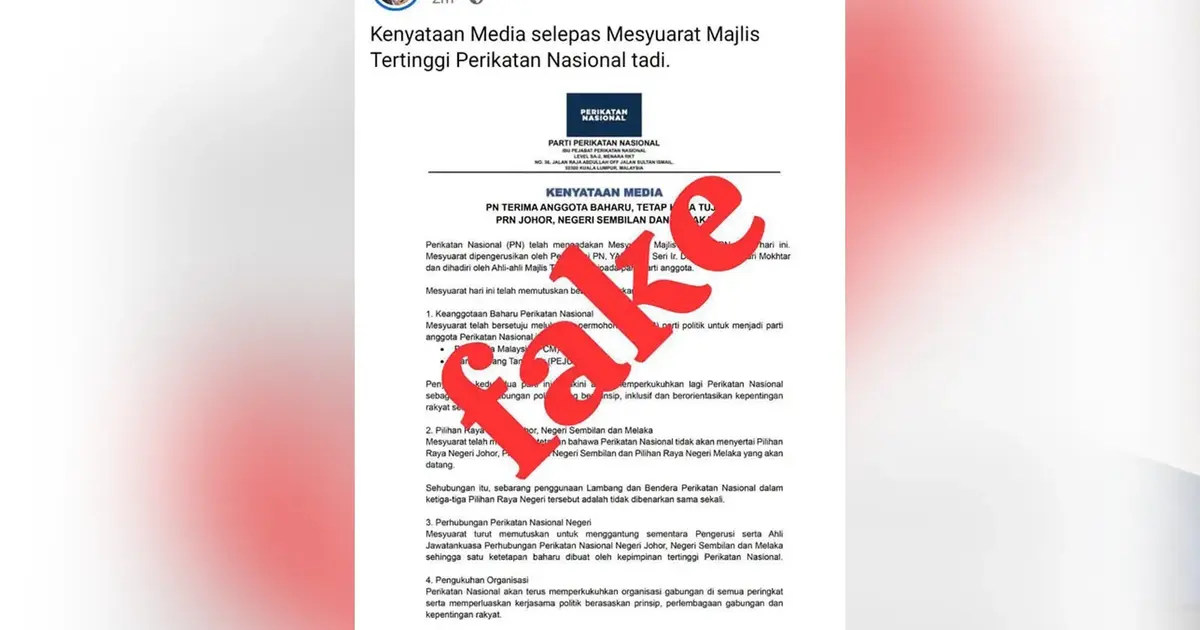
A forged statement falsely attributed to Perikatan Nasional has circulated in political circles, prompting a swift denial from the coalition leadership. The bogus document purportedly indicated that PN would withdraw from electoral contests in three states, a claim the coalition has characterised as both false and inaccurate.
The emergence of such fabricated statements underscores the intensifying information warfare that has become commonplace in Malaysia's political landscape. Perikatan Nasional's formal rebuff signals the coalition's concern about disinformation campaigns that could potentially mislead voters and distort the public debate surrounding upcoming electoral contests at the state level.
In Malaysia's competitive political environment, strategic narratives around electoral participation carry significant weight. Any suggestion that a major political coalition might selectively withdraw from state contests would substantially reshape calculations about campaign dynamics and voter expectations. The coalition's swift response demonstrates awareness of how such claims, if left unchallenged, might gain traction among supporters and undecided voters.
The circulation of false statements attributed to political organisations has become an increasingly sophisticated challenge for election authorities and voters alike. Digital platforms have enabled the rapid dissemination of misleading content, making it difficult for the average Malaysian to distinguish between authentic party communications and cleverly fabricated ones. Perikatan Nasional's designation of this particular statement as inaccurate reinforces the necessity for voters to verify information through official party channels.
State elections represent crucial battlegrounds in Malaysia's federal structure, as they determine regional governance and often serve as electoral bellwethers for national political sentiment. For opposition coalitions like PN, maintaining visible participation across multiple state contests remains strategically important for demonstrating electoral viability and relevance to constituents across the country.
The timing of such disinformation carries implications for electoral preparation and campaign momentum. Should voters in affected states believe that PN had no genuine intention to contest, it could dampen enthusiasm among party supporters and volunteers who might otherwise dedicate resources to campaign activities. Conversely, the coalition's public dismissal serves to reassure the grassroots that electoral efforts will proceed as planned.
Malaysia's experience with disinformation during electoral periods has prompted growing calls for enhanced digital literacy and more robust fact-checking mechanisms. While political parties themselves issue corrections and denials, a broader societal infrastructure for verifying claims remains underdeveloped compared to certain other democracies in the region.
Perikatan Nasional's response reflects standard protocol among major Malaysian political organisations when confronted with fraudulent statements. By explicitly labelling the allegations as false and inaccurate, the coalition aims to establish a clear factual record that can be referenced by journalists, observers, and voters seeking reliable information about its electoral intentions.
The incident also highlights the competitive dynamics within Malaysia's opposition spectrum. As multiple coalitions and parties vie for political position, the deployment of disinformation against rivals has become a recognisable tactic in the broader struggle for electoral advantage and public legitimacy. Perikatan Nasional's prompt rejection demonstrates vigilance against such attempts to manipulate public perception.
For Southeast Asian observers monitoring Malaysian politics, such episodes illustrate the region's broader struggles with election integrity and information reliability. As democratic institutions mature, the sophistication of challenges to their smooth functioning has also evolved, requiring political actors and civil society to remain constantly alert to new forms of disruption and deception.
The coalition's formal denial also serves a practical function in maintaining internal cohesion and confidence among party members and affiliates. Any uncertainty about PN's electoral strategy across different states could create confusion within party structures and undermine coordination efforts ahead of voting day. A clear public statement eliminates ambiguity and reinforces organisational discipline.
Moving forward, this incident illustrates the ongoing tension between the speed at which false information can spread and the resources available to political organisations for rapid response and correction. Perikatan Nasional's quick action in this instance prevented the fabricated narrative from potentially gaining wider currency, but the underlying challenge of verifying political claims in an information-saturated environment persists for Malaysian voters and institutions alike.