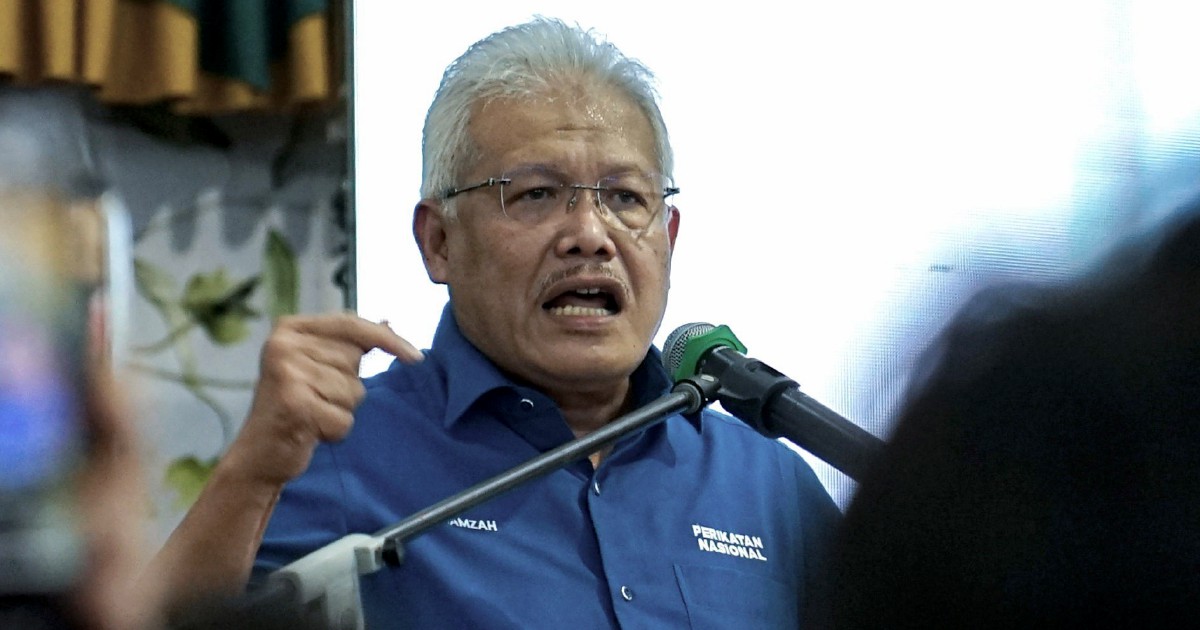
Perikatan Nasional (PN) has introduced a fresh acronym—'PBN'—to describe its election-time partnership with Barisan Nasional (BN) ahead of voting in Negri Sembilan, marking an attempt to consolidate the messaging around the two coalitions' collaborative effort in the state.
The branding move reflects a broader trend in Malaysian politics where coalition names are created strategically to unify electoral campaigns and communicate partnership to voters. The use of 'PBN' blends the initials of both organisations, providing a single identifier for what would otherwise be described as a complex multi-party arrangement. This approach mirrors earlier naming conventions adopted during major federal elections, where combined coalitions have sought memorable, readily recognisable designations to strengthen voter recall and electoral positioning.
Negri Sembilan has emerged as a significant political battleground, given the state's competitive nature and the substantial number of seats at stake. The creation of a unified identity through the 'PBN' acronym suggests that both PN and BN view coordinated messaging as essential to maximising their combined electoral advantage. By presenting themselves under a single banner, the two coalitions hope to project unity and strength to the electorate, countering perceptions of fragmentation that sometimes plague multi-party alliances.
The timing of this announcement carries political weight, as state elections in Malaysia typically generate intense scrutiny from party loyalists and political analysts who parse every signal about coalition stability and strategic intention. The launch of a new acronym serves as a visible sign that the partnership between PN and BN extends beyond backroom agreements into public-facing campaign operations. For voters trying to navigate an increasingly complex political landscape, a unified brand makes the choice starker: support the PBN coalition or support opposition parties.
From a regional perspective, the Negri Sembilan election holds implications beyond the state itself. The results will be closely watched by political observers across Southeast Asia as an indicator of Malaysian electoral trends, particularly regarding how Islamist-influenced parties (PN's historical base) can cooperate with more traditional establishment politicians represented within BN. The success or failure of their coalition project in Negri Sembilan could inform future alliance-building strategies not only in Malaysia but potentially across the region, where similar patterns of political realignment are occurring.
For Malaysian voters, particularly those in Negri Sembilan, the 'PBN' branding represents a significant consolidation of centre-right and Islamist political forces under one electoral umbrella. This arrangement reduces fragmentation on that portion of the political spectrum, effectively concentrating power and potentially making it more difficult for opposition blocs to compete. Understanding the implications of this coalition is crucial for residents of the state who wish to make informed electoral decisions.
The announcement also highlights how Malaysian politics continues to evolve through pragmatic power-sharing arrangements rather than ideological consensus. PN and BN have historically represented different constituencies and pursued divergent agendas, yet electoral mathematics—the reality that neither may govern effectively alone—pushes them toward cooperation. The 'PBN' acronym essentially acknowledges this pragmatism whilst attempting to frame it as a unified movement rather than a temporary convenience.
Backroom negotiations would have undoubtedly preceded this branding decision, involving discussions about seat allocations, campaign resources, and which party receives top billing in various contexts. The creation of a joint acronym signals that these negotiations have progressed to a stage where public presentation matters, meaning fundamental agreements on candidate selection and strategic priorities have been reached. For political analysts, the existence of 'PBN' therefore indicates that the partnership has substance rather than being merely nominal.
The broader Malaysian political context makes this development noteworthy. Since the 2022 general election, the country has experienced unprecedented coalition fluidity, with parties shifting partners, Perikatan Nasional rising as a new force, and Barisan Nasional undergoing a significant reinvention. In this environment, demonstrating stable partnerships through concrete symbols like a shared acronym becomes essential for building voter confidence. The 'PBN' branding serves this function, suggesting to voters that PN and BN have overcome historical animosities to offer stable governance.
For Malaysian businesses and investors monitoring political stability, the PN-BN partnership in Negri Sembilan offers signals about the likely policy direction of the state government over the next five years. If the coalition performs well, it may embolden similar partnerships in other states, potentially creating a more stable federal landscape. Conversely, if voters reject the 'PBN' coalition, it would suggest that Malaysian electorates are growing weary of strategic alignments and prefer more principled political platforms.
The introduction of 'PBN' also carries subtle implications for party identities. Perikatan Nasional, as the newer and more assertive coalition, may view the new acronym as validating its political significance and mainstreaming its presence alongside the established Barisan Nasional. For BN, engaging in such branding reinforces that it remains a relevant force capable of forming winning coalitions in contemporary Malaysian politics, an important message after the electoral reverses it experienced earlier this decade.

