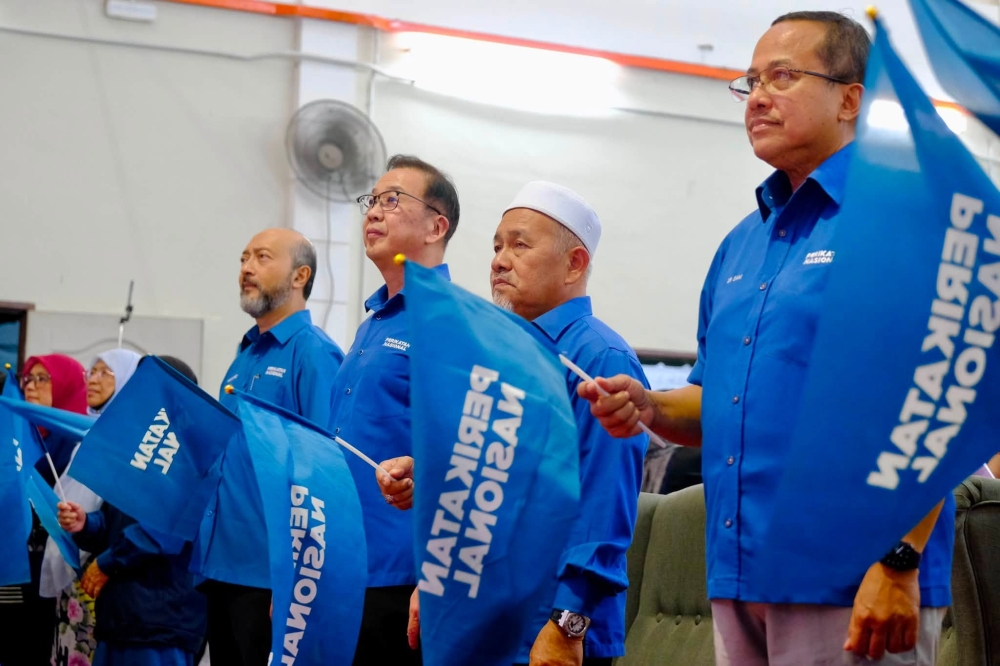
Perikatan Nasional chairman Datuk Seri Ahmad Samsuri Mokhtar has opened the door to extending the coalition's cooperation with Barisan Nasional beyond the current electoral cycle, signalling that a successful partnership at the state level could provide a blueprint for future national elections. Speaking in Kuala Lumpur on July 17, Ahmad Samsuri indicated that the alignment forged between PN and BN in Negeri Sembilan represents more than a temporary arrangement, potentially serving as the foundation for a longer-term political understanding that could reshape Malaysia's coalition landscape ahead of the sixteenth general election.
The suggestion comes at a pivotal moment in Malaysian politics, as both coalitions navigate the complex terrain of post-election alliances and state-level governance. Perikatan's willingness to explore sustained cooperation with Barisan reflects a pragmatic recognition that the country's fractured political landscape increasingly favours collaborative arrangements over traditional winner-take-all competitions. This shift underscores how Malaysia's transition towards coalition politics has become more sophisticated and flexible, with leaders now viewing electoral partnerships as potentially iterative rather than one-time transactions.
Negeri Sembilan has emerged as the testing ground for this political experiment. The state-level agreement between PN and BN demonstrates how two historically competing coalitions can find common ground on governance matters, resource allocation, and policy priorities despite their different ideological underpinnings and electoral bases. Success in managing these practical arrangements at the state level would provide credibility and operating procedures that could be scaled to national politics, addressing longstanding concerns about coalition stability and predictability.
For Barisan Nasional, Ahmad Samsuri's remarks suggest that PN views the relationship as mutually beneficial rather than adversarial. This represents a notable shift from the confrontational stance that has characterised Malaysian politics for much of the past decade. By positioning the Negeri Sembilan arrangement as a potential springboard for future cooperation, PN is signalling that it has moved beyond seeing electoral victory as a zero-sum game and instead recognises that sustainable political influence may require building durable institutional partnerships.
The implications for Malaysian voters and political observers are substantial. An extended PN-BN alliance heading into GE16 would dramatically alter the competitive landscape, potentially reducing the number of viable national coalitions and reshaping which parties and leaders have realistic pathways to federal power. This concentration of political forces would have profound consequences for policy direction, resource distribution, and the nature of political competition itself.
Regionally, Malaysia's evolving coalition dynamics carry significance for neighbouring Southeast Asian democracies. Countries across the region grapple with similar questions about managing plural political systems, balancing competing interests, and finding stable governance structures. Malaysia's experiment with flexible, pragmatic coalitions offers both lessons and warnings about the sustainability of such arrangements when grounded primarily in electoral mathematics rather than shared ideological commitment.
However, the success of any extended PN-BN partnership remains contingent on factors beyond either leadership's complete control. Electoral outcomes in state and by-elections will test the coalition's coherence. Grassroots members within both parties may resist sustained collaboration if they perceive threats to their own political fortunes. Leadership changes within either PN or BN could trigger reassessments of strategic direction. Additionally, emerging political movements or shifting voter preferences could reshape the entire calculus that currently favours coalition expansion.
The Negeri Sembilan pact will face continuous scrutiny as a bellwether for future cooperation. Constituents will judge whether the partnership delivers tangible improvements in governance, economic management, and service delivery. Any perception that the alliance prioritises elite political calculations over public welfare could undermine Ahmad Samsuri's vision of extended cooperation. Conversely, demonstrable success in addressing state-level challenges could generate genuine political momentum toward a more durable national arrangement.
For Malaysia's civil society, media, and democratic institutions, Ahmad Samsuri's statements underscore the need for enhanced transparency and accountability mechanisms around coalition governance. Citizens require clear information about how decisions are made within coalition structures, how resources are allocated, and how agreements between coalition partners affect policy outcomes. Without such transparency, coalitions risk being perceived as opaque arrangements serving elite interests rather than public purposes.
The timeline toward GE16 will determine whether PN-BN cooperation deepens into institutional relationships or remains a temporary accommodation. Several general elections or significant political realignments typically prove necessary before observers can confidently assess coalition durability. Ahmad Samsuri's optimistic framing of the partnership's potential longevity reflects hope rather than certainty, positioning PN as open to long-term cooperation while carefully avoiding commitments that might constrain future strategic flexibility.
Ultimately, the trajectory of PN-BN relations will depend on whether both coalitions' senior leadership can maintain internal discipline while managing members' expectations about the benefits of cooperation. The Negeri Sembilan experiment will either validate the viability of extended coalitions or expose the structural tensions that make sustained cross-coalition partnerships inherently unstable. Either outcome will carry important implications for Malaysian politics through the remainder of this decade.

