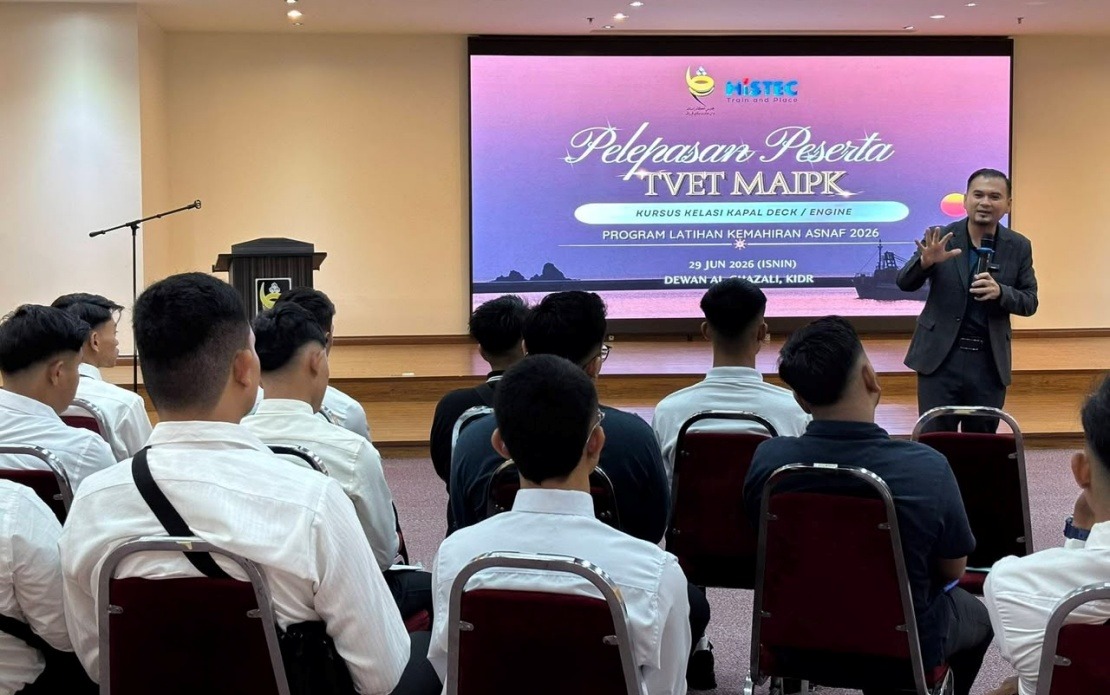
The Perak Islamic Religious and Malay Customs Council (MAIPk) is backing a significant effort to develop the maritime workforce by investing RM470,000 in vocational training for 25 economically disadvantaged young people across the state. The sponsorship programme, which targets deck and engine crew positions, underscores MAIPk's strategic alignment with Malaysia's broader push to strengthen technical and vocational education as a pathway for disadvantaged communities.
Allocating RM18,800 per participant, the council views this initiative as more than a simple financial commitment. According to the organisation, the investment represents a deliberate attempt to cultivate skilled labour that satisfies real market demands within the maritime industry, particularly at a time when shipping and port operations across Southeast Asia are expanding. By placing resources directly into competency-based training, MAIPk addresses both immediate employment gaps and longer-term economic mobility for asnaf (underprivileged) communities in Perak.
The three-month training programme will be delivered through the Ranaco Education and Training Institute in Chukai, Terengganu, combining classroom instruction with hands-on practical exercises. Participants will pursue internationally recognised certifications alongside Malaysia's mandatory seaman's licence requirements, credentials that open doors to employment across regional maritime hubs. This structured approach ensures that graduates meet global industry standards rather than local requirements alone, a distinction that matters considerably given Malaysia's position within major shipping routes and the presence of major port facilities in Klang, Port Kelang, and Penang.
The timing of this initiative reflects broader policy conversations across Malaysia regarding skills-based economic development. Policymakers and industry observers have increasingly recognised that TVET pathways offer alternatives to traditional academic routes whilst simultaneously addressing labour shortages in sectors like maritime operations, construction, and manufacturing. For Perak specifically, where economic diversification remains an ongoing priority, developing local maritime talent could strengthen the state's role in supporting national shipping infrastructure and logistics networks.
What distinguishes this MAIPk programme is its explicit focus on employment placement immediately following training completion. Rather than leaving graduates to navigate job markets independently, the council has arranged direct pathways into maritime sector positions, substantially increasing the likelihood of sustained employment and income growth. This employment-first approach differs from purely training-oriented schemes and reflects understanding that skills certification alone frequently proves insufficient without employer linkages and labour market navigation support.
The send-off ceremony, held at Kompleks Islam Darul Ridzuan in Ipoh and officiated by MAIPk Asnaf Empowerment Division General Manager Amirudin Osman, signals institutional backing for the programme. Such formal recognition elevates the initiative beyond corporate social responsibility rhetoric, positioning it as core work aligned with Islamic principles of supporting vulnerable populations. Within Malaysian society, where Islamic councils hold significant community influence, this framing potentially encourages similar investments from other state-level institutions.
The emphasis on socio-economic transformation reflects recognising that skills development serves purposes beyond immediate employment. Young people completing this course not only secure immediate income but also build human capital that enables long-term career progression within maritime fields. Deck and engine crew positions frequently offer pathways toward higher certifications, supervisory roles, and eventually senior positions within shipping operations. For asnaf youth, such trajectories represent genuine exits from poverty cycles rather than temporary employment relief.
Malaysia's maritime sector employs tens of thousands of workers across numerous disciplines, yet chronic shortages of qualified local crews persist, forcing operators to recruit internationally. This structural gap creates both challenge and opportunity—challenge because it indicates existing training systems are not meeting industry demand, opportunity because targeted interventions like MAIPk's programme can measurably improve labour availability. By developing 25 additional qualified crew members, the council contributes incrementally to solving this supply-side constraint.
The programme's success will be observable through employment outcomes. If most participants secure sustained maritime positions within three to six months of completing training, the model becomes replicable by other state Islamic councils and vocational authorities. Conversely, if placement rates fall short or if graduates struggle with workplace integration, the initiative will generate valuable lessons regarding the specific barriers that asnaf youth face when entering professional maritime environments.
Beyond individual beneficiaries, this investment carries implications for Perak's broader economic development strategy. Strengthening local maritime workforce capacity potentially attracts shipping-related investments and port operations to state territories, generating multiplier effects throughout logistics, transportation, and supply chain sectors. Several Southeast Asian economies have successfully leveraged workforce development as an economic attraction strategy, positioning themselves as cost-competitive maritime hubs with reliable local labour supplies.
The MAIPk initiative also illustrates evolving approaches within Malaysian Islamic institutions toward economic empowerment. Rather than limiting assistance to charitable distribution or religious instruction, councils increasingly view themselves as development actors capable of investing in human capital and market engagement. This repositioning carries significance for how religious institutions contribute to national development objectives whilst maintaining their distinct community roles and values systems.

