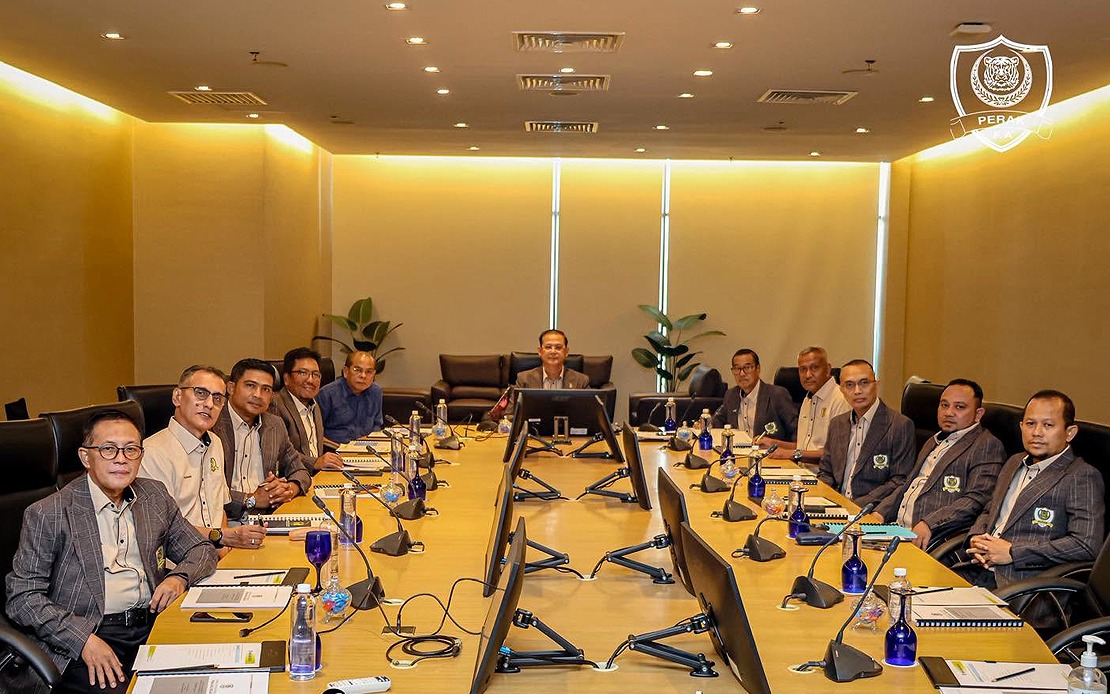
The Perak Football Association has confirmed plans to bring in a new head coach to oversee the team's campaign in the 2026-2027 Liga A1 Semi-Pro season, marking a significant transition in the state's football management structure. The decision comes in response to fresh mandates issued by the Amateur Football League, which now requires every competing team to employ a head coach holding an AFC Pro Diploma Coaching License. This regulatory shift reflects broader efforts to raise coaching standards across Malaysia's semi-professional football tiers.
In articulating its recruitment strategy, the association emphasised that the incoming head coach will need to satisfy more than just licensing credentials. The successful candidate must demonstrate substantial involvement in grassroots football development, fluency with contemporary coaching methodologies, and a demonstrable record of achievement across state, national, and international competitions. By establishing these criteria, Perak aims to secure leadership capable of elevating both immediate competitive performance and long-term player development trajectories.
The association has explicitly linked its coaching appointment to Perak's broader strategic framework, particularly the Perak Sejahtera 2030 Plan. This alignment suggests that football development is being positioned within the state government's wider economic and social development agenda. Such integration indicates that sports infrastructure and talent cultivation are increasingly viewed as components of comprehensive state development rather than isolated pursuits, potentially opening pathways for sustained investment and coordination across multiple government departments.
Outgoing coach Syamsul Saad, a former player, delivered respectable results in the previous season, guiding Perak to fifth place in the league standings whilst navigating the team through the MFL Challenge Cup semifinals and Malaysia Cup quarterfinals. Though these achievements demonstrate competitive viability, the move toward a certified Pro-A coach suggests the association believes progression toward higher competitive tiers requires a different calibre of technical expertise. The transition reflects a calculated investment in structural upgrading rather than a reflection on Saad's competence within his licensing category.
A noteworthy aspect of the recruitment approach is the stated commitment to retaining existing coaching support staff rather than implementing a wholesale replacement. The association plans to integrate the new head coach with the current technical team, creating a layered coaching structure intended to strengthen institutional knowledge whilst introducing fresh methodologies and certified expertise. This preservation of continuity may mitigate disruption whilst allowing the organisation to benefit from both established relationships and upgraded qualifications.
Player retention also figures prominently in the association's planning. Perak intends to extend contract offers to squad members who satisfied performance evaluation criteria during the previous campaign, providing stability and reducing the upheaval typically accompanying coaching transitions. This approach acknowledges that team cohesion and player familiarity with tactical systems carry measurable value, particularly when combined with enhanced coaching oversight.
Beyond the primary Liga A1 competition, Perak's broader fixture list will encompass the Liga A2 Amateur and the President's Cup. These additional competitions serve a deliberate developmental function, creating pathways for emerging talent identified through grassroots initiatives including the Malaysia Games, Liga A1 Semi-Pro participation, and the Liga Perak Sejahtera 2030. Rather than viewing these tournaments as secondary obligations, the association positions them as integral components of a comprehensive player development ecosystem.
The effectiveness of this multi-tier approach is evident in quantifiable outcomes. The association reports producing approximately 70 players aged between 18 and 24 through its coordinated development programmes, suggesting that systematic investment in structured grassroots pathways generates sustained talent pipelines. For Malaysian football, which historically struggles with consistent player development and continuity, this output demonstrates that strategically designed competition frameworks can compensate for limitations in traditional academy systems.
Menteri Besar Datuk Saarani Mohamad's acknowledged support provides political backing for the association's initiatives, suggesting state-level commitment to maintaining Perak's competitive football presence. This political dimension is significant for Southeast Asian football contexts, where government endorsement often determines funding availability and infrastructure access. By securing executive acknowledgment, Perak positions itself favorably for resource allocation in competitive negotiations with other states.
The professional standards now mandated by the Amateur Football League reflect Malaysia's broader football governance evolution. Requiring AFC Pro Diploma qualifications across semi-professional leagues signals commitment to raising coaching standards systematically rather than concentrating expertise in elite tiers. This regulatory framework has implications beyond Perak, establishing precedents that other state associations must eventually accommodate, thereby creating incremental pressure toward professionalisation throughout the domestic system.
For Malaysian football enthusiasts and analysts, Perak's coaching transition encapsulates larger structural transitions underway in domestic football governance. The emphasis on certified expertise, integrated development pathways, and multi-tier competition design reflects lessons learned from higher-performing football nations and recognition that sustainable success requires systemic investment rather than episodic intervention. Whether this appointment delivers enhanced competitive results remains to be observed, but the strategic framework suggests the association approaches football development with sophisticated understanding of modern requirements.

