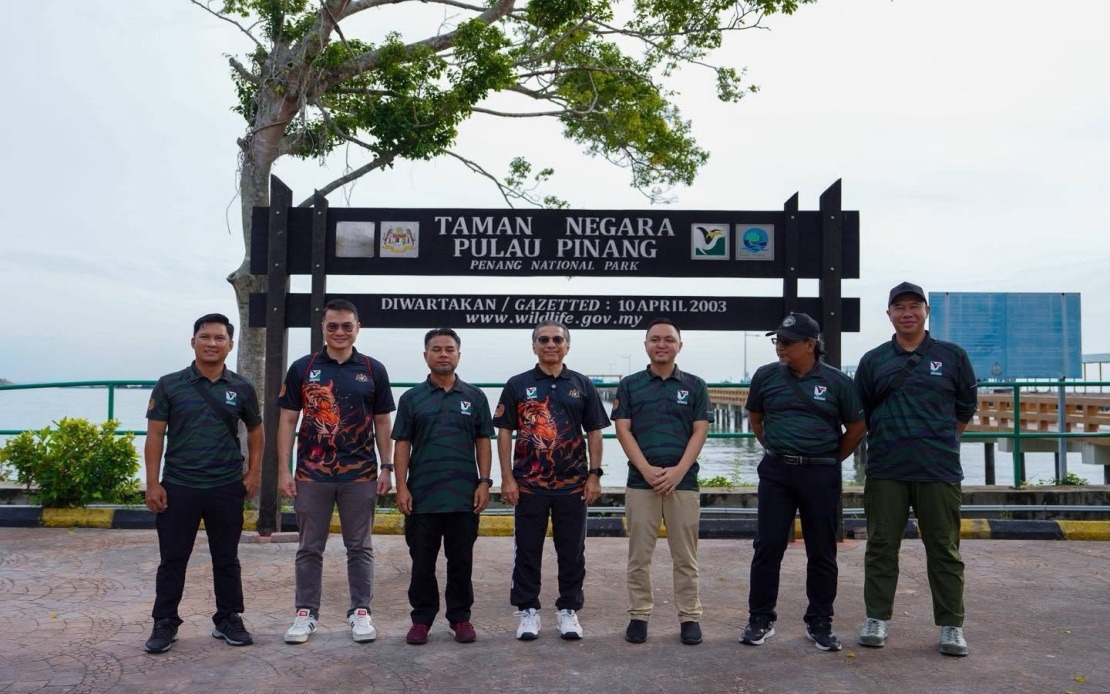
Penang National Park stands as one of Malaysia's most ecologically significant landscapes, harbouring a remarkable constellation of natural systems that span pristine forests, dynamic coastal zones, and rare aquatic environments. The park's meromictic lake—a water body with layers that do not mix—exemplifies the intricate ecological diversity contained within a single protected area, yet ensuring its survival demands far more than traditional fencing-off approaches that dominated conservation thinking a generation ago. Deputy Minister of Natural Resources and Environmental Sustainability Syed Ibrahim Syed Noh articulated this evolving philosophy during a recent inspection visit to the park in Teluk Bahang, signalling a strategic shift toward conservation models that actively incorporate local residents and visitors as stakeholders rather than passive observers.
The traditional conservation paradigm that treated protected areas as islands separated from surrounding communities has given way to a recognition that long-term ecosystem survival depends fundamentally on sustained public understanding and investment. Syed Ibrahim's remarks underscore this reorientation, framing the park not merely as a repository of endangered species and habitat, but as living heritage that carries obligations to both present and future generations. This philosophically grounded approach carries particular relevance across Southeast Asia, where population pressures and development demands constantly test the boundaries of protected lands. For Malaysia, where biodiversity hotspots increasingly intersect with urbanised areas and competing land claims, embedding conservation into community consciousness becomes not optional embellishment but essential infrastructure.
During his field inspection, Syed Ibrahim examined Penang National Park's multifaceted management structure, including the Penang Department of Wildlife and National Parks' oversight responsibilities. The visit itinerary revealed the layered nature of modern conservation work: technical ecosystem monitoring, visitor experience design, and educational programming now operate in concert rather than isolation. A boat tour through the park's coastal corridors allowed firsthand observation of mangrove systems and littoral habitats that function as nurseries for marine life and buffers against storm surge—ecosystem services increasingly valuable as climate patterns shift across the region.
A significant component of the inspection focused on the Turtle Conservation Centre at Kerachut Beach, operated by the Department of Fisheries Malaysia. This facility represents the convergence of species protection and community engagement, where researchers actively work with volunteers to monitor and protect nesting grounds for Green Turtles and Olive Ridley Turtles. These marine reptiles, which migrate across international maritime boundaries, underscore how biodiversity conservation transcends administrative borders. Penang's role as a nesting site for these endangered species positions the state as a custodian of regional ecological stability, a responsibility increasingly recognised in Southeast Asian conservation networks.
The meromictic lake inspection highlighted an ecological phenomenon that few other locations in Malaysia can claim. This unusual freshwater system, where distinct water layers maintain different chemical compositions and resist natural mixing, hosts specialised microbial and aquatic communities found nowhere else. Such unique ecosystems demand sophisticated understanding and careful management protocols, yet they also hold considerable educational value. When residents and students witness such natural wonders firsthand, abstract concepts of biodiversity protection acquire concrete meaning and emotional resonance.
Educational initiatives featured prominently in Syed Ibrahim's assessment, particularly the conservation programming at Entopia Penang, where interactive exhibits and direct nature engagement replace purely textbook-based learning. This experiential approach addresses a critical gap in Malaysia's environmental literacy—many urban residents, particularly younger generations growing up in cities, possess limited understanding of how ecosystems function or why their preservation matters. By transforming Penang National Park into a living classroom where biodiversity becomes tangible and personally relevant, conservation organisations cultivate constituencies predisposed to support protective policies and sustainable practices.
Ecotourism emerged as a central theme in the Deputy Minister's remarks, reflecting acknowledgment that economic incentives and conservation goals need not conflict when properly structured. Responsibly managed visitation to natural areas can generate revenue for local communities while funding protection efforts, provided that carrying capacities remain respected and visitor impacts remain monitored. This model proves particularly attractive in Malaysia's context, where tourism generates substantial foreign exchange while environmental degradation erodes long-term prosperity. Penang, as a major regional tourist destination, demonstrates both the opportunities and challenges inherent in this balancing act.
The Ministry of Natural Resources and Environmental Sustainability's emphasis on grounding conservation in practical realities reflects lessons learned from previous initiatives that failed to achieve lasting impact through top-down mandates alone. When communities lack economic stake in preservation or feel excluded from decision-making processes, even well-funded protection schemes prove vulnerable to encroachment and degradation. Conversely, when residents understand tangible benefits—whether through employment, educational opportunity, or enhanced environmental quality—support for conservation becomes self-reinforcing.
Penang's biodiversity challenges extend beyond park boundaries into broader landscapes where agricultural conversion, coastal development, and urban expansion continually narrow habitat corridors. The integrated approach emphasised during this visit suggests recognition that fragmentary ecosystems require landscape-scale thinking that encompasses protected areas alongside buffer zones, wildlife corridors, and sustainable-use zones. For Malaysian policymakers and resource managers, this represents a maturing understanding that conservation cannot succeed through protection of isolated reserves alone.
The intergenerational framing that recurred throughout Syed Ibrahim's statements—referring to Penang's natural heritage as a legacy requiring transmission to future generations in undiminished condition—invokes a moral dimension often absent from purely technical conservation discourse. This appeals to deeply rooted Asian values emphasising ancestral responsibility and filial obligation, potentially cultivating broader societal support for protective measures. In Malaysia's multicultural context, such universal ethical framings may resonate more effectively than narrow scientific arguments.
As Malaysia confronts mounting environmental pressures and climate vulnerabilities, Penang National Park functions as both symbolic and practical demonstration of how conservation can integrate ecological science, community engagement, economic development, and cultural transmission. The Deputy Minister's visit and subsequent statements signal that federal policymakers increasingly recognise that protected areas must serve multiple constituencies simultaneously—as repositories of biodiversity, as educational resources, as economic assets, and as spiritual or cultural touchstones. This multivalent approach, when implemented with rigour and integrity, offers a template for addressing conservation challenges across Southeast Asia's urbanising landscape.

