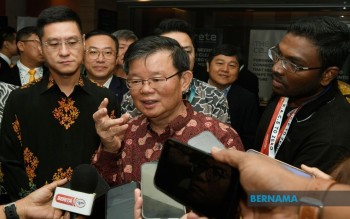
Penang's inaugural Climate Mitigation Fund has captured the interest of 25 manufacturing firms seeking to finance sustainability improvements, with five applications already in the assessment pipeline. Chief Minister Chow Kon Yeow announced the initiative's progress at the R.A.C.E To Zero conference in George Town, signalling the state's accelerating pivot towards environmentally responsible industrial development. The fund represents a critical bridge between environmental ambition and practical corporate action, offering participating companies both capital and expert guidance to navigate the transition towards cleaner operations.
The fund itself carries substantial firepower despite its initial modest appearance. Operating under the Penang Green Industry Programme in partnership with Alliance Bank, it began with RM20 million in combined capital—RM5 million from the Penang state government and RM15 million from the financial institution—yet carries potential commitments reaching RM100 million. This structure allows the initiative to scale gradually while demonstrating viability, a prudent approach given that climate financing at the state level remains relatively novel territory across Malaysia. The dual public-private funding model also reduces strain on government budgets whilst leveraging banking sector resources and incentives.
Eligible businesses, particularly small and medium enterprises alongside mid-tier companies, can access preferential financing packages up to RM500,000 buttressed by complementary services including sustainability assessments, expert advisory support, and targeted grants. This bundled approach recognises that capital alone proves insufficient; manufacturers often lack in-house expertise to identify efficiency opportunities or navigate renewable energy procurement. By combining loans with consulting and assessment services, the programme attempts to remove multiple barriers simultaneously, addressing knowledge gaps that frequently obstruct green transitions in developing economies.
The timing of this initiative reflects deepening pressure from global supply chains themselves. Penang, which exported RM436.9 billion in electrical and electronics products last year—comprising approximately 68 per cent of Malaysia's national E&E exports—occupies a uniquely vulnerable yet influential position. Multinational corporations increasingly impose carbon requirements on suppliers, treating environmental performance as a competitive prerequisite rather than a peripheral concern. Chief Minister Chow articulated this shift candidly: major buyers now routinely interrogate not merely traditional factors like workforce quality, infrastructure adequacy, logistics efficiency and operational costs, but also the energy sources powering production facilities. Renewable energy access and minimised Scope 2 emissions have become central to purchasing decisions, particularly among technology and consumer goods manufacturers bound by their own net-zero commitments.
Penang's strategic response flows through the Penang Energy Framework, launched in November 2024, which establishes measurable targets for the state's industrial energy profile. The framework commits to reducing energy intensity by 25 per cent and expanding renewable energy's share of the state's total energy mix to at least 10 per cent by 2030. These figures may appear modest compared to global net-zero pledges, yet they represent realistic interim goals for an urbanised, densely populated state where land scarcity presents genuine constraints. Rather than pursuing expensive and complex offshore wind or large-scale hydroelectric projects, Penang emphasises rooftop solar deployment as pragmatic and spatially efficient.
The state has begun mandating solar integration into new building construction. Fresh commercial and industrial structures must now utilise a minimum of 75 per cent of available roof area for photovoltaic panels or alternatively demonstrate equivalent renewable energy sourcing aligned with their Tenaga Nasional Berhad tariff classifications. This regulatory approach sidesteps subsidy debates by embedding green requirements into planning standards, creating market pull for solar installation industries whilst distributing transition costs across property developers and operators. The regulation operates prospectively, avoiding retrofitting complications whilst establishing renewable energy as a baseline expectation rather than an aspirational luxury.
Beyond rooftop solutions, Penang explores complementary renewable pathways. The Penang Water Supply Corporation is conducting feasibility studies for floating solar installations across its reservoir network, a technology gaining traction across Southeast Asia as drought vulnerabilities increase. Meanwhile, Silicon Island—the state's flagship semiconductor and advanced manufacturing cluster—will integrate renewable energy systems into its master plan, anchored by a dedicated Green Tech Park powered substantially through on-site solar generation. These initiatives collectively signal that Penang's green transition is not rhetorical but structurally embedded across state enterprises and major development projects.
Energy efficiency represents the second pillar of Penang's approach, complementing renewable energy expansion. The state is establishing energy intensity standards permitting systematic measurement, benchmarking and comparative performance analysis across industrial facilities. Government buildings and local authority properties are undergoing assessments to quantify renewable energy and efficiency potential. For newly constructed state and local authority facilities, targets mandate that at least five per cent of total energy consumption derive from renewable sources, with existing government properties encouraged to pursue identical objectives. This government-led commitment provides both demonstration effects and procurement leverage, as state purchasing power influences market development for energy solutions and technologies.
Penang's initiatives align deliberately with federal frameworks, specifically the National Energy Efficiency Action Plan 2.0, which targets an 11.6 per cent reduction in national energy demand by 2030. This alignment matters substantially because Malaysia's climate transition requires synchronisation between state and federal policies; misalignment typically creates confusion, inefficient investment, and undermines corporate confidence in long-term stability. By anchoring state programmes to national objectives, Penang reinforces the credibility of its commitments whilst participating in broader coalition-building around energy transition. The state thus positions itself neither as a maverick pursuing unilateral targets nor as a passive implementer of federal directives, but rather as an active contributor to genuinely national decarbonisation efforts.
The Climate Mitigation Fund's early reception from 25 companies suggests manufacturing leadership in Penang recognises both the inevitability and opportunity embedded in this transition. Competitive pressures from global supply chains mean delay becomes increasingly costly. Simultaneously, early movers gain advantages: access to preferential financing, brand positioning as sustainability leaders, and influence over emerging regulatory landscapes before mandates become universally binding. For Malaysian manufacturers more broadly, Penang's experiment offers both inspiration and practical lessons about structuring green finance, integrating renewable energy into established industrial clusters, and aligning state policies with global competitive requirements. The next phase will demonstrate whether initial enthusiasm translates into sustained implementation and measurable emissions reductions across the state's dominant industrial sectors.

