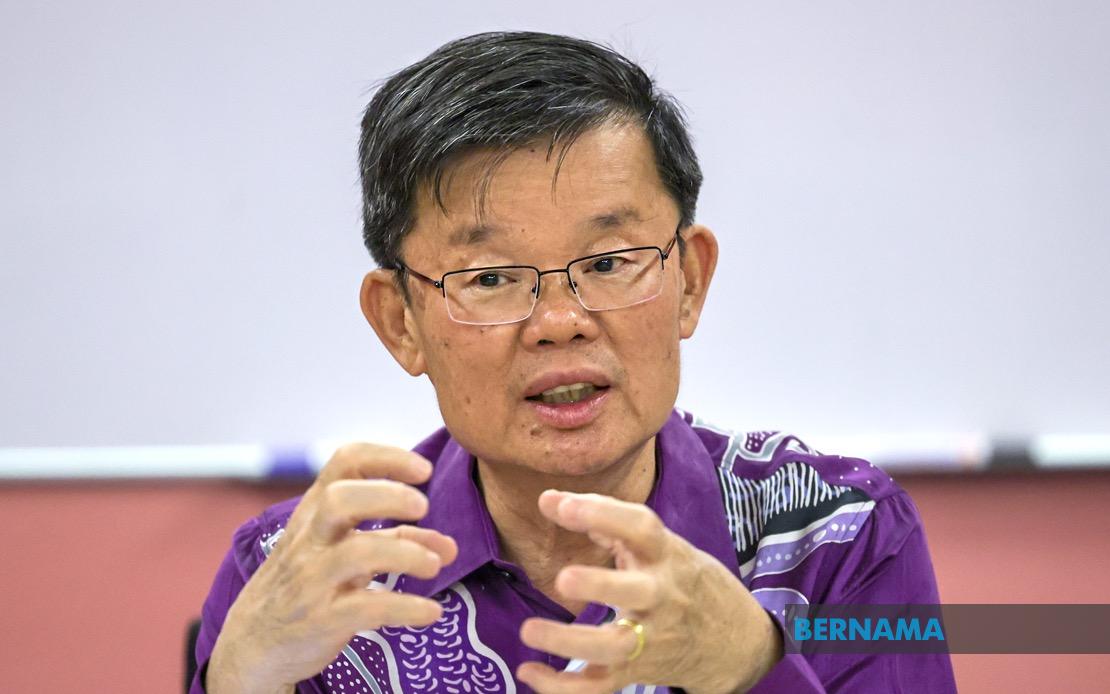
Penang's ruling Pakatan Harapan coalition will maintain its partnership with Barisan Nasional by keeping the latter's state executive councillor in the administration through to the next general election, Chief Minister Chow Kon Yeow announced on Wednesday. The decision, formalised at a Penang PH meeting in George Town, reflects the coalition's commitment to the electoral alliance struck during the 2023 state election, when the two blocs jointly secured 29 of the 40 available seats.
The BN representative holding an executive position is Datuk Rashidi Zinol, who chairs the State Rural Development, Agrotechnology and Food Security Committee. His continued tenure underscores the pragmatic nature of the Unity Government arrangement, which has proven resilient across multiple state administrations since its formation at the federal level following the 2022 general election. Chow characterised the retention decision as evidence of PH's willingness to nurture cross-coalition cooperation, framing it within the broader reform narrative that underpins the coalition's political identity.
Chow indicated that the coalition views the transition period towards the next general election as an opportunity to deepen its collaborative framework rather than fracture it. He stated that maintaining BN's representation at the executive level would enable both parties to continue accelerating their shared reform agenda and consolidate the institutional stability that voters have come to expect from the state government. This approach suggests that PH leadership believes the Unity Government model remains electorally valuable, despite occasional tensions between component parties over seat allocations and policy direction.
The Penang PH leadership has also absorbed lessons from recent state elections in Johor and Negeri Sembilan, where electoral dynamics shifted in ways that surprised political analysts. Rather than viewing those results as direct precedents for Penang, the coalition is conducting granular analysis of each state constituency, examining demographic trends, voter sentiment, and local issues that may influence outcomes in the 16th general election. This methodical preparation reflects awareness that complacency could prove costly, particularly given the state's competitive political landscape and the emergence of new voter cohorts.
A significant element of Penang PH's strategy involves engaging with voters aged 18 to 20, the Undi18 demographic that gained voting rights after the constitutional amendment lowering the voting age. The coalition recognises that this growing segment of the electorate requires tailored messaging and engagement approaches, particularly through digital platforms where younger voters congregate. Chow acknowledged that public perceptions shift rapidly and often outpace the factual record of governmental achievement, necessitating more sophisticated communication strategies than traditional methods alone can provide.
The political narrative that PH intends to project centres on the state administration's demonstrated stability, institutional integrity, and tangible economic outcomes. Penang's track record of attracting foreign direct investment, generating employment opportunities, and implementing policies perceived as beneficial to ordinary households forms the factual foundation for this messaging. However, Chow cautioned that strong performance metrics do not automatically translate into electoral success if the coalition fails to effectively communicate its achievements or permit perception gaps to widen unchecked.
The 2023 state election results that produced the current configuration saw DAP's dominant performance, winning all 19 seats it contested, complemented by PKR's seven seats and Amanah's single seat, together delivering PH's substantial majority. BN's two seats, though modest numerically, gained significance as the tiebreaker that enabled the formation of a government with 29 of 40 seats. This mathematical reality explains PH's apparent willingness to preserve BN's executive representation, as losing that partnership could theoretically reduce the coalition's legislative cushion below comfortable margins if defections or other political shifts occurred.
The decision to retain Datuk Rashidi Zinol also reflects pragmatic calculations about the costs of coalition fracture against the benefits of continuity. A public rupture with BN, particularly at the state level, could signal weakness to voters and potentially embolden opposition parties to exploit divisions within the government. Moreover, maintaining the arrangement demonstrates to BN's electoral base that coalition participation yields tangible benefits in the form of ministerial portfolios and policy influence, potentially discouraging defections to other political formations.
Looking toward the 16th general election, Penang PH faces the delicate balancing act of claiming credit for the coalition's achievements while managing expectations about what additional gains might be possible if PH were to govern alone. The retention of BN's executive councillor signals confidence that the present arrangement can be defended to voters, but it also constrains PH's ability to argue for a mandate to pursue a purely PH-led agenda. This tension between coalition building and electoral competition represents an ongoing challenge for Malaysian politics in the post-2022 era.
Chow's emphasis on the coalition's strengths—institutional stability, economic performance, and policy coherence—attempts to reframe the political conversation around governance outcomes rather than seat counts or factional positioning. This messaging strategy reflects an understanding that voters increasingly evaluate coalitions based on what they deliver in terms of services, economic opportunity, and transparent administration rather than abstract political calculations. Whether this emphasis proves sufficient to maintain voter confidence through the electoral cycle ahead remains to be tested.

