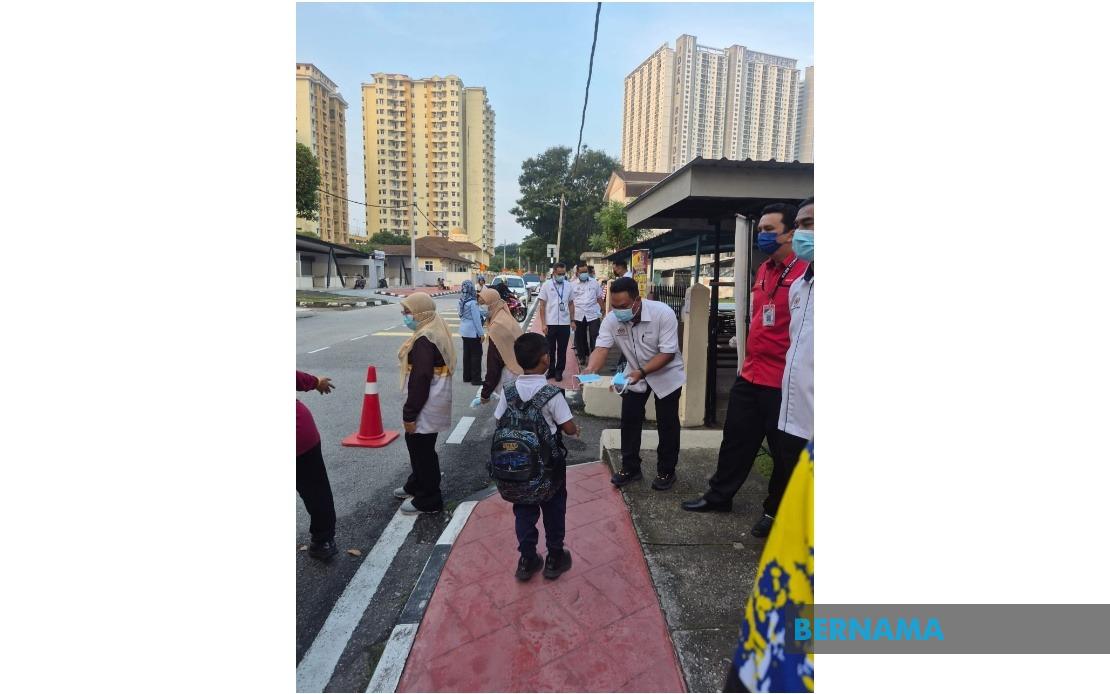
Penang schools stand ready to transition towards home-based teaching and learning, known locally as PdPR, should the Air Pollutant Index climb to 200 as a result of transboundary haze pollution affecting the region. The Penang Education Department has established clear thresholds and monitoring protocols to respond swiftly to deteriorating air quality, ensuring minimal disruption to the academic calendar while prioritising student wellbeing. This proactive stance reflects broader regional concerns about haze-induced disruptions, which have become increasingly common across Southeast Asia during dry seasons.
Mohamad Dziauddin Mat Saad, director of the Penang Education Department (JPNPP), outlined the department's operational readiness during a site visit to Sekolah Kebangsaan Sungai Gelugor. He emphasised that the decision framework aligns with nationally coordinated guidelines developed conjointly by the Ministry of Education, Ministry of Health, and the National Disaster Management Agency. This multi-agency approach reflects the seriousness with which Malaysia's federal government treats air quality emergencies, recognising that education continuity and public health must move in tandem during environmental crises. The collaborative framework ensures consistency across different states and prevents isolated, fragmented responses.
The department will not delay announcing closures or learning mode changes, Mohamad Dziauddin assured stakeholders, signalling an end to last-minute chaos that has characterised previous haze episodes. Instead, JPNPP will conduct systematic monitoring across four strategically positioned API measurement stations—Minden, Balik Pulau, Seberang Jaya, and Perai—at designated evening hours to forecast conditions for the following day. This geographic distribution of monitoring points provides representative data across Penang's urban, industrial, and outlying areas, enabling nuanced decision-making rather than crude statewide pronouncements. Evening assessments allow schools and parents adequate time for preparation, transforming administrative response from reactive scrambling into orderly transition.
To operationalise this monitoring system, JPNPP activated a dedicated war room on August 13, functioning as a centralised command centre for haze situation analysis. The unit continuously tracks API trends, meteorological developments, and health alerts before cascading information through district education offices to individual schools. This hierarchical information flow prevents communication bottlenecks and ensures uniform messaging. Schools, having received authoritative guidance, can then inform parents and staff with confidence, reducing anxiety and misinformation. The systematic approach represents institutional maturation in crisis management, moving beyond ad-hoc responses towards embedded preparedness infrastructure.
Parental anxiety forms a significant component of haze-related disruptions, extending beyond school operations into household planning and work arrangements. Mohamad Dziauddin sought to reassure families that JPNPP maintains dedicated personnel monitoring conditions around the clock, with student safety, health, and comfort positioned as paramount considerations. This transparency about internal arrangements, whilst appearing routine, addresses a trust deficit that sometimes emerges when government agencies appear to act without explanation. Schools have simultaneously been encouraged to advise students, particularly those with respiratory vulnerabilities, to prepare preventive measures in advance. This targeted approach recognises that haze impacts are not uniformly distributed across the student population, requiring differentiated support strategies.
Beyond classroom operations, Penang faces the challenge of hosting two major youth-oriented events whose timing coincides with the haze-prone season. The Malaysia Schools Sports Council Football Championship and the 15th Malaysian Scout Jamboree, both commencing on August 28, attract thousands of young athletes and scouts across Malaysia and internationally. These events represent significant national showcases, yet they necessarily expose participants to outdoor air quality hazards. JPNPP, in coordination with the Ministry of Education's Sports, Co-Curriculum and Arts Division, has begun contingency planning that balances event continuity with health protection. The department is exploring schedule flexibility, particularly adjusting football match timings to coincide with periods of superior air quality within each day.
The Malaysian Scout Jamboree presents particularly complex logistical considerations given its scale and international dimensions. Hosted under MYJAM15, the gathering will welcome more than five thousand domestic scouts alongside over four hundred fifty international participants representing eleven countries, including South Korea, Indonesia, Singapore, and Sri Lanka. Prime Minister Datuk Seri Anwar Ibrahim is scheduled to officiate the opening ceremony on August 29. Cancellation would represent diplomatic embarrassment and logistical nightmare, whilst proceeding during hazardous conditions risks reputational damage and participant health consequences. The national scouting organisation has accordingly established its own specialized operations facility dedicated to haze monitoring and management throughout the programme duration, enabling real-time decision-making regarding activities, safety protocols, and schedule adjustments.
The convergence of these events with haze season illustrates a broader challenge facing Malaysia and Southeast Asia: seasonal air quality crises increasingly intersect with fixed calendars for education, commerce, and national celebrations. Unlike unpredictable natural disasters, transboundary haze occurs with relative regularity, yet its intensity and timing remain insufficiently predictable for definitive advance planning. Schools and organisers must therefore develop adaptive management systems that accommodate uncertainty whilst maintaining operational credibility. Penang's approach—establishing clear numerical thresholds, creating monitoring infrastructure, and developing contingency options—represents a practical methodology that other Malaysian states and regional neighbours might usefully emulate.
From a regional perspective, Penang's experience foreshadows challenges likely to intensify as climate change patterns alter precipitation and burning practices across Indonesia and other regional sources. Air pollutant indices exceeding 200 represent hazardous conditions by international standards, warranting serious restriction of outdoor activity. Yet as haze events grow more frequent and severe, educational systems must develop capacity to maintain learning continuity despite air quality emergencies. Remote learning capabilities, whilst expanded since pandemic-era lockdowns, remain unevenly distributed across Malaysia's socioeconomic spectrum. The transition to PdPR, therefore, implicitly raises equity questions about technology access and household connectivity that education authorities have only partially addressed. Schools situated in disadvantaged communities may struggle to implement remote learning effectively, potentially widening educational disparities during haze episodes that correlate with particular geographic distributions.
The financial and logistical burden of managing haze-responsive education extends beyond Penang. State education departments across northern Malaysia face similar pressures, as do schools in other Southeast Asian nations confronting transboundary air pollution. Coordinating responses across state boundaries, as well as internationally, remains underdeveloped. Regional frameworks for air quality data sharing, harmonised health thresholds for school closures, and mutual recognition of remote learning delivery could strengthen collective resilience. ASEAN, through its Secretariat and environmental bodies, might usefully facilitate development of regional protocols rather than permitting continued fragmentation of responses based on individual national or subnational decisions.
Looking forward, Penang's haze preparedness represents a pragmatic interim solution whilst structural causes of transboundary air pollution remain inadequately addressed. Addressing underlying sources—agricultural burning practices, industrial emissions, and forest conversion in Indonesia—requires sustained diplomatic engagement and bilateral environmental cooperation at levels above education department competence. Schools must meanwhile equip themselves for potentially worsening conditions, investing in air filtration technology, expanding remote learning infrastructure, and developing comprehensive contingency protocols that account for the widening range of stakeholders affected by haze events. The coming months will test whether Penang's war room and monitoring systems deliver on their promise of orderly, timely, transparent responses to deteriorating air quality.

