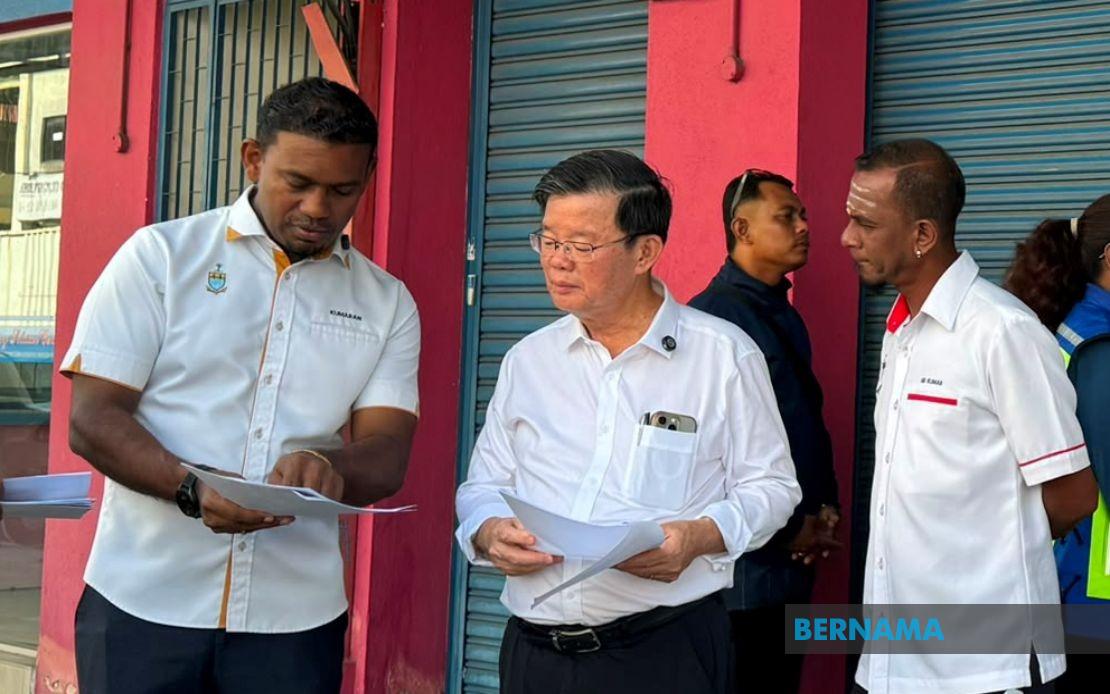
Penang will forge ahead with a water tariff increase that began on July 1, resisting pressure from lawmakers and the public to delay the controversial change. Chief Minister Chow Kon Yeow made the announcement in Butterworth, emphasising that the state government had already granted consumers a substantial grace period by deferring implementation from the originally scheduled August 2024 date until this month—nearly a year of additional waiting time. Despite continued objections, including a recent appeal from Bagan Member of Parliament Lim Guan Eng urging a one-year postponement, Penang's leadership maintains that further delays would undermine the state's water security objectives.
The tariff adjustment, mandated by the Federal Government through the National Water Services Commission (SPAN), generates an estimated RM20 million in additional annual revenue for the Penang Water Supply Corporation (PBAPP). While this figure may appear modest in isolation, it forms a critical component of a far larger financial strategy. The water utility faces capital expenditure requirements totalling nearly RM2 billion for supply security initiatives, with additional billions required for the state's share of an ambitious water supply project drawing resources from Perak. These competing funding pressures have made tariff increases unavoidable under current circumstances, leaving officials to defend rather than celebrate the measure.
Chow underscored an important structural reality that often escapes public debate: tariff increases across Malaysian states follow a standardised framework established by SPAN, which permits operators to seek rate reviews every three years as production costs and infrastructure needs evolve. Penang has not acted unilaterally or deviantly but rather adopted a mechanism in use nationwide. This regulatory context matters because it suggests any solution involving broader tariff relief would require federal rather than state-level intervention—a distinction that has largely been absent from public discourse surrounding the increase.
A crucial element of Chow's defence centres on cross-subsidy arrangements that mask the true cost of water delivery to household consumers. The actual expense of producing and distributing water in Penang has surpassed RM1 per cubic metre, yet domestic users pay only approximately 65 sen—a substantial shortfall underwritten by non-domestic customers in the industrial and commercial sectors. Under the new rate structure, household consumers paying only 65 sen per cubic metre are receiving an implicit subsidy representing approximately one-third of the actual production cost. Without this arrangement, residential tariffs would be substantially higher, shifting even greater financial burden onto ordinary families.
The immediate financial impact on household budgets remains modest for most consumers. PBAPP chief executive officer Datuk K. Pathmanathan outlined that approximately 82 per cent of Penang households consuming 35 cubic metres or less monthly—a reasonable consumption level encompassing most families—will experience maximum additional costs of 8 sen per day, or RM2.55 per month. Commercial users consuming 500 cubic metres monthly face steeper increases of RM2.59 daily or RM77.70 monthly, reflecting the intentional policy of maintaining household affordability through cross-subsidy.
The rationale for accepting these tariff increases becomes clearer when examined through the lens of Penang's water security strategy. The Water Contingency Plan 2030 (WCP 2030) represents an ambitious framework designed to insulate the state from supply shortages and climate volatility in coming years. Specific projects funded through tariff revenue include construction of new water treatment plants at Mengkuang Dam and Sungai Perai, land acquisition and modernisation of the Sungai Dua facility, property assembly for a planned Sungai Muda treatment plant, and critical pipeline infrastructure improvements including the Macallum-Bukit Dumbar connection. Each component addresses genuine vulnerabilities in the current system—ageing infrastructure, limited treatment capacity, and geographic constraints limiting water availability.
The timing of this announcement carries regional significance for Malaysia and Southeast Asia more broadly. Water stress affects multiple states across Peninsular Malaysia, with Selangor, Kuala Lumpur, and other developed regions facing similar capacity constraints. Penang's decision to proceed despite political headwinds may influence other state governments currently contemplating difficult tariff decisions of their own. If Penang successfully implements increases while maintaining public service quality and demonstrating transparent allocation of revenue toward visible infrastructure, it could establish a template for other states seeking public acceptance of rate increases necessary for long-term security.
Opposition to the tariff increase, while understandable from household budgeting perspectives, must contend with the stark reality that water infrastructure cannot be maintained or expanded without adequate funding. Lim Guan Eng's appeal for a one-year postponement, while sympathetic to cost-of-living pressures, implicitly assumes that deferring necessary revenue collection merely delays difficult decisions rather than solving underlying problems. Infrastructure deterioration and capacity shortfalls cannot be wished away, and postponement risks forcing even more painful increases later if maintenance failures necessitate emergency spending.
Chow's framing of the decision as protecting long-term consumer interests rather than extracting short-term revenue reflects a calculated political gamble. The Chief Minister is betting that households can absorb additional monthly bills of RM2-3 while appreciating government efforts to prevent future water rationing or emergency supply disruptions. Whether this political calculation proves sound depends partly on PBAPP's execution of promised projects and transparent communication of progress, and partly on whether water scarcity fears materialise in ways that vindicate the utility's spending plans.
The broader developmental context cannot be ignored. Penang's economy remains dependent on reliable, abundant water supply for manufacturing, tourism, and residential expansion. A state that cannot guarantee water security faces potential constraints on economic growth and property development. From this perspective, current tariff increases represent an investment in future prosperity rather than merely a cost-of-living burden. Whether Malaysian households and politicians accept this framing while managing household budget pressures will significantly influence how successfully Penang navigates its water security challenges across the coming decade.

