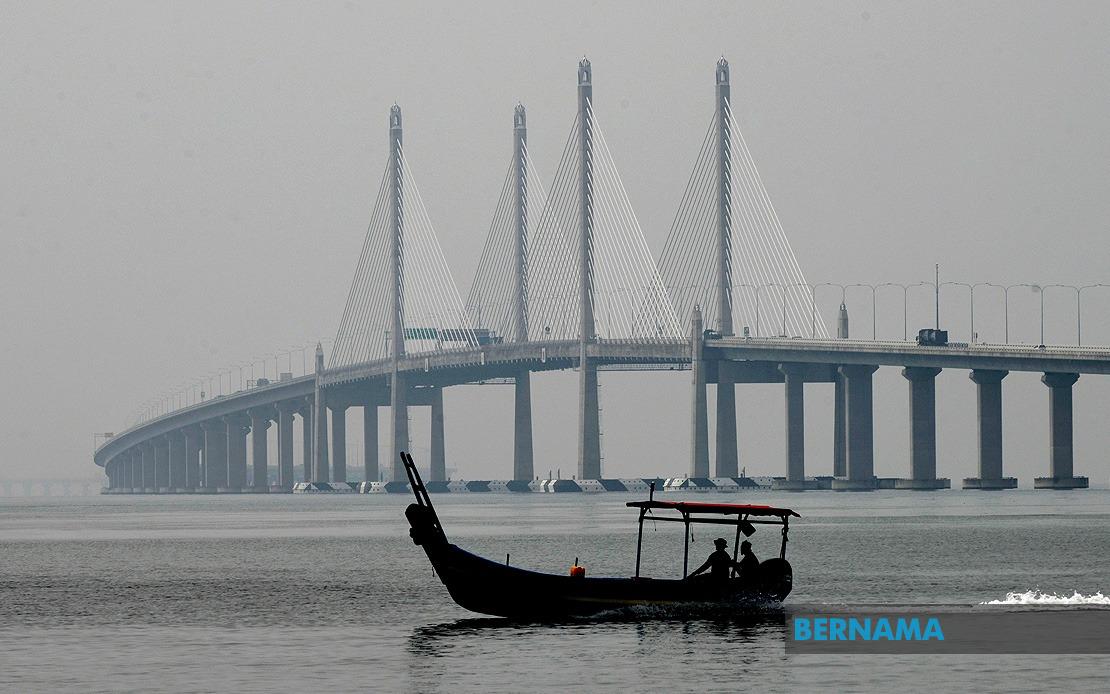
State authorities in Penang have committed to exploring a more nuanced approach to a recently enforced fishing prohibition beneath the Penang Bridge and the Sultan Abdul Halim Mu'adzam Shah Bridge, following complaints from the maritime industry. Discussions involving relevant stakeholders are scheduled for the coming week, with officials seeking to calibrate enforcement measures that do not unduly compromise both public safety and economic sustainability in the region.
Datuk Rashidi Zinol, chairman of Penang's Rural Development, Agro-technology and Food Security and Entrepreneurship Committee, acknowledged the growing friction around the implementation of the ban. His remarks came after maritime operators—encompassing both fishing and tourist boat services—raised significant objections during recent consultations. The committee chief indicated that the administration recognises the tension between necessary regulatory compliance and the material hardship experienced by dependent communities, suggesting that a formulaic enforcement may not serve either objective adequately.
Operators have articulated concrete concerns about the economic fallout. The fishing embargo has contracted commercial demand, with reduced bookings reported across both fishing and leisure boat services. This contraction reflects not merely a temporary adjustment but a structural challenge to the viability of established supply chains and service networks that have long operated in these waters. The ripple effect extends far beyond the vessel operators themselves, touching suppliers of fishing gear, ice distributors, food vendors, and numerous ancillary enterprises that depend on robust activity in these traditional fishing grounds.
The legal framework underpinning the restriction is longstanding and substantial. Both bridge areas have been formally gazetted as restricted zones and prohibited places under the Protected Areas and Protected Places Act 1959, and designated as National Key Points. This classification reflects genuine security considerations around critical infrastructure protecting major transportation links and urban connectivity. The legal architecture therefore cannot be readily dismantled without establishing alternative protective mechanisms that satisfy national security requirements.
The challenge confronting Rashidi and his colleagues involves threading a needle between incommensurable demands. Security imperatives and regulatory formalism push toward absolute prohibitions, while livelihood considerations and economic realities argue for graduated restrictions or designated operational windows. The maritime operators' grievances suggest that current enforcement, whatever its security rationale, operates without sufficient calibration to local economic conditions or established usage patterns.
What makes this situation particularly acute for Malaysian policymakers is its demonstration of how infrastructure security measures, while necessary, can inadvertently damage precisely those communities least equipped to absorb economic shocks. Small-scale fishing operations and related service providers often lack diversification and alternative revenue streams, rendering them exceptionally vulnerable to sudden operational restrictions. The committee chairman's explicit acknowledgement of broader supply chain impacts indicates awareness that the ban's reach extends to invisible portions of the economy.
The pending discussions will likely require creative problem-solving rather than simple policy reversal. Potential avenues might include designated fishing windows outside peak tourist traffic, restricted-area permits for registered operators meeting enhanced security vetting, or relocation protocols facilitating operations in nearby alternative waters. Each approach carries distinct implementation challenges and residual security considerations that planners must carefully evaluate.
Penang's approach here offers a useful model for other Malaysian states grappling with similar tensions between security frameworks and economic autonomy. The recognition that balance requires active negotiation rather than unilateral decree reflects pragmatic governance. Security measures that generate disproportionate collateral economic damage risk undermining public compliance and trust, particularly among affected communities who may perceive enforcement as disconnected from their wellbeing.
For Southeast Asia more broadly, such conflicts are becoming increasingly common as governments simultaneously prioritise critical infrastructure protection and economic resilience. Penang's willingness to convene stakeholders and examine the enforcement regime's broader impacts suggests that effective security governance need not mean economic disregard. The coming week's discussions will test whether officials can identify mechanisms satisfying both mandates, or whether compromises must be struck that acknowledge the inherent tension between these objectives.
The outcome will likely influence not only the immediate situation affecting boat operators and fishing communities but also set expectations for how state authorities approach security-versus-livelihoods dilemmas elsewhere. A successful balanced approach could demonstrate that regulatory compliance and economic sustainability are not mutually exclusive, while failure to accommodate legitimate economic concerns might entrench perceptions that security frameworks are imposed without consideration for affected populations.

