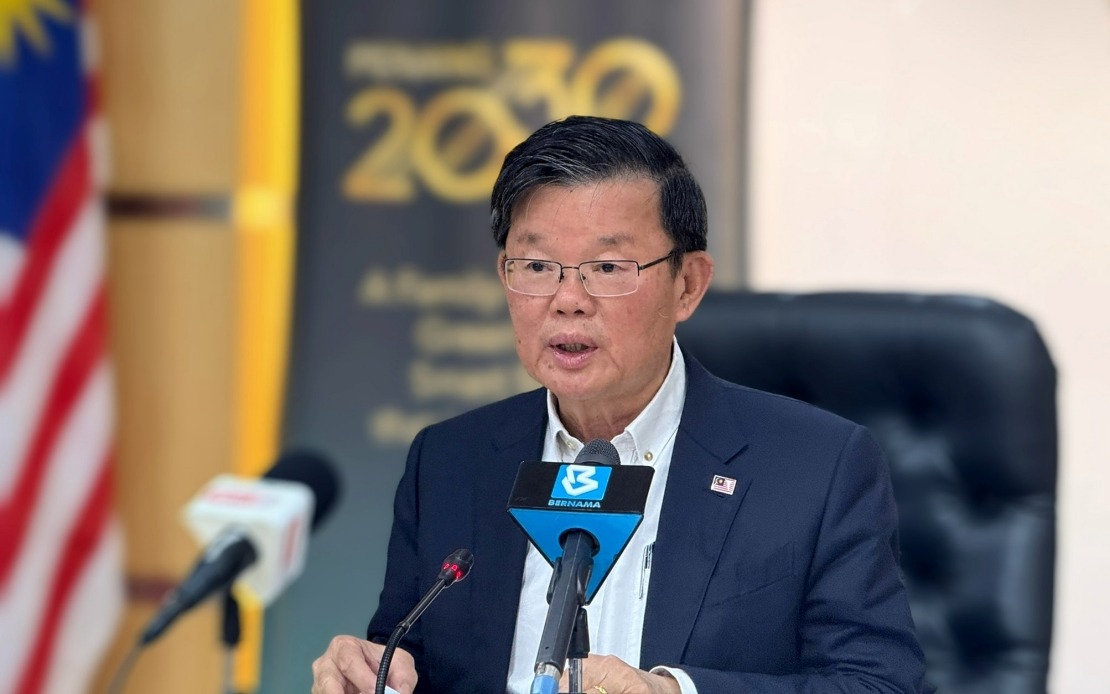
The Penang government has entrusted PricewaterhouseCoopers Advisory Services Sdn Bhd (PwC) with developing the foundational policy documents for the Penang International Financial Centre (PIFC), a bold initiative aimed at positioning the state as a regional financial services powerhouse. Chief Minister Chow Kon Yeow announced that PwC received its formal letter of appointment on June 15, tasked with completing three interconnected deliverables within a 20-week timeline: a comprehensive White Paper outlining the centre's strategic vision, a detailed Strategic Blueprint addressing operational structures, and an Action Plan charting the implementation pathway.
The PIFC Special Task Force Committee, which oversees the project's development, approved PwC's engagement and has already received an initial progress report. According to Chow's statement, the consulting team has begun identifying how Penang's existing competitive advantages—particularly its deep integration into global electrical and electronics supply chains—can serve as the foundation for this financial initiative. This analytical focus suggests the PIFC will not emerge as a generic financial district, but rather as a specialized hub connecting financial services with manufacturing innovation and technology-driven enterprises.
The scope of PwC's assignment extends well beyond producing glossy policy documents. The consultant has been explicitly tasked with conducting widespread stakeholder engagement, reaching out to strategic partners, multinational industry players, regulatory authorities, academic institutions, and the broader business community. This consultative approach reflects recognition that the PIFC's success will depend on genuine buy-in from international investors, domestic corporations, and government agencies at both state and federal levels. The engagement process also signals Penang's commitment to ensuring that the proposed centre's framework remains grounded in practical realities rather than aspirational rhetoric.
Chow emphasized that the initiative represents a calculated response to global economic trends, particularly the intersection of financial services with technology innovation. By positioning the PIFC within Penang's existing electronics ecosystem, the state government appears to be betting that financial technology, supply chain financing, and innovation-linked capital flows will constitute the future of regional finance. This positioning distinguishes Penang's approach from traditional financial centre models that concentrate on trading, wealth management, and banking operations divorced from productive industries.
The White Paper, expected to be finalized by late July or early August, will articulate the regulatory framework underpinning the PIFC's operations. This document will be critical in establishing how the centre will coordinate with Malaysia's existing financial regulatory architecture, including Bank Negara Malaysia's supervisory requirements and the Securities Commission's oversight. The blueprint component will detail governance structures, identifying which institutions will oversee the centre's operations and how decision-making authority will be distributed among state government agencies, federal regulators, and potentially private sector participants.
The infrastructure component carries particular weight for a state seeking to attract high-value financial operations. Penang will need to demonstrate that it can provide world-class office facilities, telecommunications connectivity, and digital security infrastructure capable of meeting international standards. Given competition from established centres such as Singapore and Hong Kong, as well as emerging hubs like Dubai and Shanghai, the infrastructure blueprint must be sufficiently compelling to justify relocation or expansion decisions by global financial institutions.
Incentives design represents another critical dimension of the Strategic Blueprint. International financial centres typically offer tax advantages, regulatory exemptions, and operational flexibility to attract targeted activities. PwC will need to recommend incentive structures that are sufficiently attractive to international participants while remaining politically sustainable within Malaysia's broader fiscal framework and not creating resentment among other states or domestic financial sector competitors. The balance between competitiveness and fiscal responsibility will significantly influence the centre's viability.
Chow's confidence in the initiative's transformative potential reflects broader state government ambitions extending beyond financial services. Penang leadership has consistently emphasized the goal of nurturing homegrown champion companies capable of competing at global scales. The PIFC is framed as a mechanism for channelling capital toward innovation, facilitating technology transfer, and enabling promising domestic enterprises to access international financing. This developmental orientation suggests the centre will function partly as an economic policy tool rather than purely as a financial services venue.
The timing of this initiative carries strategic significance for Malaysia's broader economic positioning. As regional competition intensifies among ASEAN economies seeking to become financial hubs, and as global capital increasingly seeks exposure to technology-driven economies, Penang's move to combine traditional financial services ambitions with manufacturing sector integration presents a potentially distinctive model. The state's location within the Northern Corridor, connecting to Thailand and providing access to wider Southeast Asian markets, adds geographical advantages that competing Malaysian locations cannot replicate.
Successful execution will require sustained coordination across multiple government levels. While Penang retains primary responsibility for the centre's development, effective implementation will necessitate federal government support—particularly from Bank Negara Malaysia and the Securities Commission—in establishing regulatory frameworks and potentially relaxing certain financial regulations to accommodate international participants. The degree to which federal authorities embrace the initiative will substantially influence its ultimate scope and influence.
The appointment of a globally recognized consulting firm like PwC lends credibility to Penang's intentions and signals seriousness to prospective international partners. PwC's experience advising on financial centre development across multiple jurisdictions provides access to comparative benchmarking, proven governance models, and networks of potential institutional participants. This professional credibility will be essential when Penang begins marketing the PIFC to international firms and investors.
Looking forward, the success metrics for this initiative will likely focus on the number of financial institutions establishing operations, the volume of capital flowing through PIFC-based entities, and the degree of integration between financial services and the broader electronics and manufacturing sectors. Whether the PIFC ultimately functions as envisioned—as a node connecting global capital to Penang's technology-driven economy—will depend substantially on the quality of PwC's strategic recommendations and the government's commitment to implementing them faithfully despite inevitable political and bureaucratic obstacles.
The PIFC initiative ultimately reflects Penang's recognition that sustained prosperity requires continuous economic reinvention. By attempting to merge financial services ambitions with existing manufacturing strengths and innovation potential, the state is positioning itself for a future where the boundaries between finance and manufacturing become increasingly fluid, and where capital flows follow technological capacity rather than traditional banking relationships.

