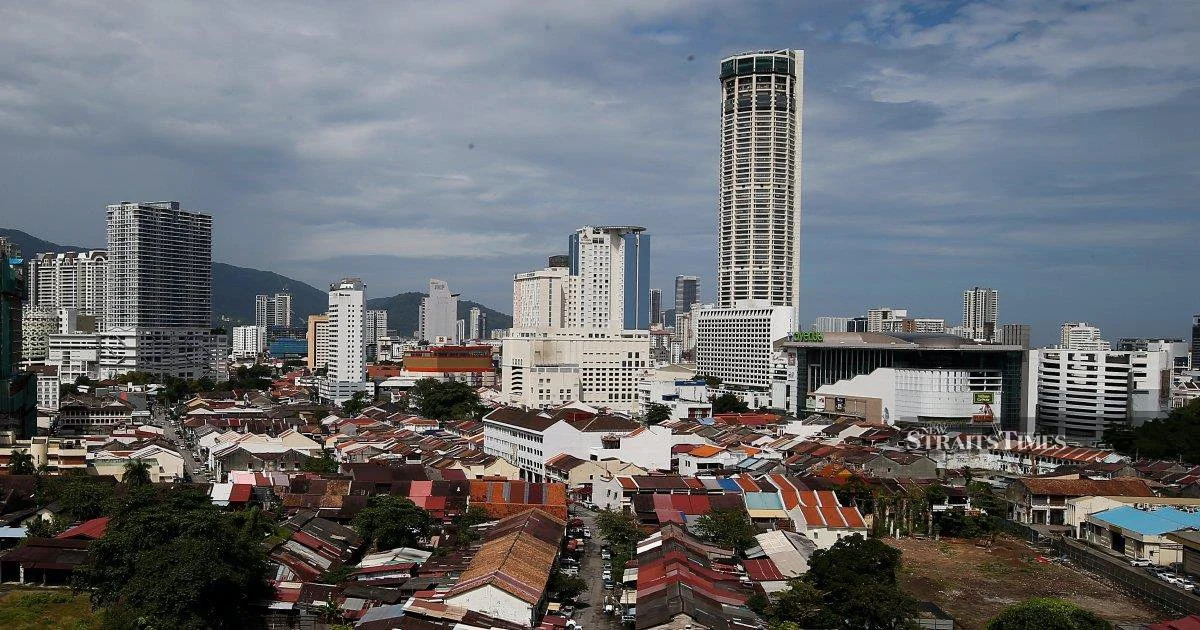
The Penang DAP Socialist Youth (Dapsy) has lashed out at environmental watchdog Sahabat Alam Malaysia (SAM) for employing what it characterises as inflammatory language to describe the Penang South Reclamation (PSR) project, dismissing the phrase "illegal island" as a propaganda tactic designed to inflame public sentiment rather than engage in substantive policy debate. The criticism comes in the aftermath of SAM's unsuccessful legal challenge against the massive reclamation initiative, marking a broader clash between environmental activism and state-led development ambitions in one of Malaysia's most economically vibrant regions.
The Penang South Reclamation undertaking represents one of the country's most ambitious and contentious infrastructure ventures, designed to expand the island's limited land resources and accommodate future economic expansion. Spanning significant portions of coastal waters, the project aims to create artificial landmass that will host mixed-use development including residential, commercial, and recreational facilities. For proponents within the state administration and ruling coalition, the scheme offers a tangible solution to Penang's geographical constraints and escalating property values that have priced out middle-income families. The project embodies a vision of modernisation that prioritises economic growth and urban expansion as essential pathways to improved living standards and opportunities for ordinary Penangites.
SAM's legal objections have centred on environmental concerns, marine ecosystem disruption, and allegations that the reclamation contravenes international maritime law and domestic environmental protection statutes. The organisation has characterised the initiative as unprecedented in scale and potentially catastrophic for the region's biodiversity, fisheries, and coastal stability. By deploying the term "illegal island," SAM sought to delegitimise the project by questioning its fundamental lawfulness and regulatory compliance. However, the court's rejection of SAM's appeal represents a significant setback for the environmental coalition opposed to the development, suggesting judicial acceptance of the government's position that proper authorisation and environmental assessments have been undertaken.
Dapsy's response reflects deepening polarisation within Penang's political ecosystem, where questions of development versus environmental stewardship have become increasingly entangled with partisan considerations. The youth wing's accusation that SAM engages in propaganda implies a deliberate campaign to distort facts for political advantage rather than a good-faith environmental protection effort. This framing transforms the debate from technical policy disagreement into a struggle over narrative and public perception, a dynamic that complicates genuine dialogue between stakeholders with legitimate concerns. For younger Penangites, the reclamation question crystallises larger anxieties about their future prospects: whether their state can accommodate population growth and economic opportunity without sacrificing natural heritage.
The failed court challenge represents a watershed moment that effectively clears significant legal hurdles for PSR advancement. With judicial authority having apparently validated the project's compliance with existing regulatory frameworks, project proponents can now push forward with enhanced credibility, while environmental opposition must recalibrate its strategy. SAM and allied groups will likely shift emphasis from formal legal challenges toward public pressure campaigns, community mobilisation, and advocacy within international environmental forums. This repositioning suggests that the reclamation debate will increasingly play out in the court of public opinion and civil society rather than through conventional litigation.
From a broader Malaysian and Southeast Asian perspective, the Penang reclamation controversy illustrates enduring tensions between rapid urbanisation imperatives and environmental conservation values. Across the region, coastal nations face similar pressures: rising sea levels, population concentration in limited urban zones, competition for prime waterfront real estate, and the genuine need for infrastructure expansion. Development advocates argue that countries cannot afford to prioritise pristine ecosystems over the pressing housing, commercial, and employment needs of their expanding middle classes. Environmental advocates counter that short-term growth calculations ignore long-term costs of ecological degradation, diminished fisheries productivity, and increased climate vulnerability. Neither position can be dismissed as mere propaganda; both reflect competing but authentic visions of development pathways.
The PSR initiative also raises questions about consultation and democratic participation in major infrastructure decisions. Despite environmental concerns and public debate, the project has proceeded through official channels with what authorities assert is appropriate procedural adherence. Yet critics argue that public input mechanisms remain inadequate and that affected coastal communities and traditional fishermen have insufficient voice in decisions fundamentally altering their environment and livelihoods. This democratic deficit, separate from the environmental merits question, reflects broader governance challenges across Southeast Asia where development velocity frequently outpaces participatory mechanisms.
Looking ahead, the successful court defence of the Penang South Reclamation likely signals investor confidence and accelerated project timelines. Penang's state government, facing revenue constraints and seeking to maintain its economic competitiveness within Malaysia, regards the reclamation as essential to its development blueprint. However, the persistence of vocal opposition suggests that social licence for the project remains contested, potentially complicating implementation, attracting international environmental scrutiny, and generating ongoing political friction. Malaysia's international standing depends partly on balancing development aspirations with environmental responsibility, a calculus made more complex by regional competition for investment and the increasingly demanding sustainability expectations of global capital markets.

