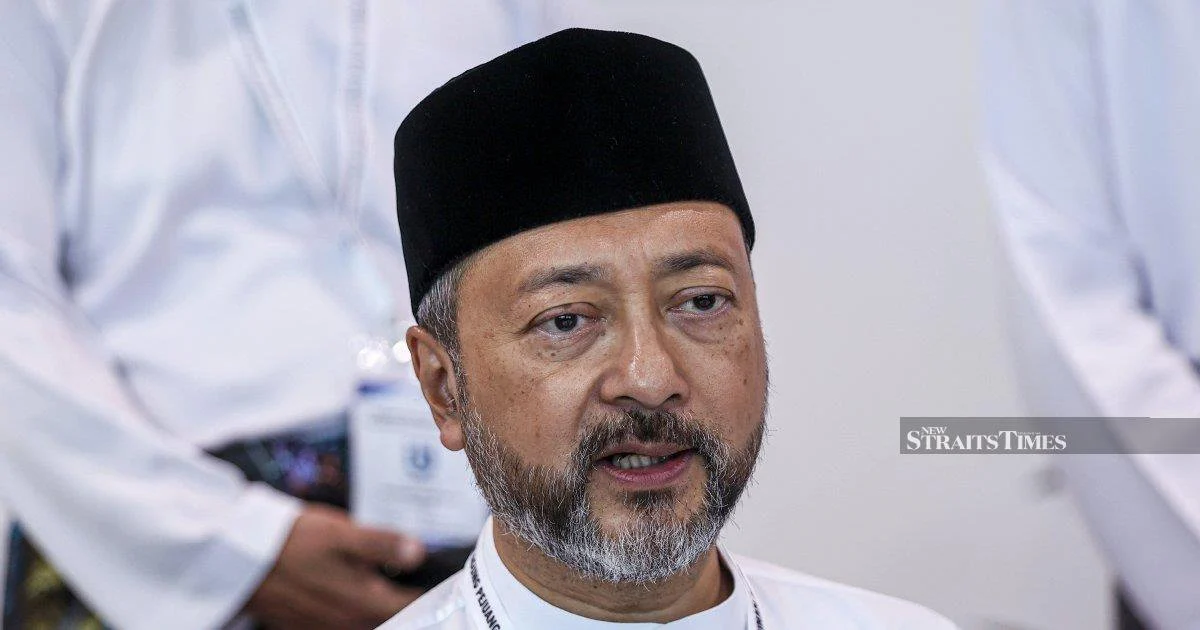
Parti Pejuang Tanah Air's formal integration into the Perikatan Nasional coalition represents a strategic development in Malaysia's fractured opposition landscape, with the party's leadership framing the move as part of a larger blueprint for political consolidation. Party president Datuk Seri Mukhriz Mahathir characterised the merger as the opening chapter in a comprehensive restructuring effort designed to strengthen coalition cohesion and equip opposition forces with greater capacity to address the country's escalating policy demands.
The absorption of Pejuang into PN follows months of behind-the-scenes negotiations among opposition-aligned parties seeking to forge a more unified political force. The timing of the announcement underscores growing recognition among non-governmental coalition blocs that fragmentation has weakened their collective influence in Parliament and their ability to mount coordinated policy responses to critical national issues. For Pejuang, a relatively newer political entity that has struggled to establish itself as a significant parliamentary force, the merger offers a pathway to greater institutional leverage and access to PN's existing organisational networks and resources.
Mukhriz's characterisation of this development as emblematic of a broader unity programme suggests the opposition is contemplating additional consolidation moves beyond Pejuang's accession. The statement hints at potential negotiations with other smaller opposition-oriented parties or independent political actors who remain outside the current coalition frameworks. This incremental expansion strategy reflects lessons from electoral cycles where opposition vote-splitting has benefited the ruling coalition, particularly in three-cornered contests where divided non-government candidates have allowed government-backed nominees to win with reduced vote shares.
The incorporation of Pejuang carries specific implications for Perikatan Nasional's internal dynamics and its positioning ahead of future electoral contests. PN has already established itself as the primary opposition coalition outside of Pakatan Harapan, commanding significant parliamentary representation and state-level influence particularly in Peninsular Malaysia's northern and eastern regions. Absorbing Pejuang enhances PN's claim to represent a more comprehensive alternative governing model while potentially smoothing historical fractures between participating parties. However, the merger also introduces internal integration challenges, as distinct party cultures, membership bases, and policy preferences must be reconciled within PN's existing institutional framework.
For Malaysian voters and political observers, the Pejuang development reflects a broader recalibration of opposition strategy following the mixed results of the 2022 general election. That contest exposed vulnerabilities in opposition coordination and highlighted the electoral advantage the ruling coalition derived from opposition division. The fragmentation of Pakatan Harapan in the lead-up to that election, combined with the emergence of multiple coalition blocs, resulted in a governing coalition that retained parliament despite declining vote shares. Consolidation efforts among opposition factions represent a direct response to those structural lessons.
The implications for Malaysia's political system extend beyond tactical coalition mathematics. A more unified opposition could theoretically facilitate more coherent policy platforms, enhance parliamentary scrutiny of government initiatives, and provide voters with clearer ideological choices at election time. Conversely, further consolidation could intensify intra-coalition tensions should participating parties discover that merged organisational structures constrain their individual autonomy or dilute their distinct political identities. The success of the Pejuang integration will likely serve as a test case for whether opposition unification can be sustained or whether centrifugal pressures eventually fragment such arrangements again.
Regionally, Malaysia's opposition consolidation trend reflects similar dynamics observable across Southeast Asia, where established parties increasingly seek strategic alliances and mergers to compete more effectively in democracies characterised by multiple political actors. The phenomenon raises questions about whether regional opposition movements are gravitating toward bipolar systems dominated by two dominant coalitions, a development that would represent a substantial departure from Malaysia's historically fragmented multi-party environment. Whether this constitutes democratic strengthening or a subtle concentration of political power remains contested among analysts.
For Perikatan Nasional specifically, the Pejuang merger occurs amid PN's efforts to present itself as a credible alternative government in waiting. PN controlled multiple state governments and had parliamentary representation that, combined with certain defections and coalition arrangements, briefly positioned it closer to governing power in recent political cycles. By absorbing Pejuang, PN signals institutional stability and accumulates additional parliamentary seats and party infrastructure that could prove decisive in tight electoral contests. The move also sends a message to other potential coalition partners that PN offers an attractive organisational home for parties seeking greater political influence through collective action.
Mukhriz's emphasis on addressing national challenges reflects the opposition's recognition that technical coalition-building must ultimately serve substantive political purposes. Voters increasingly respond to parties that demonstrate capacity to deliver solutions to immediate concerns such as cost-of-living pressures, healthcare accessibility, educational quality, and job creation. The efficacy of opposition consolidation will ultimately be measured not merely by parliamentary seat gains but by whether unified coalitions can convincingly articulate and pursue policy agendas that resonate with electoral constituencies. This places pressure on opposition leaders to translate coalition expansion into tangible policy differentiation from incumbent authorities.
Looking ahead, the trajectory of this broader unity initiative remains uncertain. Opposition consolidation can prove durable when participating parties perceive mutual benefit and exercise sufficient internal discipline to manage inevitable disagreements. Conversely, coalition arrangements frequently unravel when electoral calculations shift or when powerful personalities within constituent parties prioritise factional interests over collective objectives. The Pejuang integration will be observed closely by political analysts tracking whether Malaysian opposition forces can finally achieve the unified positioning that has historically eluded them.