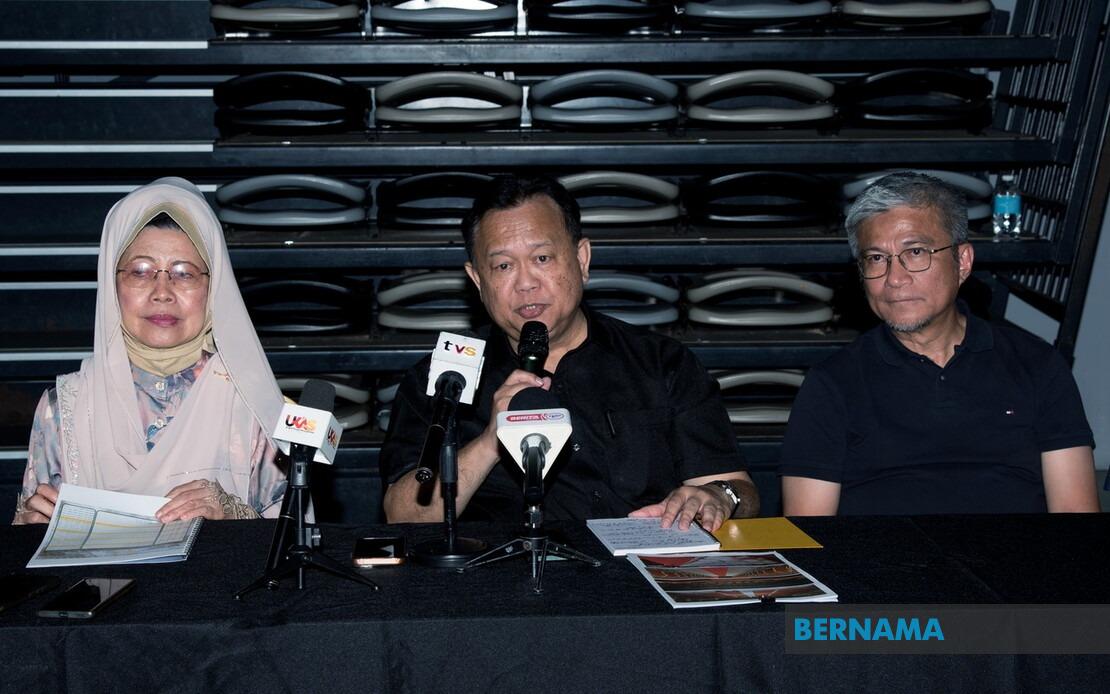
The Parti Pesaka Bumiputera Bersatu Sarawak (PBB) will convene its central zone special convention in Sibu on July 26, drawing an anticipated attendance of over 3,000 delegates representing 24 branches across the region. The gathering at Sibu Indoor Stadium marks a significant moment for the Sarawak-based political party as it moves into a crucial organisational cycle ahead of the 2026 general election year.
Datak Seri Alexander Nanta Linggi, the party's secretary-general, revealed that the central zone convention will be the first of its kind to be held in 2026, with the southern, Betong, and northern zones scheduled to follow in subsequent months. This sequential approach allows party leadership to address each regional constituency with tailored messaging while maintaining consistency in core party directives across Sarawak's vast geography. The staggered schedule also demonstrates the party's intention to conduct deliberate, well-organised engagement rather than rushing through party business.
Preparations for the Sibu event have accelerated following a comprehensive organising committee meeting held to ensure logistical readiness. The committee's focus reflects the complexity of assembling thousands of delegates in a single venue while maintaining order and allowing substantive political discourse. Securing the Sibu Indoor Stadium, a venue capable of accommodating such large numbers, indicates PBB's commitment to hosting a professional gathering that befits a party of Sarawak's governing calibre.
The convention's agenda addresses matters of constitutional and developmental significance. A presentation on the Malaysia Agreement 1963 (MA63) will feature prominently, reflecting ongoing Sarawak discourse surrounding the state's constitutional position within the Malaysian federation. This topic remains perpetually relevant in Sarawak politics, particularly given ongoing discussions about resource rights, autonomy, and the equitable distribution of federal revenues. Sarawak's political leaders have consistently emphasised MA63 as foundational to their governance philosophy and state identity, making its inclusion in a major party gathering both symbolically and substantively important.
Equally significant will be discussions centred on the Post COVID-19 Development Strategy 2030 (PCDS 2030), demonstrating PBB's forward-looking economic positioning. This framework addresses recovery and long-term growth priorities, positioning Sarawak within Malaysia's broader developmental trajectory while articulating the state's specific economic priorities. For delegates and observers across Southeast Asia, such emphasis reveals how Sarawak intends to leverage post-pandemic recovery to strengthen its competitive advantages in sectors ranging from energy to agriculture to manufacturing.
Sarawak Premier Tan Sri Abang Johari Tun Openg, who holds the dual position of PBB president, will officiate the convention and deliver the keynote address. His presence and remarks will shape the tone for party messaging heading toward the general election year. As the state's chief executive and party leader, his address will likely integrate state governance achievements with party political strategy, attempting to consolidate party unity while setting electoral expectations among grassroots delegates.
The comprehensive agenda encompasses broader political matters beyond these flagship presentations, suggesting party leaders intend to use the convention as an opportunity to communicate directly with mid-tier party functionaries and branch representatives who influence ground-level political operations. Conventions of this scale serve multiple functions simultaneously: they provide platforms for senior leaders to articulate vision, they offer feedback mechanisms through which regional concerns can surface, and they create psychological momentum within party structures heading into electoral cycles.
From a Malaysian political perspective, the convention reflects the resilience and organisational capacity of ruling parties in the states. Sarawak, like Sabah, maintains distinctive political dynamics within the Malaysian federation, with PBB and its coalition partners exercising essentially autonomous governance within state boundaries. Large-scale conventions underscore the continued relevance of state-level party machinery despite national-level political developments. For regional observers, the event demonstrates that Sarawak politics remains fundamentally shaped by strong state parties rather than federal-level political movements.
The timing also carries significance. Holding the convention in July 2026 positions PBB to move into the latter half of the year with renewed organisational energy and delegates thoroughly briefed on party positions. A general election could theoretically be called in the latter months of 2026, making this period strategically important for internal party cohesion and message consistency. Whether the convention triggers broader political shifts or simply reinforces existing party directions will become clearer as subsequent zone conventions proceed through their cycles.
For Malaysian and Southeast Asian political analysts, the PBB convention illustrates how regional political parties in Malaysia maintain grassroots engagement despite centralised government structures. The sheer number of delegates—over 3,000—demonstrates that branch-level party organisations across Sarawak remain active and invested in formal party processes. This contrasts with perceptions of declining grassroots engagement in some other contexts, suggesting that local ownership of political institutions remains strong where state-level parties retain genuine governing authority.

