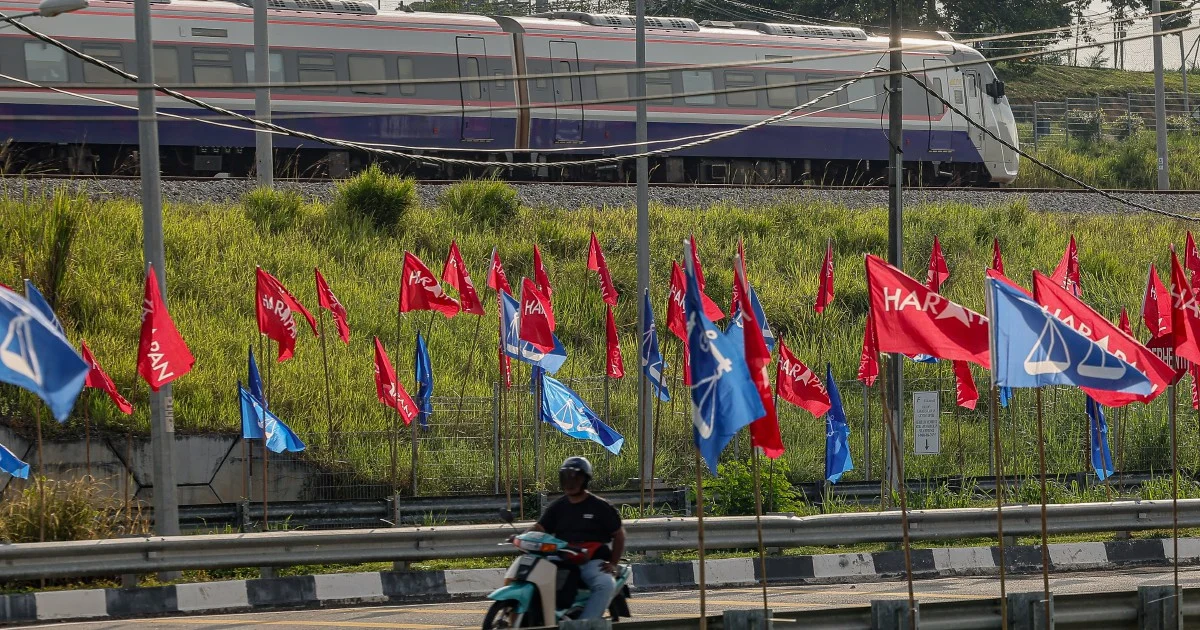
The youth wing of PAS has moved to explain its willingness to mobilise supporters behind Barisan Nasional candidates in constituencies where the Perikatan Nasional coalition maintains no presence, characterising the manoeuvre as a deliberate tactical calculation aimed at preventing Pakatan Harapan from securing electoral victories in these areas. The statement, issued in Johor Baru, represents an effort to clarify internal party positioning amid the complex dynamics of Malaysia's multi-coalition political landscape.
This development underscores the intricate nature of contemporary Malaysian electoral politics, where traditional party rivalries intersect with fluid coalition arrangements and shifting voter preferences. Rather than pursuing a unified front as a single bloc, Malaysia's political actors increasingly employ seat-by-seat negotiations and variable alliance structures. The PAS Youth pronouncement illustrates how younger party members within established organisations are articulating pragmatic political strategies that transcend conventional binary competition.
The move signals deeper fragmentation within the opposition sphere and a recalibration of power dynamics between the major coalitions. Barisan Nasional, long the dominant force in Malaysian politics until its 2018 defeat, has been working to rebuild electoral credibility following that watershed moment. An endorsement from PAS Youth, representing the party's younger and often more ideologically driven faction, suggests Barisan Nasional has made inroads in presenting itself as a viable alternative to Pakatan Harapan governance.
Peikatan Nasional itself represents a relatively recent configuration, emerging from the 2020 political realignment that fractured the opposition vote. PAS's dual positioning—as a component of PN while simultaneously cooperating with BN in certain constituencies—reflects the party's efforts to maximise its influence regardless of which coalition ultimately commands parliamentary majorities. This flexibility has become a distinctive feature of PAS strategy, allowing the Islamist party to maintain bargaining power across multiple political configurations.
For Pakatan Harapan, the development presents a substantial challenge to its electoral mathematics. The coalition, comprising PKR, DAP, and Amanah, requires broad support across diverse constituencies to maintain or expand its parliamentary representation. When opposition votes become fragmented across competing coalitions, the beneficiary is often the incumbent or the most organised alternative rather than the divided opposition itself. This dynamic has repeatedly influenced recent Malaysian electoral cycles.
The PAS Youth clarification gains significance when viewed against the backdrop of Malaysia's 2023 general election results, where no coalition secured a clear majority and complex negotiations determined the final government composition. The willingness of major political actors to cooperate outside formal coalition structures suggests future electoral contests may prove equally unpredictable and dependent on last-minute strategic calculations.
Regionally, Malaysia's political manoeuvering carries implications for broader Southeast Asian stability. The nation's democratic processes, despite their complications, continue to function through electoral competition rather than extraconstitutional upheaval. However, the flexibility with which coalitions form and reform raises questions about governance coherence and policy consistency once elections conclude. Voters in constituencies where multiple coalitions vie for support must navigate complex local political messaging, sometimes discovering that promised allegiances shift after ballots are cast.
The economic dimensions of this political recalibration deserve attention as well. Investor confidence often depends on stable, predictable governance. When electoral outcomes remain uncertain until after polling day, and coalition partnerships remain fluid, foreign capital may adopt cautious postures. Malaysian businesses and multinationals operating domestically must navigate political uncertainty that cannot be easily anticipated through policy platforms alone.
Within PAS itself, the Youth wing's pronouncement may reflect generational differences in strategic thinking. Younger party members, particularly those focused on electoral organising, may view tactical cooperation with Barisan Nasional as pragmatic necessity rather than ideological compromise. Conversely, longer-serving party elders who experienced PAS's prior partnership configurations might assess such moves through different historical lenses and with varying degrees of enthusiasm.
The statement's timing remains noteworthy, arriving as various political constituencies assess their positioning ahead of potential future electoral contests. Malaysia's political cycle operates without fixed timelines for general elections, meaning strategic positioning occurs throughout inter-election periods rather than concentrating in defined campaign seasons. This continuous electoral readiness creates persistent uncertainty about legislative and executive stability.
For Malaysian voters, particularly those in constituencies where multiple coalitions actively contest seats, the PAS Youth declaration illustrates how national electoral outcomes depend partly on complex backstage negotiations invisible to most citizens. Constituents voting in such areas effectively cast ballots into contests whose fundamental dimensions may shift through post-election coalition arrangements or pre-election strategic partnerships announced without meaningful public consultation.
The broader implications of this tactical flexibility extend to questions about democratic legitimacy and mandate clarity. When voters elect individuals through representatives from different coalitions, the resulting government's policy agenda may not align neatly with any coalition's published platform. This creates potential disconnection between electoral expression and policy implementation, complicating accountability mechanisms that typically rely on voters punishing or rewarding governing coalitions at subsequent elections.

