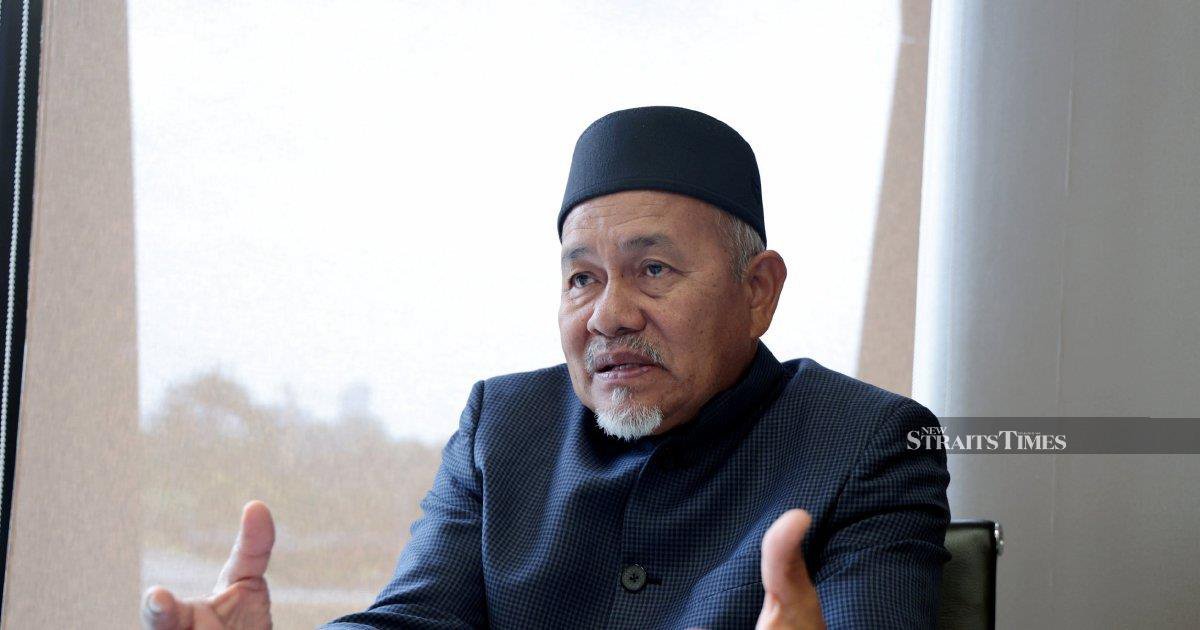
The Islamic party PAS has signalled its readiness to explore an expanded political coalition with Perikatan Nasional and Barisan Nasional, moving beyond existing agreements to potentially reshape Malaysia's political landscape. Senior party figures have indicated that discussions at the national level could lead to broader cooperation arrangements that extend across multiple state governments and potentially to federal government structures, marking a significant development in Malaysia's coalition politics.
The party's openness to dialogue reflects growing momentum for deeper integration among these three political blocs, which have demonstrated ability to govern collaboratively in certain states. PAS officials have specifically mentioned the possibility of replicating electoral and governance models that have proven successful in Negri Sembilan, suggesting these frameworks could be transplanted to other states and potentially adapted for national-level cooperation. The Negri Sembilan model has become a template that political analysts are watching closely for its potential application elsewhere.
Melaka represents a particularly significant focus for these expansion discussions. As a state with complex political history and shifting coalition dynamics, the state could serve as a testing ground for extended PN-BN cooperation. The prospect of formalising such arrangements in Melaka would effectively consolidate the influence of these allied blocs across multiple crucial southern peninsular states, altering the balance of power in regions where opposition parties have traditionally held competitive positions. For observers of Malaysian politics, Melaka's political trajectory has become increasingly emblematic of broader national trends.
The possibility of replicating state-level cooperation at the federal level carries profound implications for Malaysian governance. If PAS, PN, and BN were to establish formal cooperative arrangements at the national level, this could fundamentally reshape the parliamentary composition and executive decision-making structures. Such an alliance would consolidate substantial parliamentary representation, potentially affecting legislative outcomes, policy priorities, and cabinet compositions. The federal dimension of these discussions suggests ambitions that extend well beyond conventional state-level politics.
Background to these negotiations involves the complex history of Malaysian coalition politics over recent years. The emergence of PN as a distinct political force, separate from the BN structure that dominated Malaysian politics for decades, created new possibilities for flexible political arrangements. PAS, historically part of various coalition formations, has proven adept at navigating these shifting alliances. The current discussions represent an evolution of pragmatic political positioning rather than ideological realignment, though some observers detect shifting priorities within each organisation.
For Malaysian readers and regional observers, understanding the significance of these developments requires recognising that coalition arrangements at national level directly affect everyone's daily lives through legislative priorities, resource allocation, and policy implementation. Broader coalitions typically translate to stronger government stability but can also create tensions around resource distribution among coalition partners and potential compromises on individual party agendas. The balance between these competing considerations shapes how effectively governments can function and respond to public concerns.
The Negri Sembilan framework that PAS has highlighted as potentially replicable demonstrates how different political organisations can coordinate on electoral strategies, resource sharing, and governance priorities without complete merger or loss of individual party identity. This model has attracted attention precisely because it offers a template for pragmatic political cooperation that respects component parties' distinct constituencies and ideological positions while creating stable governing arrangements. Understanding these mechanics becomes crucial for voters assessing potential political futures.
Regional implications of expanded PN-BN-PAS cooperation extend beyond Malaysia's borders. Political analysts across Southeast Asia closely monitor Malaysian coalition dynamics as indicators of broader regional political trends, particularly regarding how Islamic political parties engage with secular-oriented organisations and how religious and nationalist movements coexist within formal governance structures. Malaysia's political arrangements often serve as case studies in how diverse societies navigate coalition governance, making these discussions relevant to observers throughout the region.
The willingness of PAS to engage in national-level discussions rather than limiting cooperation to specific states or constituencies reflects confidence in the alliance's potential viability and mutual benefit. This openness also suggests that component parties within these blocs perceive alignment as advantageous for achieving legislative or policy objectives that individual organisations might struggle to accomplish independently. However, observers caution that discussions at this level necessarily involve complex negotiations around resource distribution, ministerial portfolios, and policy emphasis.
Since these remain discussions rather than formal agreements, the trajectory remains fluid. Political circumstances, internal party dynamics, electoral calculations, and shifts in other parties' positioning could all influence whether preliminary talks translate into concrete arrangements. The coming months will likely reveal whether these openness signals lead to substantive cooperation frameworks or represent exploratory positioning typical of coalition politics. Malaysian voters monitoring these developments should recognise that formal announcements rarely emerge suddenly; instead, they typically follow extensive preliminary discussions precisely like those now occurring.
For the immediate political landscape, PAS's clear indication of willingness to explore expanded cooperation provides a signal that current coalition boundaries may not represent final configurations. This openness could influence behaviour among other political parties assessing their own coalition strategies and positioning. The prospect of broader PN-BN cooperation under PAS involvement alters calculations throughout the political system, potentially prompting realignment discussions among opposition parties and careful reassessment of positioning among other potential partners.

