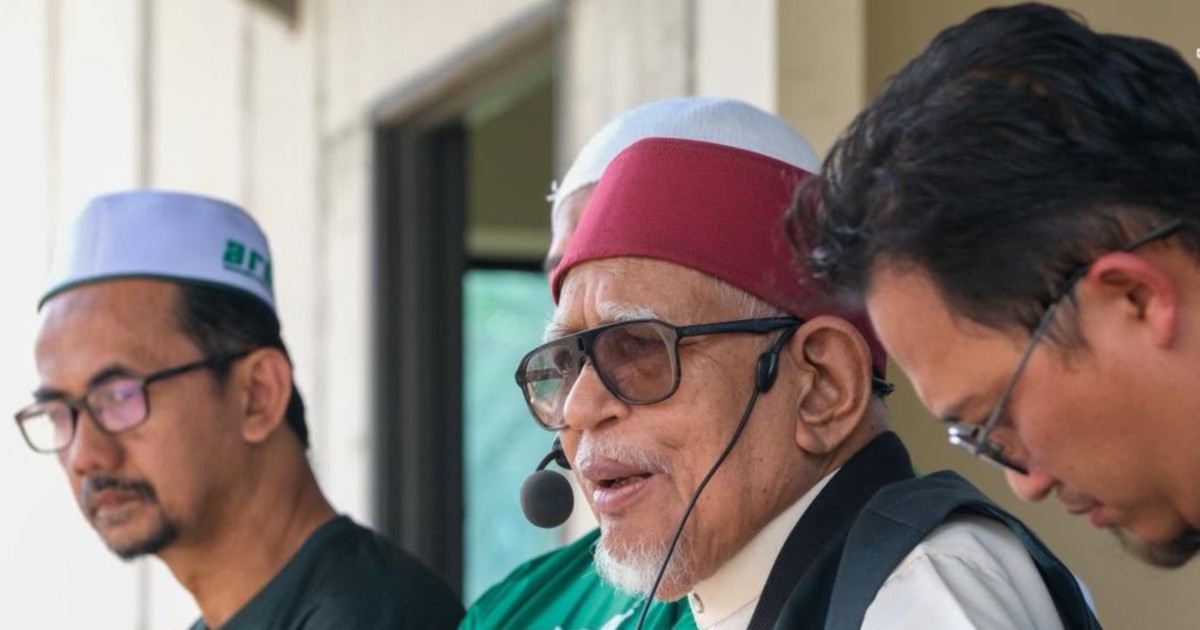
PAS president Tan Sri Abdul Hadi Awang has proposed an expansive political framework aimed at uniting Malay-Muslim voters alongside "non-extreme" non-Muslim coalition partners, explicitly naming the Malaysian Chinese Association and Malaysian Indian Congress as potential collaborators in what he describes as a salvage mission for Malaysia's future political direction.
The call represents a significant positioning statement from the Islamic party leadership, signalling openness to engagement with established moderate parties across communal lines. This approach departs from the more polarised political rhetoric that has characterised recent electoral cycles, where coalitional agreements have often broken along sharper ideological and ethnic divisions. By emphasising the "non-extreme" qualifier, Hadi appears to be drawing a deliberate distinction between parties willing to work within conventional democratic frameworks and those perceived as pursuing more confrontational or radical agendas.
The proposal places Umno and PAS at the centre of a potential governing construct, reflecting the contemporary reality that these two parties have repositioned themselves as natural partners despite their historical rivalry and differing ideological emphases. Umno's establishment credentials and administrative experience combined with PAS's grassroots organisational strength and electoral appeal in rural constituencies create a numerically substantial bloc, though their coalition requires additional parliamentary partners to command a working majority in most conceivable electoral outcomes.
Integrating MCA and MIC into this framework addresses a persistent challenge in Malaysian politics: the representation and participation of non-Muslim communities in governance arrangements predominantly shaped by Malay-Muslim party interests. Both parties have experienced declining voter bases in recent elections, with MCA particularly struggling to maintain its traditional position as the primary vehicle for Chinese Malaysian political representation. For Hadi to explicitly name these parties suggests recognition that sustainable governance requires meaningful non-Muslim partnership rather than tokenistic inclusion or exclusion.
The "save Malaysia" framing employed by Hadi invokes a narrative of national crisis or existential challenge, though the statement does not specify the precise threats or policy failures he envisions as motivating such unity. This rhetorical construction serves multiple purposes: it legitimises the proposed coalition by positioning it as responding to genuine national imperatives rather than mere partisan advantage-seeking, and it creates psychological and emotional urgency among supporters who might interpret various contemporary challenges—economic hardship, communal tensions, institutional concerns—as confirming the need for unified action.
From a Malaysian political economy perspective, this proposal emerges within a context of government instability and policy uncertainty that has characterised the post-2022 period. Coalition governments have struggled to sustain coherent policy directions, particularly regarding fiscal management, affirmative action recalibration, and management of religiously sensitive issues. A broader unity formula incorporating both Islamist and moderate secular parties might theoretically provide greater policy stability, though it would also require negotiating increasingly complex internal disagreements across the coalition spectrum.
The implications for regional Southeast Asian politics warrant consideration. Malaysia's internal political arrangements influence its diplomatic positioning and capacity to engage credibly with neighbours. A more stable, inclusively-representative governing coalition could enhance Malaysia's regional standing and diplomatic effectiveness, particularly in forums like ASEAN where consensus-building remains essential. Conversely, continued coalition fragmentation and political volatility risk diminishing Malaysia's regional influence and complicating responses to transnational challenges including maritime security, trade arrangements, and climate cooperation.
For Chinese and Indian Malaysian communities, Hadi's overture potentially signals openness to genuine policy participation rather than subordinate status within coalition arrangements. MCA and MIC leadership will likely interpret this approach as validating their continued relevance in national politics, though their ability to mobilise their voter bases behind such an arrangement remains uncertain given long-term demographic and electoral shifts. Younger Malaysian voters of all communities have demonstrated reduced loyalty to these established parties, complicating any coalition's capacity to deliver electoral mandates.
The proposal also reflects evolving calculations within PAS regarding its political ceiling and coalition options. As an Islamic party in a multi-community state, PAS faces structural constraints on its maximum electoral performance; partnerships with moderate non-Muslim parties represent a realistic assessment of these limitations rather than ideological triumph. This pragmatism distinguishes contemporary PAS positioning from earlier periods when the party emphasised doctrinal purity and positioned itself as standing apart from established political compromises.
Implementing such a coalition formula would require detailed negotiation around policy priorities, ministerial allocation, and constitutional protections for agreed positions. The composition of such an arrangement directly affects its governance capacity: broader coalitions provide greater political legitimacy and support but create coordination challenges and potential veto points, while narrower arrangements risk instability and policy vulnerability to defection.
Ultra-long term, Hadi's framing of cooperation around moderate partnership rather than exclusionary Malay-Muslim-only blocs potentially points toward a more inclusive Malaysian political settlement. Whether such evolution can crystallise into durable institutional arrangements depends on whether party leaders across communal lines embrace genuine shared governance principles or merely employ such language as temporary tactical positioning. Malaysian voters across all communities will closely monitor whether rhetoric about unity translates into substantive policy outcomes addressing their economic concerns and aspirations.

