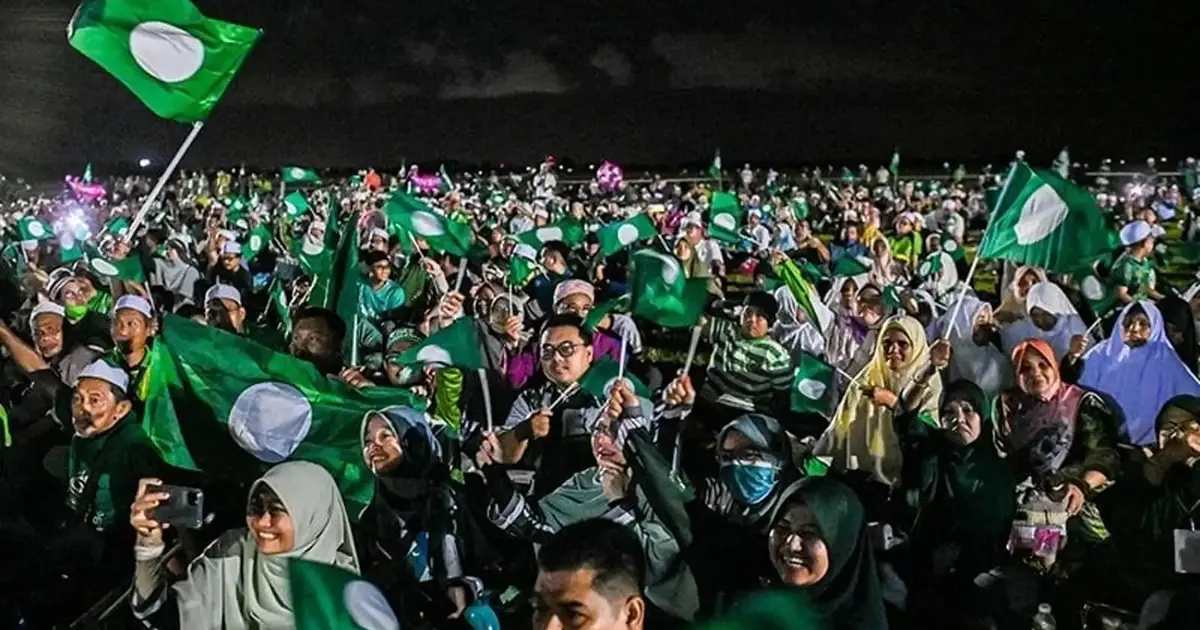
PAS president Hadi Awang has levelled serious accusations against coalition partners within Pakatan Harapan and the Democratic Action Party, asserting they deliberately deployed Islamophobic language and messaging to damage the Islamic party's standing with Malaysian voters. The allegations underscore deepening tensions within the opposition alliance and reflect broader anxieties about how religious identity has become a flashpoint in domestic political discourse.
Hadi's complaint centres on the characterisation of PAS support as a "green wave," terminology the party leadership views as pejorative and designed to weaponise religious sentiment. The term, which gained prominence during electoral campaigns, carries implications linking the party to a broader wave of Islamist politics that coalition partners reportedly sought to frame as threatening to Malaysia's secular foundations and pluralistic character. By framing PAS's electoral momentum in these terms, Hadi contends, opposition figures intentionally sought to cultivate fear among non-Muslim voters and moderates concerned about the direction of governance.
The accusation reflects a more fundamental rupture in opposition unity that has become increasingly visible since the 2022 elections and subsequent political realignments. What was once presented as a cohesive counter-narrative to the Barisan Nasional coalition has fragmented into competing visions for Malaysia's political future, with stark disagreements over the role of Islamic governance, secularism, and minority rights. These tensions reveal that despite formal coalition structures, the constituent parties harbour fundamentally incompatible ideological positions on questions central to Malaysian identity.
PAS's grievance regarding the "green wave" terminology highlights how language itself becomes contested political terrain in Malaysia's religiously diverse society. The party argues that the phrase, deployed repeatedly in opposition messaging and media commentary, served to homogenise PAS support as a singular ideological movement rather than acknowledging the plurality of reasons Malaysians voted for the party. This conflation, from PAS's perspective, instrumentalised religious identity as a tool of electoral manipulation rather than engaging substantively with policy platforms or governance records.
The broader context involves mounting concerns about how religious nationalism has reshaped electoral competition in Malaysia. Over successive elections, Islamic identity politics have intensified, with various parties claiming authenticity and moral authority on religious matters. PAS, as Malaysia's largest Islamist party with significant grassroots support particularly in rural and semi-urban areas, has become a focal point for these contests. The party's electoral gains in several states have prompted defensive responses from both the ruling coalition and opposition factions, each accusing the other of recklessness or opportunism in wielding religious rhetoric.
Democratic Action Party leadership has traditionally positioned itself as defender of secular governance and minority rights, creating inevitable collision points with PAS's vision of stronger Islamic institutional influence. These philosophical differences, manageable during periods of unified opposition to Barisan Nasional dominance, become acute when both parties compete for overlapping voter bases or when electoral outcomes require difficult coalition negotiations. The accusation of Islamophobic campaigning thus represents not merely a rhetorical disagreement but reflects structural incompatibilities within the opposition alliance that electoral arrangements have failed to resolve.
From a regional perspective, Malaysia's experience mirrors broader Southeast Asian patterns where religious identity politics have intensified across Indonesia, Thailand, and Myanmar. The weaponisation of religious sentiment that Hadi describes represents a troubling evolution in how competing political actors mobilise voters, potentially eroding consensus around constitutional frameworks and pluralistic governance. For Malaysia specifically, where the constitution enshrines Islam's special position while guaranteeing minority religious freedoms, electoral campaigns increasingly blur the line between legitimate advocacy for particular governance models and inflammatory rhetoric that stigmatises entire communities.
The implications for Malaysian governance extend beyond immediate political competition. When major opposition parties engage in mutual recrimination over Islamophobic campaigning, public discourse becomes polarised in ways that impede constructive policy debate. Voters confronted with characterisations of either party as threatening to religious minorities or to Islamic principles face artificial binary choices rather than substantive engagement with economic, environmental, or social policy platforms. This dynamic particularly disadvantages smaller parties and independent voices struggling to penetrate media narratives dominated by religious and ideological framing.
PAS's accusations also warrant scrutiny regarding internal consistency. While condemning opposition parties for weaponising religion, PAS itself has built its political dominance partly through appeals to religious identity and claims of defending Islam against perceived secular threats. The party's portrayal of itself as Islam's authentic guardian contains its own divisive implications for pluralistic discourse. These mutual accusations of bad faith regarding religion suggest that Malaysian politics currently lacks mechanisms for discussing legitimate differences about governance without recourse to stigmatising entire constituencies.
Moving forward, these tensions will shape coalition politics heading toward future elections and potentially determine whether opposition unity can be reconstructed or whether Malaysian politics permanently splinters into religiously and ideologically segmented blocs. The accusations Hadi has raised cannot simply be dismissed as campaign rhetoric; they reflect genuine ruptures in how major political forces envision Malaysia's constitutional and social future. For Malaysian voters seeking coherent alternative governance models, these unresolved tensions within opposition ranks represent a significant obstacle to meaningful political choice and accountability.

