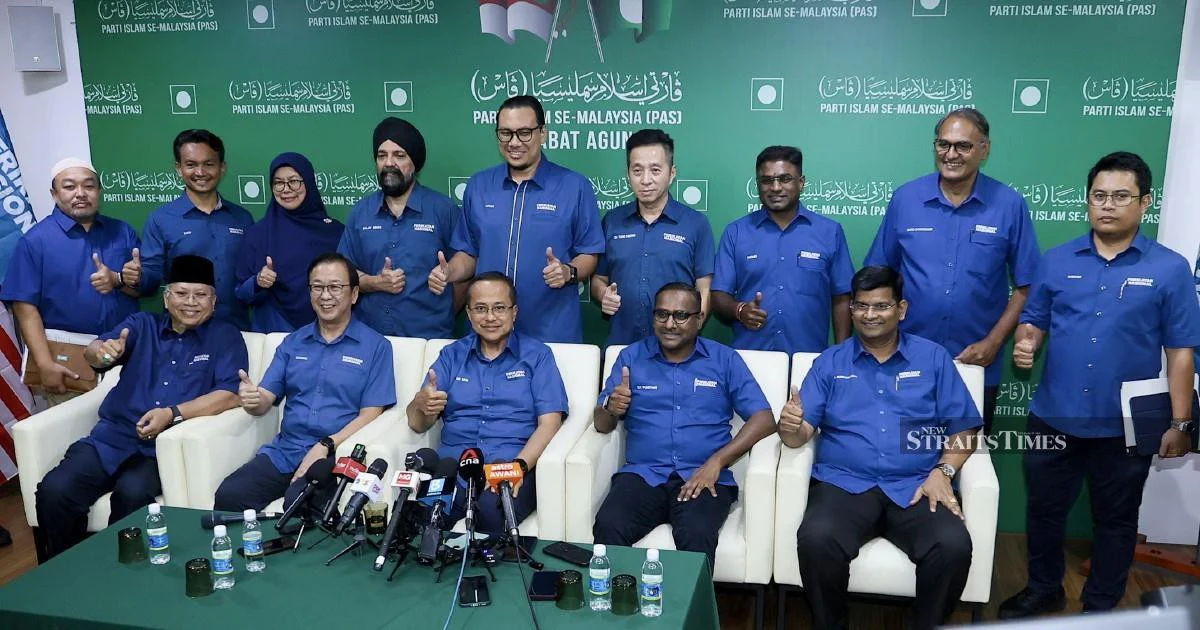
PAS has publicly stated it holds no fear of facing DAP in the approaching Johor state election, with party leadership using the remarks to signal confidence ahead of what promises to be a closely contested contest. The assertion, delivered to Transport Minister Anthony Loke, underscores PAS's determination to project strength during the campaigning period, even as the political landscape in Johor remains fractured among multiple coalitions and competing interests.
Dr Sam's comments represent a calculated effort by PAS to establish psychological momentum before voting takes place. By directly addressing concerns about DAP's electoral machinery and support base, the PAS representative has attempted to frame the competition as one where the Islamic party possesses sufficient organisational capacity and grassroots backing. This rhetorical positioning is significant in Malaysian politics, where perception of viability can influence voter behaviour and candidate recruitment.
The Johor state election occurs within a complex political ecosystem where traditional party loyalties have fractured considerably since the 2018 general election. PAS has sought to consolidate support among its core constituencies while attempting to broaden appeal beyond its traditional voter base. The party's decision to publicly distance itself from concerns about DAP's challenge suggests confidence in its ground game and appeal to Johor voters across multiple demographic segments.
DAP, Malaysia's largest primarily Chinese-based opposition party, has invested significant resources in Johor, viewing the state as strategically important for rebuilding presence in peninsular Malaysia following setbacks in recent elections. The party's challenge to PAS in Johor represents part of a broader opposition strategy to contest seats across diverse constituencies and present itself as a viable alternative to the ruling coalition.
The political dynamics in Johor reflect broader Malaysian electoral trends where single-dominant-party control has given way to multi-polar competition. PAS's assertion of fearlessness regarding DAP competition must be understood against this backdrop of increasing electoral unpredictability. The party has demonstrated capacity to mobilise religious and communal sentiment effectively, particularly among Malay-Muslim voters who constitute a demographic majority in most Johor constituencies.
Anthony Loke, as Transport Minister and a significant figure within the Democratic Action Party, represents the coalition interests that DAP is attempting to advance in Johor. His engagement with PAS leadership, as evidenced by the exchange referenced in Dr Sam's remarks, highlights how even opposition parties maintain dialogue channels despite electoral competition. Such interactions are routine in Malaysian politics, occurring below public view even when parties contest fiercely for votes.
PAS's confidence assessment carries implications for how the party allocates resources and positions itself strategically. By declaring no fear of DAP, PAS leadership is signalling to potential candidates, party members, and sympathetic voters that the organisation possesses conviction in electoral victory. This psychological dimension of political competition should not be underestimated in understanding how Malaysian electoral contests unfold.
The Johor state election represents a significant test for PAS's ability to sustain support in a state where it has made substantial inroads during recent electoral cycles. The party's religious messaging and communal mobilisation strategies have proven effective, yet DAP's expansion efforts and attempts to frame itself as defending secular constitutionalism could resonate with portions of the electorate, particularly in urban areas.
Geographic distribution of voter preference in Johor will largely determine electoral outcomes, as the state encompasses both heavily Malay-Muslim rural constituencies and ethnically mixed urban and semi-urban areas. PAS's assertion of unafraid status reflects confidence that its appeal in rural and semi-rural constituencies will outweigh any disadvantage against DAP in more urbanised areas where the latter party maintains stronger organisational presence.
The broader significance of PAS-DAP competition in Johor extends beyond state-level politics. Johor possesses approximately 26 state constituencies, making it among Malaysia's larger state assemblies. Results in Johor will offer indicators regarding shifting voter preferences between Islamic-nationalist politics represented by PAS and secular-progressive positions advocated by DAP, patterns that could influence calculations for future general elections.
PAS's leadership has demonstrated increasing confidence in contesting elections across Malaysia's peninsula, moving beyond its traditional geographic strongholds. The party's performance in Johor will help determine whether this expansion represents sustainable strategic success or whether it reflects temporary electoral advantages that may not persist as voter preferences potentially shift again.
The coming Johor election will test multiple hypotheses about Malaysian electoral behaviour, including questions about the staying power of PAS's recent surge, the effectiveness of DAP's opposition strategy, and broader coalitional arrangements that continue to evolve following the 2022 general election. Dr Sam's remarks dismissing fears of DAP competition suggest PAS believes its fundamentals are sufficiently strong to withstand opposition pressure in what promises to be among Malaysia's more interesting upcoming state-level contests.

