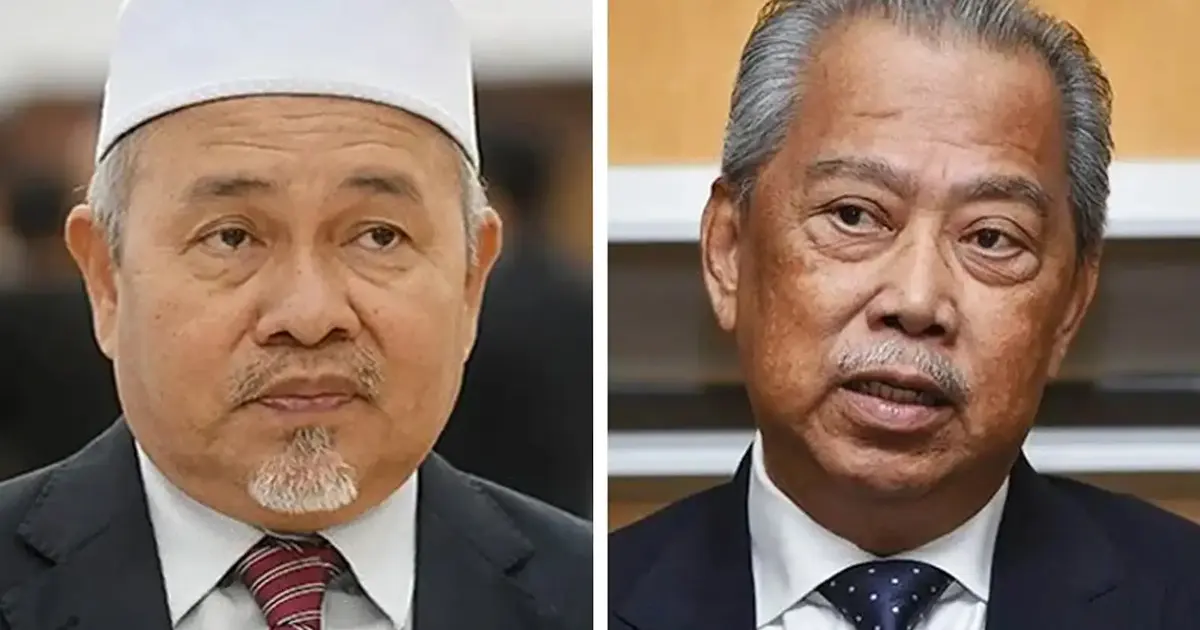
The stability of Perikatan Nasional came under renewed strain when PAS deputy president Tuan Ibrahim Tuan Man publicly challenged Bersatu to justify its continued involvement in an alliance he characterised as fundamentally damaged. His remarks followed Bersatu president Muhyiddin Yassin's explicit signal that his party intends to establish an entirely separate coalition, a move that threatens to unravel one of Malaysia's most fractious political partnerships.
Tuan Ibrahim's intervention represents a significant escalation in simmering tensions within Perikatan Nasional, the three-party coalition formed in 2020 that comprises PAS, Bersatu, and Pan-Malaysian Islamic Party. The deputy PAS leader's pointed questioning of Bersatu's rationale for remaining in the partnership suggests that acrimonious disagreements over direction and strategy have pushed the coalition toward a potential breaking point. For observers tracking Malaysian politics, this development underscores the volatile nature of the post-2020 realignment that has dominated the nation's political landscape for nearly four years.
Muhyiddin Yassin's announcement that Bersatu would forge a new coalition carries unmistakable implications for the future of Perikatan Nasional. By explicitly moving to establish an alternative alliance, the Bersatu president has signalled that his party sees limited future in the current arrangement and is actively preparing an exit strategy. Such a development would represent a dramatic reversal from the coalition's formation, when Bersatu merged with PAS and other parties following the collapse of the Sheraton Move alliance that once united Bersatu with former Prime Minister Najib Razak's United Malays National Organisation.
The tensions plaguing Perikatan Nasional reflect deeper ideological and strategic divisions between its constituent parties. PAS, with its Islamist orientation and entrenched base in northeastern Malaysia, has pursued an increasingly assertive political trajectory that sometimes conflicts with Bersatu's broader nationalist messaging and cross-communal appeal. These fault lines have become increasingly visible as the coalition has struggled to present a unified front to voters and maintain internal cohesion around key policy positions.
For Malaysia's broader political ecosystem, a potential collapse of Perikatan Nasional would fundamentally reshape the competitive landscape ahead of future elections. The coalition currently represents a significant electoral force, particularly in Malay-majority constituencies and in Peninsular Malaysia's east coast. Its dissolution would scatter its parliamentary strength across various groupings and could dramatically alter calculations about which alliances might command majority support in parliament. Regional governments controlled by the coalition, particularly in Kelantan and Terengganu where PAS holds sway, could face political complications if the partnership formally ruptures.
Tuan Ibrahim's public questioning of why Bersatu should remain tethered to what he termed a damaged alliance serves multiple purposes within PAS's internal political calculations. By issuing this challenge directly to his coalition partner, the PAS deputy president is simultaneously appealing to his own party's base by demonstrating unwillingness to tolerate what PAS members might perceive as disloyal behaviour from Bersatu. He is also attempting to seize the narrative initiative, portraying Bersatu as the destabilising force rather than allowing Muhyiddin Yassin to frame Bersatu's coalition-building efforts as a strategic adaptation to changing political circumstances.
The impending departure of Bersatu, should Muhyiddin's intentions materialise into concrete action, would leave PAS as the dominant force within whatever remains of Perikatan Nasional. This outcome carries significant implications for PAS's own political strategy, as the party would need to determine whether to continue operating under the Perikatan banner or pursue alternative arrangements. For Malaysian voters concerned about the direction of governance and political stability, the possibility of major coalitions fragmenting before or after elections creates considerable uncertainty about the formation of future governments.
Muhyiddin Yassin's manoeuvres must also be understood within the context of Bersatu's declining political fortunes since 2020. The party has struggled to establish independent electoral appeal beyond its former alliance with UMNO and has faced internal pressures as its leadership navigates between Islamist and nationalist currents within Malaysian politics. By moving toward a new coalition, Muhyiddin may be seeking to revitalise Bersatu's political relevance and position his party as an indispensable coalition partner in future government formations.
Tuan Ibrahim's challenge to Bersatu essentially presents the coalition partnership with an existential question: either recommit to collective governance or formalise the separation that Muhyiddin's recent actions suggest is inevitable. This ultimatum-style approach reflects PAS's determination to control the narrative around Perikatan Nasional's potential dissolution and to ensure that any negative consequences are attributed to Bersatu's alleged disloyalty rather than to divisions originating within PAS itself.
The coming weeks and months will prove decisive in determining whether Perikatan Nasional can reconstitute itself around a renewed sense of common purpose or whether Malaysian politics enters another period of volatile coalition-building. For Southeast Asia's largest Muslim-majority democracy, the stability of its political structures and the coherence of major electoral coalitions carry implications extending well beyond domestic governance, affecting regional perceptions of Malaysia's political maturity and institutional resilience.

