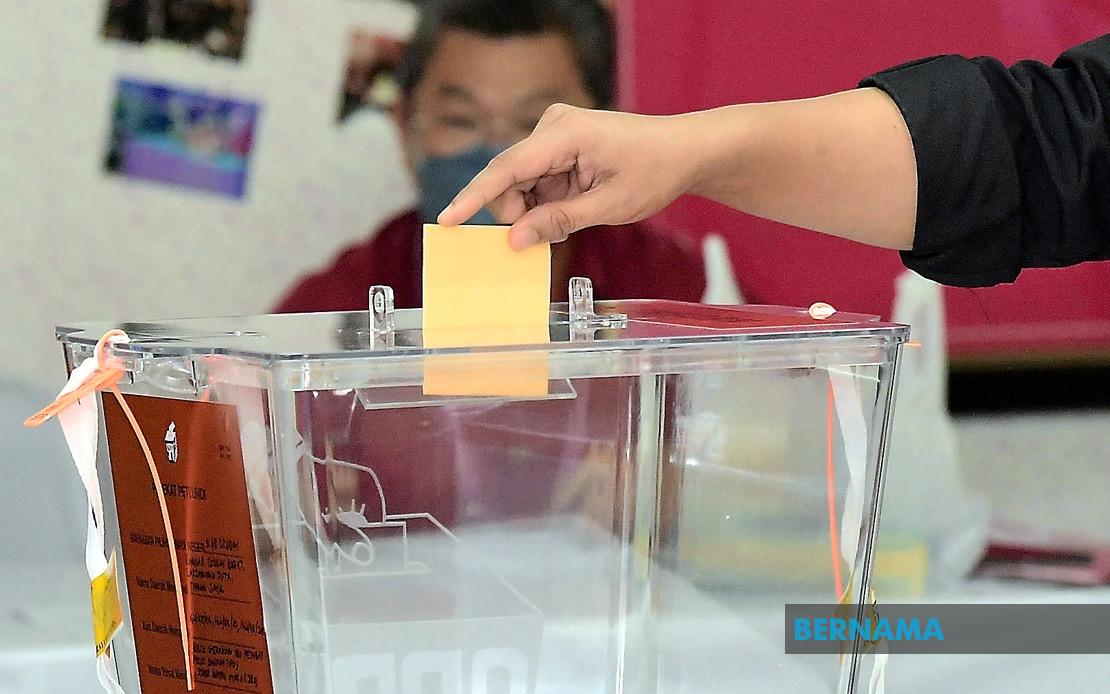
The Johor state election held on July 11 has produced clear messaging from the defeated and humbled opposition blocs, with Islamic party PAS openly accepting the electorate's mandate while signalling continuity in its broader political trajectory. Johor PAS commissioner Datuk Dr Mahfodz Mohamed, speaking on behalf of the party in the state where it has held considerable influence, acknowledged that voters had exercised their democratic choice and that the result reflected their preference for the incumbent coalition's leadership direction.
Barisan Nasional's commanding performance, securing 29 of 56 state assembly seats, delivered Menteri Besar Datuk Onn Hafiz Ghazi the clear mandate he required to form a new state administration. The scale of the BN victory ensured that questions about governance instability or minority administrations—concerns that have periodically haunted Malaysian state politics in recent years—were definitively answered. For Johor specifically, this result provides administrative clarity and policy continuity after a period of considerable political turbulence that had characterised earlier state administrations.
PAS's public posture of acceptance carries particular significance given that Perikatan Nasional, the broader coalition within which PAS operates alongside other partners, failed to substantially improve its position in one of Malaysia's largest and most politically significant states. The party's statement emphasising commitment to "religion, race and the welfare of the people" represents a carefully calibrated message to its core base, reassuring supporters that electoral setbacks will not deflect the party from its foundational mission. More tellingly, PAS framed the Johor result as merely one chapter in a longer political narrative, explicitly pivoting discussion toward the 16th General Election—a shrewd rhetorical move that redirects attention from a disappointing outcome toward the next major contest where the party can attempt recalibration.
Bersatu's response through secretary-general Datuk Seri Mohamed Azmin Ali indicated that the party intends to undertake a methodical examination of what went wrong and where strategic adjustments might prove necessary. For a party that has experienced significant volatility since its founding, such introspection is essential. Bersatu's performance in Johor reflected broader challenges facing Perikatan Nasional—the coalition's inability to capitalise on the anti-establishment sentiment that had powered earlier electoral cycles, combined with internal contradictions about messaging and positioning that left voters unclear about what the coalition genuinely offered beyond opposition to the incumbent federal government.
The experience of Parti Bersama Malaysia, however, presents a markedly different narrative. The party, led by Datuk Seri Rafizi Ramli, contested the election merely 52 days after its formal establishment—a remarkably compressed timeline that made electoral breakthrough virtually impossible. The loss of all 15 candidates' election deposits, a penalty imposed when candidates fail to secure the minimum vote threshold, underscores the enormous challenge facing nascent political entities attempting to build organisational infrastructure, voter recognition, and campaign machinery from scratch.
Rafizi's public response, posted on social media, betrayed a degree of pragmatism about the party's situation. Rather than deflecting responsibility or making excuses, he characterised the Johor contest as a learning experience that would inform the party's future strategy. This approach acknowledges that new political parties require time to develop institutional capacity, and that early electoral defeats, while disappointing, provide valuable intelligence about voter preferences, campaign effectiveness, and message resonance. The decision to position the Johor outcome as foundational rather than conclusive represents mature political calculation from a party that presumably intends to contest multiple electoral cycles.
The broader Johor result, with Barisan Nasional winning decisively while Pakatan Harapan managed only two seats and Perikatan Nasional drawing a blank, suggests several underlying trends in Malaysian politics. The opposition's fragmentation—with Pakatan Harapan, Perikatan Nasional, and now the newly emerged Bersama all competing in the same political space—has created a three-way split on the anti-BN side of the political spectrum. This fragmentation works substantially to BN's advantage, as it means the coalition faces a divided opposition rather than a unified challenger capable of aggregating protest votes and converting them into seats.
Johor's particular political composition also matters. As Malaysia's southernmost mainland state and economically significant, it has traditionally served as a political bellwether. The decisiveness of BN's performance here suggests that the coalition retains substantial grassroots support and organisational capacity, particularly in states where it has maintained continuous or near-continuous governance since independence. The state's large Malay-Muslim demographic, combined with significant numbers of voters concerned with economic issues and stability, appears to have tilted decisively toward continuation of the BN administration.
Looking forward, the Johor result will reverberate through Malaysian politics as the country's political actors prepare for the 16th General Election. For PAS and Perikatan Nasional, the outcome suggests that the coalition's earlier momentum has stalled, and that winning back ground lost to Barisan Nasional in recent cycles presents considerable difficulty. The poor performance may prompt serious discussions within Perikatan about coalition composition and electoral strategy. For Pakatan Harapan, the result indicates that the two-seat performance in Johor reflects the challenges of regaining footing in states where it had anticipated stronger showings, and where voter sentiment appears to have shifted back toward the incumbent coalition.
The political landscape that emerges from Johor on July 11 is one of reasserted Barisan Nasional dominance in at least this crucial state, combined with a fragmented and introspective opposition. PAS's gracious acceptance of the outcome and forward-looking rhetoric, coupled with Bersatu's promised strategic review and Bersama's positioning of the result as a learning opportunity, suggests that Malaysian opposition politics is entering a period of recalibration. Whether that recalibration ultimately produces greater unity or continued fragmentation will substantially determine the competitive intensity of the 16th General Election when it arrives.

